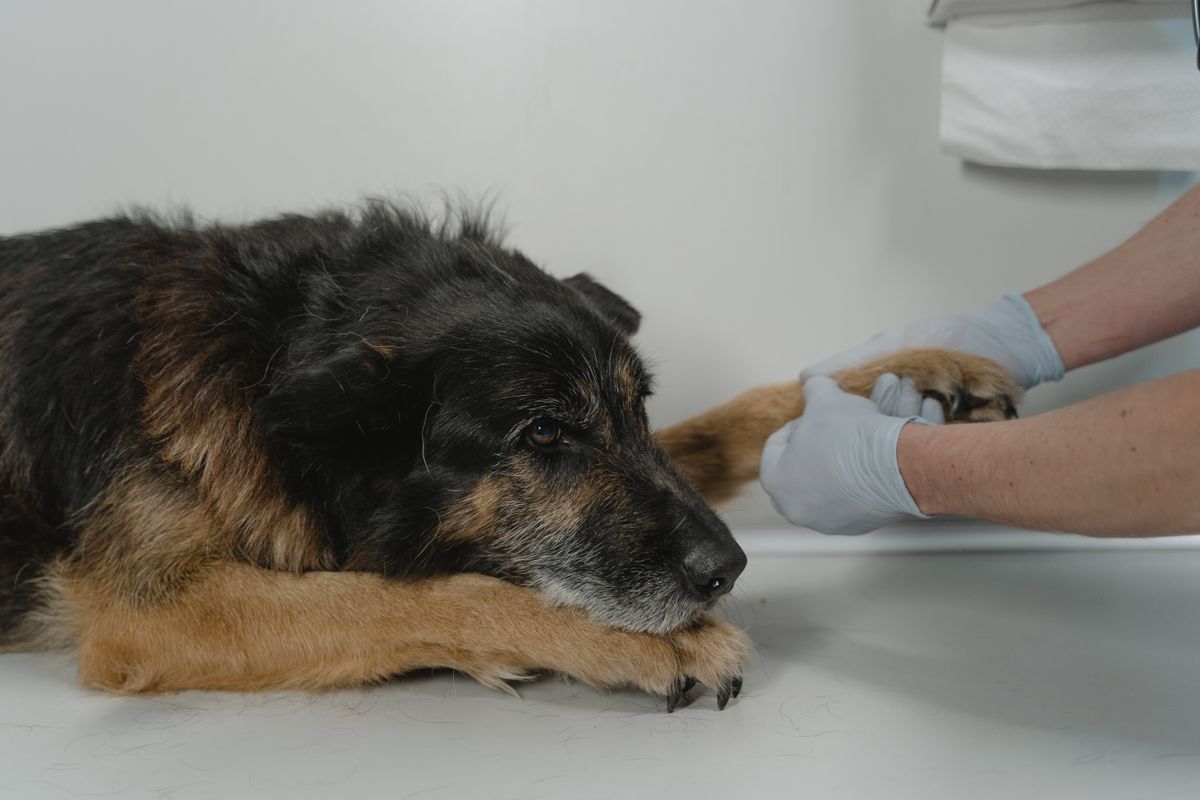
A quick paw clean is one thing; returning to the same foot repeatedly is another. Persistent licking of one paw can signal local irritation, an injury, or pain and should not automatically be called boredom. A safe look can provide useful information, but it cannot rule out a problem that needs an examination.
Watch before touching
Notice which paw is involved, how often licking happens, and whether your dog limps or avoids weight on it. Record when the change began and any recent walk on rough, hot, salted, or unfamiliar ground.
Take a brief video from a distance if it can be done safely. Do not repeatedly make the dog walk on a painful foot to demonstrate a limp. The history matters alongside what you can see today.
Inspect only if handling is comfortable
If your dog accepts gentle handling, look at the pads, nails, and visible spaces between toes. The AKC notes possibilities such as a cut, torn nail, or a foreign object. Redness, swelling, discharge, or a broken nail is useful information for your veterinarian.
Stop if the dog pulls away, growls, or appears painful. Do not probe the skin, dig out an embedded object, or force toes apart. A painful animal can bite even if normally comfortable with handling.
Prevent further damage while arranging advice
Repeated licking can keep an area irritated. Ask your veterinarian about an appropriate way to prevent access while the cause is assessed. A protective collar may be part of that advice, but its fit and the dog’s needs matter.
Avoid improvising a tight paw wrap or leaving a sock on unattended. A covering can hide swelling, hold moisture, or impair circulation if applied badly. It is not a substitute for identifying the cause.
Avoid guessing the treatment
Do not apply human pain creams, essential oils, peroxide, or leftover medication without veterinary instructions. The dog may lick a product off, and the right treatment depends on what is wrong.
Likewise, do not start a diet change because allergies appear on a possible-cause list. One paw can be affected for several reasons. A targeted examination is more informative than testing multiple remedies at once.
When to seek prompt care
Contact a veterinarian promptly for ongoing licking, swelling, an open wound, nail damage, or limping. Marked pain, inability to bear weight, heavy bleeding, or rapidly worsening swelling requires urgent advice.
Even if the surface looks normal, persistent repeated attention to one paw deserves assessment. Tell the clinic about the timing, ground conditions, handling response, and any licking elsewhere. Do not wait for the paw to become raw.
Frequently asked questions
Could it still be an allergy?
It is possible, but local injury, irritation, and other causes also need consideration. An examination is needed to distinguish them.
Can I distract my dog instead of seeing a vet?
A safe distraction may briefly interrupt licking, but persistent licking or pain still requires assessment.
Related Petzora guides
Sources and further reading
Written by Emon Ahmed for general education, not veterinary diagnosis or treatment.