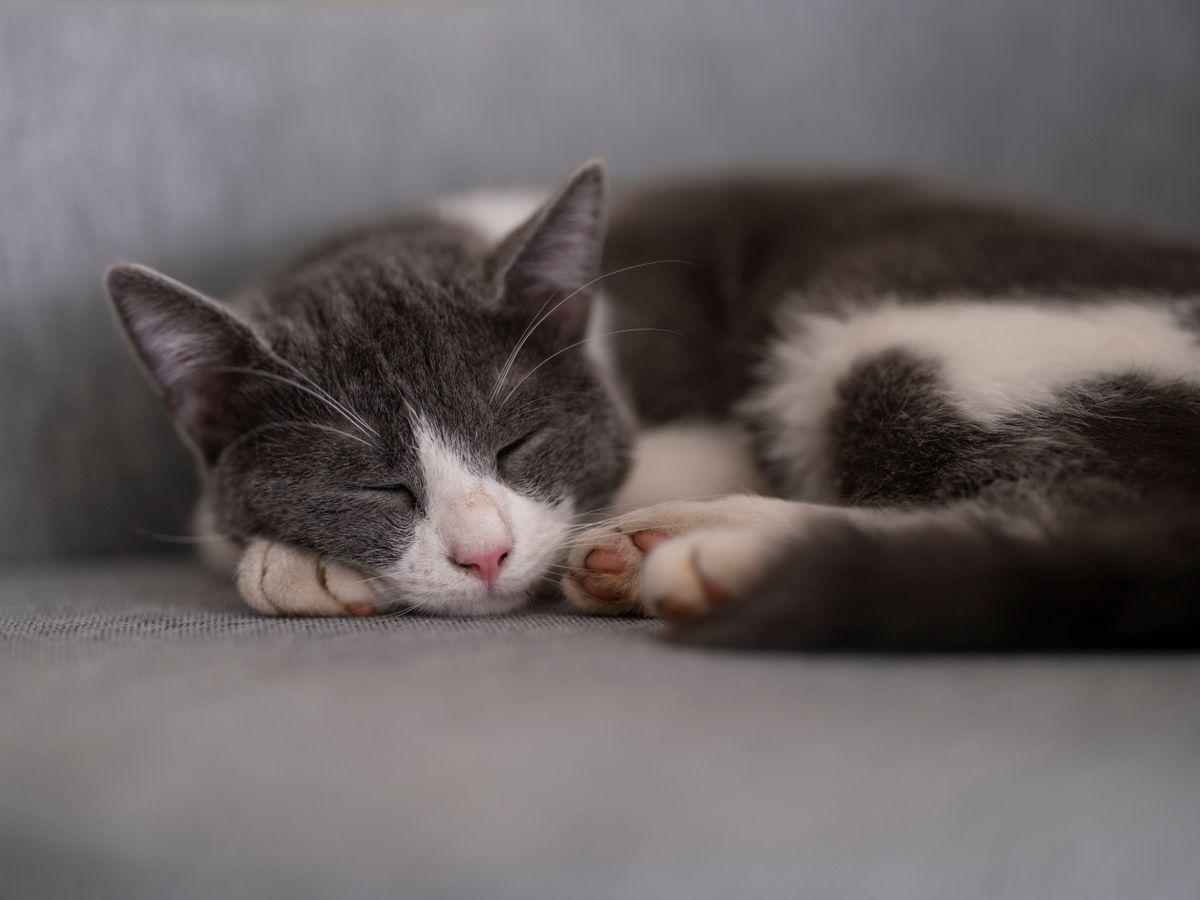
Quiet observation can give your veterinarian useful information. Count breathing when your cat is calmly resting or asleep, without purring or recent activity. A home count is a monitoring tool, not a diagnosis. If the cat is visibly struggling to breathe, do not spend time perfecting the number before seeking help.
Choose the right moment
Wait until the cat is settled in a comfortable room. Avoid counting directly after play, a stressful event, or movement. Purring can make chest movement harder to interpret, so choose a quieter moment.
Observe from a distance without picking the cat up. If approaching wakes them, step back and try later. Repeatedly waking a resting cat can change the very pattern you are trying to measure.
Count one complete breath correctly
One rise and fall of the chest is one breath. Count for a full minute if possible. If using thirty seconds, multiply the count by two, but use a longer observation when the movement is difficult to follow.
Do not count both the rise and fall as separate breaths. Note the result, date, time, and whether the cat was asleep or quietly awake. A video can help your veterinarian review what you observed.
Understand the limits of a single number
Cornell describes a normal resting respiratory rate for cats of about 15–30 breaths per minute and advises veterinary consultation above 35 when relaxed or asleep. A trend and the cat’s condition matter as well as one reading.
If the rate is unexpectedly elevated but the cat is otherwise comfortable, contact your veterinarian for guidance about repeating it and next steps. Do not assume a number in a typical range rules out illness when the cat has other concerning signs.
Know the signs that override counting
Open-mouth breathing in a resting cat, obvious effort, a stretched-neck posture with distress, collapse, or blue or gray gums requires urgent veterinary care. Cornell emphasizes that breathing difficulty can be life-threatening regardless of cause.
Keep handling and stress to a minimum while arranging help. Do not force the cat onto their back, put objects in the mouth, or give human medicines. Call the clinic for safe transport advice.
Build a useful baseline with your veterinarian
If monitoring has been recommended, follow the frequency and action threshold your veterinarian gives you. Use the same quiet conditions where possible and record changes rather than relying on memory.
A note such as “asleep, not purring, counted for sixty seconds” is more useful than “breathing looked fast.” Share any changes in appetite, activity, coughing, or sleeping posture. Monitoring complements professional assessment.
Frequently asked questions
Can I count while my cat purrs?
Choose a non-purring resting moment where chest movements are easier to interpret.
Does a high rate prove heart disease?
No. Several conditions can alter breathing. Your veterinarian needs to assess the cause.
Should I wait to reach a threshold during obvious distress?
No. Visible breathing difficulty needs urgent help even without a completed count.
Related Petzora guides
Sources and further reading
Written by Emon Ahmed for general education, not veterinary diagnosis or treatment.