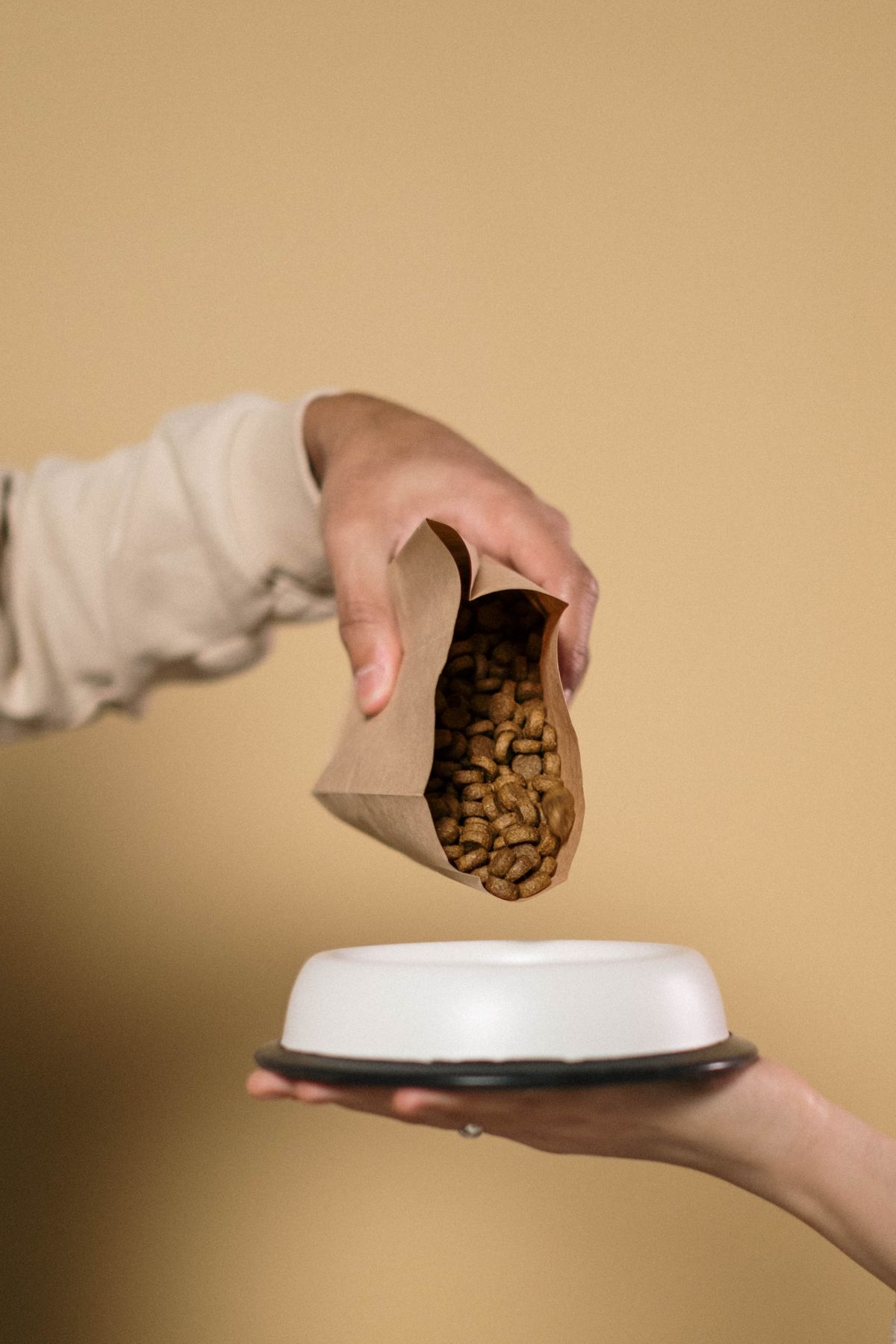
An opened bag needs more than a convenient scoop. Keep the original packaging and its identifying information, even when you use an outer storage bin. This makes it easier to check the food’s label, follow storage instructions, and identify a batch if a recall or problem occurs. A useful setup protects the food while keeping those details within reach.
Keep the bag inside the storage bin
The FDA recommends placing the whole original bag inside a separate container rather than pouring the kibble straight into it. Choose a bin large enough that you can close the bag and outer lid without crushing or tearing the packaging.
The bin should have a secure lid and be inaccessible to pets. A container on the floor that an enthusiastic dog can open is not a secure storage solution. Keep a photograph of the label as a backup, while retaining the actual bag.
Save the information that identifies the food
Keep the product name, manufacturer, UPC, lot number, and best-by date. When the bag changes, replace the saved information too. An old label attached to a new supply can make it harder to identify which batch your pet ate.
Write the opening date somewhere separate from the printed best-by date. Follow the manufacturer’s instructions for use after opening rather than assuming every dry food remains suitable for an identical number of weeks.
Clean between bags instead of topping up
Avoid continually pouring new kibble over the remains of an old bag. Empty the container, wash it, and dry it fully before the next supply. This removes crumbs and residual oils and keeps you from mixing batches without a clear record.
Keep a dedicated clean scoop with the food. Return it only when dry, and wash feeding bowls after use. Food storage and bowl hygiene work together; a well-kept bag cannot compensate for a dirty feeding surface.
Choose a cool, dry, secure location
Store the supply away from damp areas and sources of heat. A sunny window, steamy laundry area, or hot shed is a poor choice. Check the label for temperature guidance and choose a location where the bag and container stay dry.
Buy a quantity you can use according to the manufacturer’s guidance. A huge bag is not automatically economical if the food deteriorates or becomes difficult to keep clean. Keep different pets’ diets clearly separated, especially prescribed foods.
Check problems before the next meal
Stop feeding a product if you find a foul odor, foreign material, or another concerning change. Save the packaging and take photographs. Contact the manufacturer and ask your veterinarian for advice if your pet becomes unwell after eating it.
Do not rely on a quick sniff as proof that questionable food is safe. If you cannot establish that storage instructions were followed, seek specific advice instead of trying to hide a change by mixing the food into a fresh bag.
Frequently asked questions
Can I pour food directly into a container?
If you do, use a clean, completely dry container with a secure lid and retain the current bag’s identifying information. Keeping the bag inside is the FDA’s preferred approach.
Does the best-by date replace after-opening guidance?
No. Read both the printed date and the manufacturer’s handling instructions.
Related Petzora guides
Sources and further reading
Written by Emon Ahmed for general education, not veterinary diagnosis or treatment.