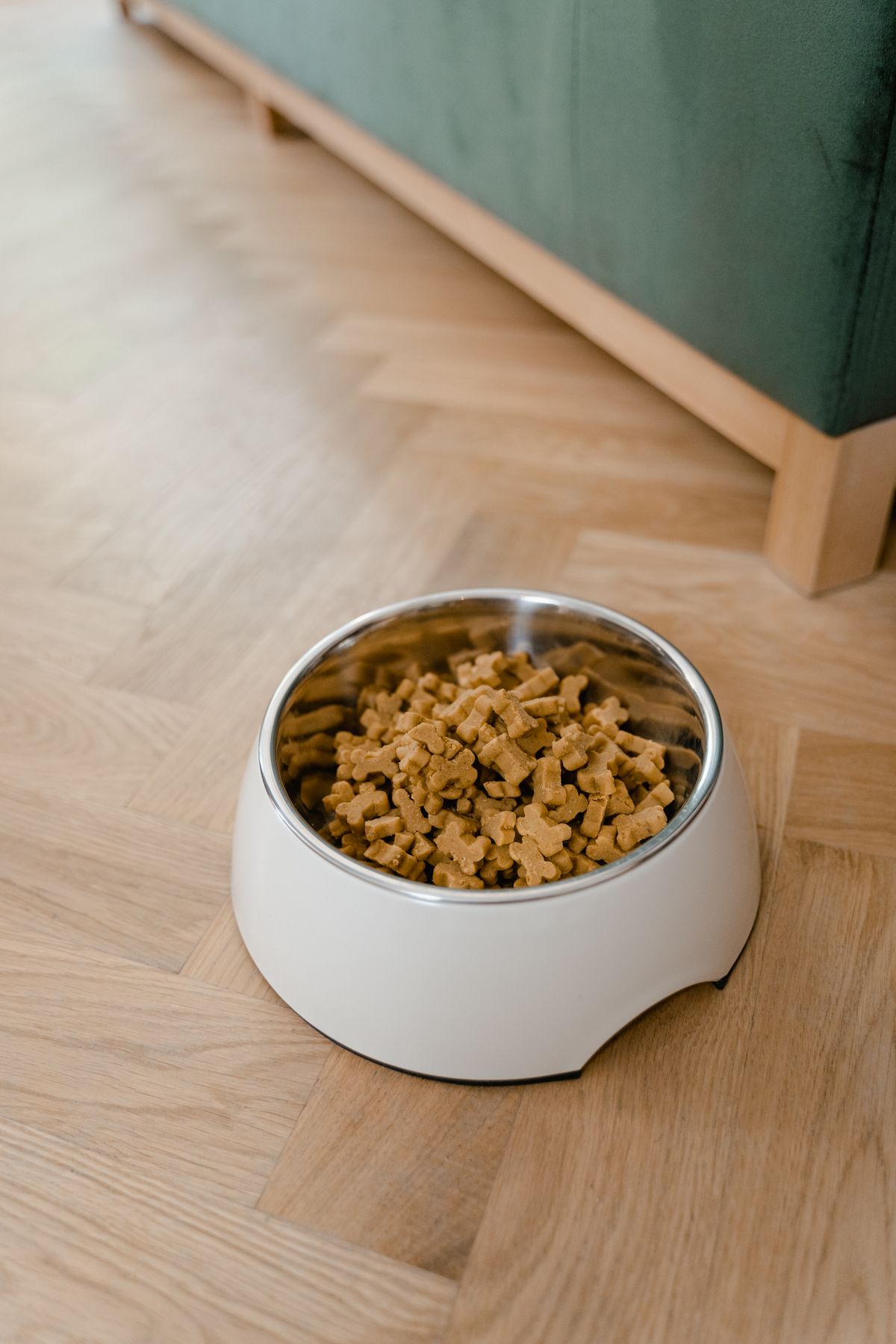
A bowl can look empty and still need cleaning. Wash food bowls after meals and clean water bowls regularly rather than only topping them up. Food residue, handling, and storage all matter. A manageable routine works better than waiting until the dish smells or develops a visible film.
Separate cleaning from refilling
Remove remaining food according to its safe storage instructions, wash the dish, rinse it thoroughly, and let it dry. For water, discard the old contents and clean the container before replacing with fresh water. Do not simply pour clean water onto residue.
The exact replacement schedule for food depends on the product and conditions. Wet food left in warm surroundings requires different handling from an unopened bag of kibble. Follow the maker’s directions instead of one universal room-temperature rule.
Use a routine that fits every meal
The FDA recommends washing pet food bowls and scooping utensils with soap and hot water after use. A dedicated washable brush can make that practical. Keep feeding utensils separate from items used for preparing human meals where possible.
Rinse away cleaning product and check that the bowl is fully clean. If using a dishwasher, confirm the bowl is suitable for it and follow the appliance and product instructions. Do not assume every plastic, coating, or removable part tolerates the same process.
Inspect material as well as cleanliness
Look for chipped ceramic, cracked plastic, damaged coatings, or edges that could hurt the mouth. Replace a compromised dish instead of scrubbing indefinitely to compensate for damage.
Choose a stable bowl your pet can reach comfortably. Material alone does not guarantee hygiene. A well-kept suitable dish is more useful than an expensive one that is awkward to wash or easy to damage.
Handle shared feeding areas
Give pets appropriate individual feeding access, clean spills, and wash mats as well as bowls. Food trapped under a dish can remain unnoticed after the top looks tidy. Keep the area dry and free of pests.
For animals eating separate diets, use clearly identifiable dishes and measures. A simple written routine reduces accidental mixing when several family members help. Diet separation is especially important when your veterinarian has prescribed a particular food.
A small kitchen checklist
After feeding, check the bowl, scoop, floor, and hands. Wash hands after handling food and containers. Keep a clean spare bowl ready if your pet needs access while one is being washed.
Do not use strong perfume to hide a dirty dish or mix cleaning products. Choose pet-safe handling and follow labels. If residue is difficult to remove, revisit the dish shape and the time food sits in it.
Frequently asked questions
Can I keep adding water all week?
Fresh water still needs a clean container. Empty, wash, rinse, and refill regularly.
Is stainless steel automatically germ-free?
No. It still needs washing, inspection, and appropriate handling.
Related Petzora guides
Sources and further reading
Written by Emon Ahmed for general education, not veterinary diagnosis or treatment.