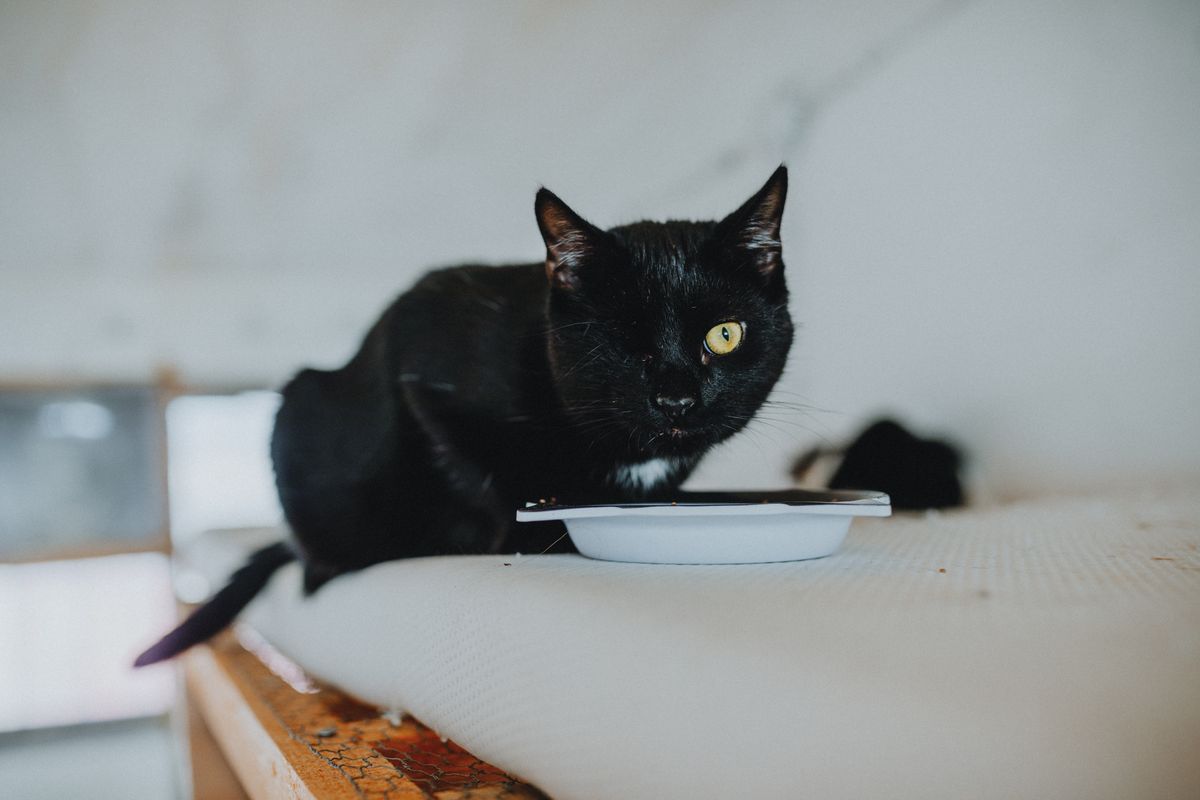
Your cat finishes a meal and paws the floor as if there were invisible litter around the dish. Scratching near food can be a covering or caching-like behavior, but it is not a reliable verdict on the meal. The important questions are whether your cat eats normally, seems comfortable, and has a feeding area that works for them.
Covering food is one possible explanation
Royal Canin describes this behavior in the context of instinctive food-covering habits. A domestic cat may make digging movements even on a surface where nothing can actually be buried. That is a plausible explanation, not proof that every cat has the same intention.
Separate this from scratching a post or sharpening claws. Pawing immediately beside a bowl has a different setting from long, repeated scratching on furniture. A short video of the movement can help clarify which behavior you are seeing.
Does it mean your cat dislikes the food?
Not by itself. A cat may scratch after eating a normal portion, before a meal, or when there are leftovers. Look at the actual amount eaten and whether appetite is changing. Do not replace every meal solely because of pawing.
If your cat repeatedly approaches food and walks away without eating, that is a different concern. Check freshness and access, then contact your veterinarian about appetite loss or discomfort instead of treating scratching as the diagnosis.
Inspect the feeding station
Watch a full meal from a little distance. Does the dish slide when touched? Is a second pet approaching? Is the area busy, cramped, or next to an appliance that switches on unexpectedly? These are useful things to notice before buying a new bowl or changing the diet.
Try one simple adjustment at a time. For example, put the existing dish on a stable washable mat. If competition seems involved, offer meals in separate quiet spaces. Keep the food itself consistent during that test so you can interpret the result.
Handle leftovers and damaged surfaces
Follow the food maker’s storage and serving instructions, especially for wet food. Remove spoiled food and wash dishes regularly. Do not leave a meal out indefinitely just because your cat appears to be “saving” it.
If the floor is being marked, a firm washable mat can protect it. Avoid a loose covering that the cat can drag over food or chew. Check the setup after meals so spilled food does not remain hidden under the mat.
What not to do
Do not push the cat’s paws away, shout, or spray water. Those responses can make mealtimes stressful without addressing why the movement happens. You can interrupt damage calmly by removing leftovers after the meal and offering another activity.
Avoid claiming the behavior proves the cat is unhappy, dominant, or trying to hide evidence from predators. Several explanations are possible. Your cat’s appetite and comfort are more useful than an elaborate story about instinct.
When to ask a veterinarian
Seek advice for new pawing accompanied by weight loss, vomiting, reduced appetite, drooling, or difficulty chewing. A cat that wants to eat but seems unable to should be assessed promptly.
Make a short meal log: food offered, approximate amount eaten, scratching before or after eating, and any other symptoms. Include recent food or bowl changes. This turns a vague observation into information someone can work with.
Frequently asked questions
Should I stop normal food-covering motions?
Usually you can leave a brief harmless routine alone. Manage floor damage and food hygiene without punishing the cat.
Does a wider bowl always solve it?
No. Bowl design is one variable. Try a stable comfortable dish if your cat struggles with the current one, but do not promise a universal fix.
Why does my cat scratch beside an empty dish?
The movement may be part of a learned sequence or individual habit. Check the wider meal routine rather than assuming the empty dish has one specific meaning.
Related Petzora guides
Sources and further reading
Written by Emon Ahmed for general education. Behavior explanations are possibilities, not a diagnosis or a claim of veterinary review. Consult a veterinarian about pain, illness, or sudden unexplained changes.