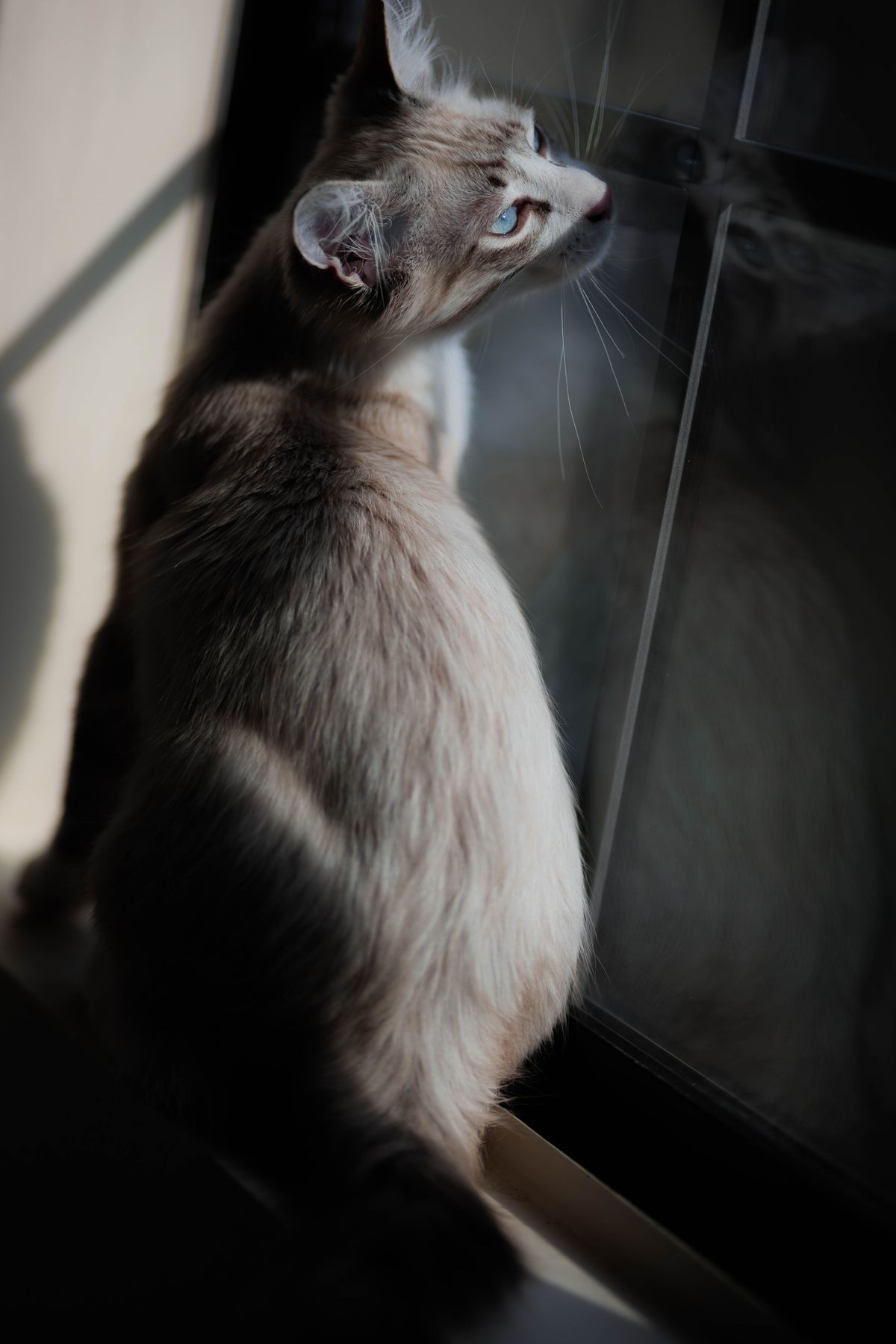
You catch your cat watching you. Then they turn their head as if nothing happened. A gaze followed by looking away can be an ordinary shift of attention. It is not evidence of manipulation, guilt, or a secret message. Look at posture and context before deciding your cat is asking for something.
Begin with the scene around the gaze
Were you opening food, moving a toy, or walking through a familiar route? Your movement may simply have attracted attention. A cat can monitor the room and then stop looking when the interesting part ends.
Compare the moment with the cat’s usual behavior. A comfortable resting cat glancing at you is different from a tense cat remaining still near a conflict. One eye movement cannot establish the difference.
Notice the body as well as the eyes
Look at whether the body appears loose, whether the cat can move away, and whether ears or tail change as you approach. Avoid deciding that purring or a blink overrides a tense posture.
Give the cat space if they lean away, crouch, or stop engaging. Your aim is a comfortable interaction, not a test of whether they will keep looking at you. A quiet shared room can be pleasant without any eye contact.
Slow blinking is a particular behavior
Cats Protection describes a slow blink as a gentle deliberate closing and reopening of the eyes, and emphasizes context. It can occur around comfortable people, but it is not a universal guarantee of relaxation.
If your cat appears comfortable, you can offer a soft slow blink and look slightly away. Do not lean in or repeat it insistently until the cat responds. They are allowed to choose another activity.
Respond to a practical request when one is clear
If watching happens around a scheduled meal, check the actual feeding routine. If your cat then walks to a toy and returns, a short game may be welcome. Look for the sequence instead of assuming staring means hunger.
Keep predictable routines and avoid supplying food after every look. You can acknowledge the cat quietly without creating a new snack schedule. Check overall appetite and daily portions when food is genuinely involved.
When eye changes deserve veterinary advice
Squinting, redness, discharge, a visibly cloudy eye, or a new difference between the pupils deserves prompt veterinary advice. Painful eyes are not a body-language puzzle to solve at home.
Describe whether the change is in one or both eyes and when it began. Do not use human eye drops or try to keep the eyelids open for a photograph. Ask for safe guidance.
Frequently asked questions
Is looking away a sign my cat dislikes me?
No. It may simply end a moment of attention. The wider relationship and behavior matter more.
Should I stare back?
Avoid intense prolonged staring or moving into the cat’s face. Calm space and voluntary interaction are better choices.
Related Petzora guides
Sources and further reading
Written by Emon Ahmed for general education, not veterinary diagnosis or treatment.