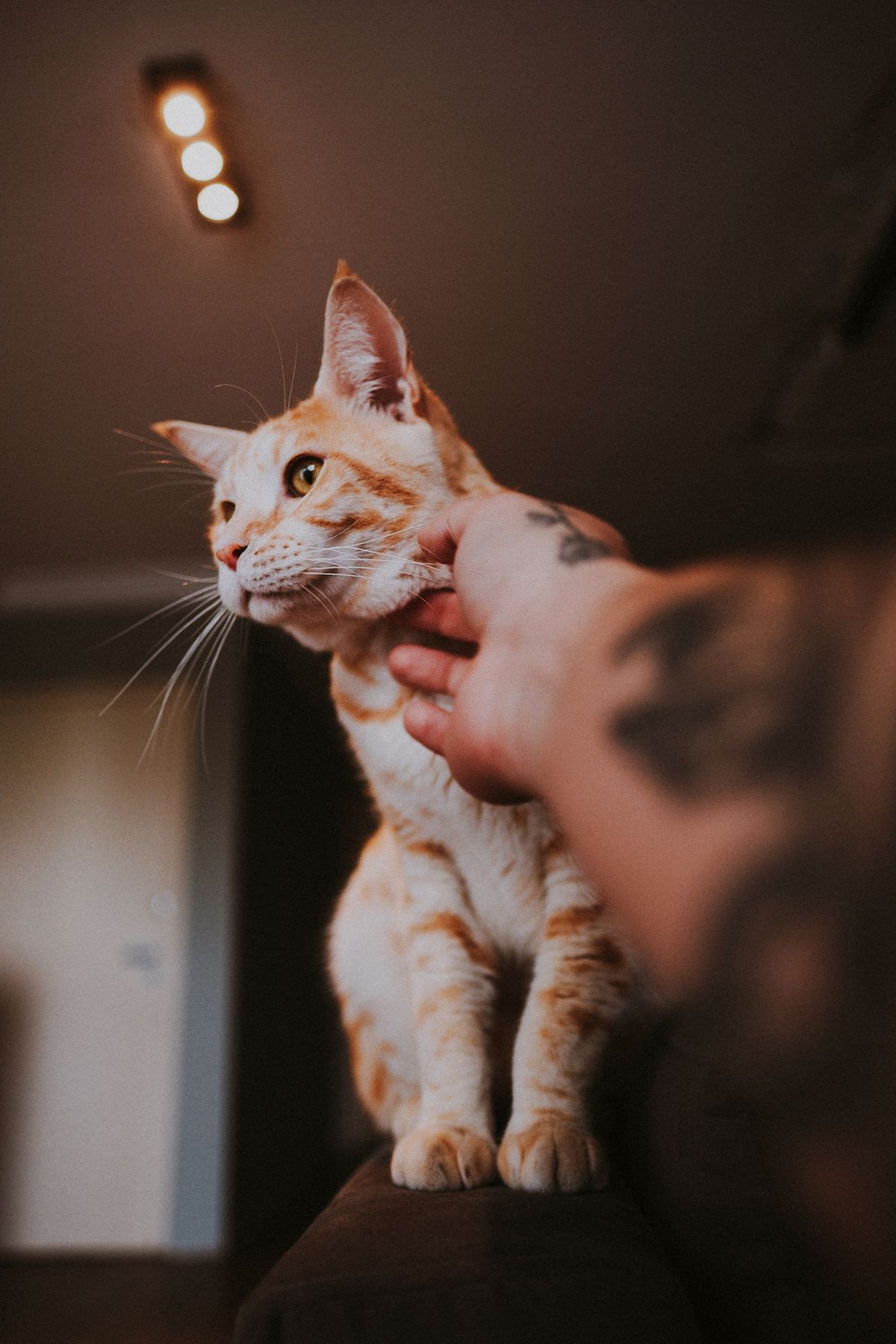
One moment your cat is licking your hand; the next, teeth touch your skin. Licking followed by a nip can occur during social contact, play, or a petting session that has become too much. “Love bite” is a nickname, not a guarantee that your cat wants more touching. Pause and look at what the rest of the body is telling you.
Licking and biting do not have one fixed meaning
Cats Protection describes licking as something that can occur during bonding, while also explaining that a cat may bite when handling continues beyond their comfort. The sequence can therefore change meaning during the same interaction.
Instead of deciding “this is affection” and continuing automatically, check whether the cat still approaches your hand voluntarily. Give them a chance to stop. A brief pause can prevent a mild warning from becoming a stronger one.
Look for the moment the interaction changes
Watch for a head turning toward your hand, tail movement becoming sharper, tense posture, or ears changing position. Signals vary between cats and must be read together. Purring does not cancel the other information.
Keep a note of where you were touching and roughly how long. If nips tend to follow repeated strokes down the back or contact near the belly, shorten the session and avoid that area. Do not deliberately repeat the trigger to see how much the cat will tolerate.
A gentler way to offer contact
Let the cat approach first. Offer a brief touch in a place they normally enjoy, then pause. If they move away, allow that. If they re-engage comfortably, you can offer another short interaction.
This is not a rigid three-stroke rule. Some cats want very little handling, while others seek longer contact. The useful habit is checking in rather than assuming the original invitation lasts forever.
Keep hands out of hunting games
If your cat grabs, chases, and mouths moving fingers, hands may have become part of play. Use a suitable toy instead. Keep enough distance that the cat can direct chasing and biting toward the object rather than your skin.
After a nip, avoid a frantic pulling movement that turns your hand into a moving target. Pause safely, end the interaction, and give space. Do not squeeze, hit, or pin the cat down. Punishment can make future contact more tense.
What to track over a few days
Record whether the nip follows petting, starts during play, or happens when the cat is resting. Note whether it is new, whether it breaks skin, and whether one area of the body seems sensitive. A pattern is more useful than calling every nip a love bite.
Make one practical adjustment, such as shorter petting sessions, and observe the result. If biting becomes stronger or unpredictable, do not keep experimenting with handling. A veterinarian or qualified feline behavior professional can help assess the cause.
When pain or injury changes the advice
Sudden biting in a cat that previously enjoyed contact can reflect discomfort and warrants veterinary advice. Mention stiffness, grooming changes, hiding, or appetite changes alongside the bite.
If a bite breaks human skin, wash it promptly and obtain appropriate medical advice, particularly for punctures, hand injuries, swelling, or increasing redness. A small-looking cat bite can still need attention.
Frequently asked questions
Is every gentle bite a love bite?
No. A nip may be a request to stop, play behavior, or another response. The surrounding interaction matters.
Should I keep stroking if my cat is purring?
Pause if other signals suggest discomfort. Purring alone is not permission to continue.
Can I train my kitten not to bite hands?
Use toys for play from the start and stop hand-based wrestling. Keep interactions predictable, gentle, and appropriate to the kitten’s energy.
Related Petzora guides
Sources and further reading
Written by Emon Ahmed for general education. Behavior explanations are possibilities, not a diagnosis or a claim of veterinary review. Consult a veterinarian about pain, illness, or sudden unexplained changes.