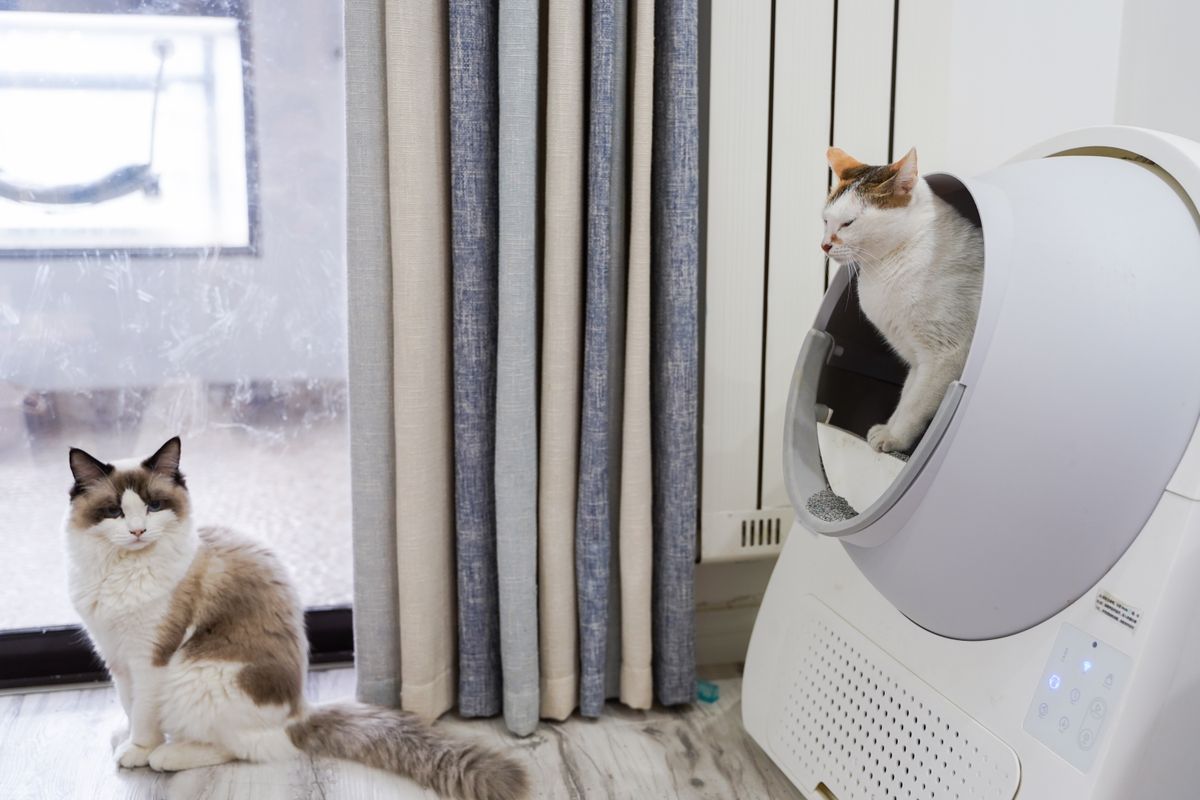
Your cat uses the tray, then reaches up to scratch the wall. Pawing nearby surfaces can be part of a covering sequence, but it can also make a cramped or uncomfortable setup worth checking. The wall scratching alone does not prove your cat has forgotten how to use litter or dislikes the entire home.
Observe before rearranging the room
Watch where the cat stands and whether they can turn fully inside the tray. Do they scratch the rim as well as the wall? Do they leave quickly, balance on the edge, or return repeatedly? Those details make the situation clearer.
Keep track of actual toileting too. Normal urine and stool with a familiar brief pawing routine differ from straining, frequent unsuccessful attempts, or accidents. The second pattern calls for medical attention rather than a decor solution.
Check whether there is enough usable space
A box should allow easy entry and comfortable turning. A lid, raised sides, or placement tight against furniture can reduce usable room. Consider a suitably larger accessible tray before assuming the wall is the main attraction.
If you offer a different tray, keep the old one available while the cat explores. Do not lift the cat into the new box repeatedly. Voluntary choice provides better information and avoids making toileting a handling exercise.
Review litter without changing everything
The texture, fragrance, and depth can all affect how a tray is used. Follow product directions and make modest comparisons. A different depth in a familiar material is easier to interpret than a new scented litter in a new box at a new location.
Keep trays clean and accessible. A strong fragrance is not a substitute for scooping. If several cats share the home, distribute enough trays so one animal does not have to pass another to reach all of them.
Protect the surface calmly
A washable protective panel may prevent marks if it is safely fitted and does not obstruct access. Avoid loose plastic, adhesive exposed to chewing, or unstable barriers beside the tray.
Do not clap, spray, or startle the cat while toileting. That can make the tray area less comfortable. Protect the wall while addressing the setup, rather than creating an unpleasant event every time the cat uses the box.
Use a short comparison log
Record the box used, pawing location, litter level, cleaning time, and whether elimination looked comfortable. Test one adjustment, then compare the pattern over ordinary use. There is no need to demand that all covering motions stop.
Seek veterinary help for straining, pain, blood, or new house-soiling. Repeated attempts to urinate with little or nothing produced are urgent, especially in male cats. Do not spend days testing box sizes in that situation.
Frequently asked questions
Does wall scratching mean the box is too small?
It is one possibility worth checking, not a diagnosis. Texture, routine, and comfort can also matter.
Should I switch to an automatic litter box?
That is not a guaranteed solution. Assess space, access, cleaning, and individual preference first.
Related Petzora guides
Sources and further reading
Written by Emon Ahmed for general education, not veterinary diagnosis or treatment.