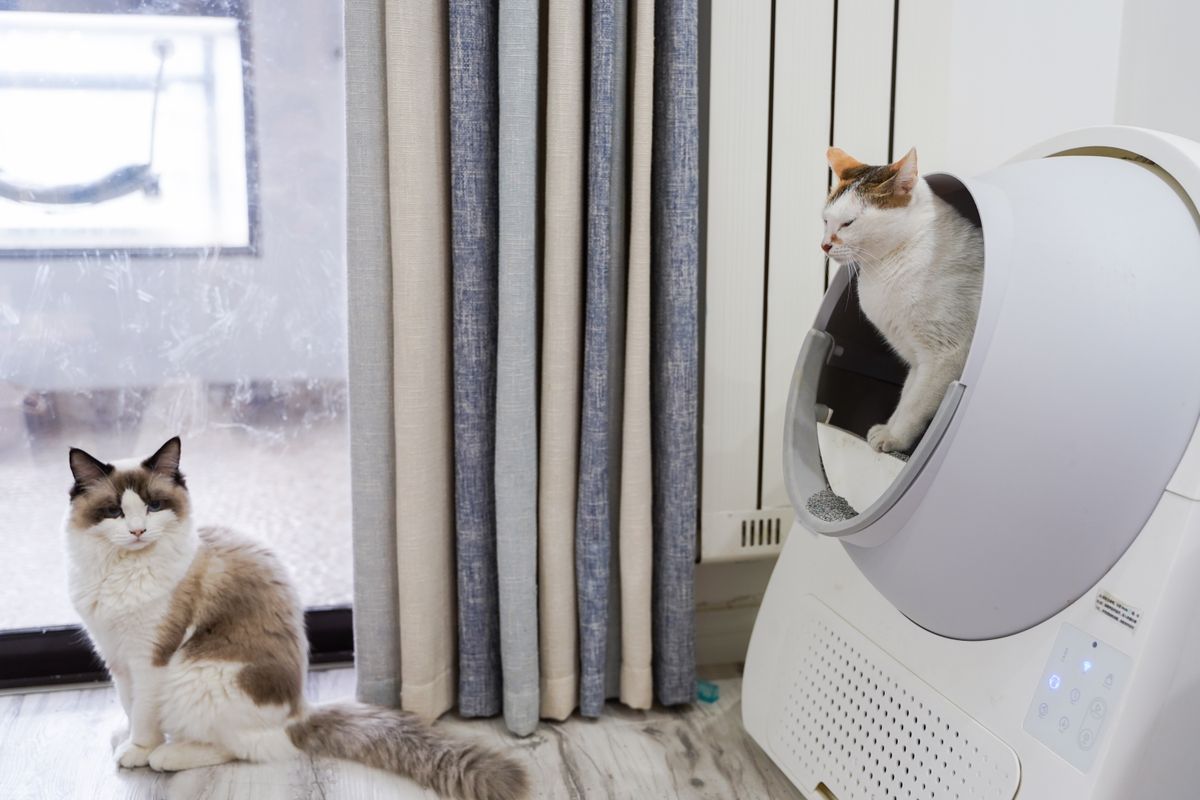
More litter does not always mean a more comfortable box. For a conventional tray, around 2 inches (5 cm) is a practical starting point for many cats, then adjust for the litter instructions and your cat’s preference. Guidance differs between litter types and welfare organizations, so there is no exact depth that suits every setup. Automatic boxes need their manufacturer’s fill line rather than a generic measurement.
Start with the box and litter you actually use
Clumping granules, non-clumping litter, wood pellets, and automatic systems behave differently. Read the packaging and box instructions before choosing a depth. A tray that needs a particular pellet layer or an automatic unit with a fill mark should not be filled using advice for another product.
Measure the settled surface at several points, not a pile in one corner. Spread litter evenly without packing it down. A small ruler kept separately from household utensils makes the amount repeatable when you refill.
Why advice varies
Winnipeg Humane Society describes about two inches as suitable for most cats. Other guidance and product instructions use shallower or deeper starting points. These recommendations are not a competition to find one perfect number; the material, tray, and individual cat matter.
The RSPCA emphasizes adequate room to turn, easy entry, cleanliness, and gradual changes in litter type. Depth is only one part of a usable tray. A very deep layer in a cramped or inaccessible box does not solve the underlying problem.
Signs the current level may need adjustment
If urine repeatedly reaches the base before the litter absorbs it, review the product directions, cleaning frequency, and amount used. A modest increase may help, but sticky clumps can also reflect the litter itself or too much time between scooping.
If your cat seems to struggle with footing or sends large quantities over the rim, compare a slightly shallower level while keeping the material and box location the same. Tracking alone is not proof of overfilling. Some cats dig vigorously even at a comfortable depth.
A simple comparison without disrupting the routine
If space allows, offer a second familiar-style tray with a small depth difference. Keep both clean and in suitable accessible areas. Observe voluntary use rather than placing the cat inside either tray.
Do not change the litter brand, scent, depth, tray style, and location on the same day. When several things change together, you cannot tell which mattered. If your cat already toilets comfortably, there may be no reason to chase an exact measurement.
Calculate how much litter a tray holds
For a rectangular box, internal length multiplied by width multiplied by depth gives approximate volume. A tray with a 50 cm by 35 cm base filled to 5 cm holds about 8,750 cubic centimeters, or 8.75 liters. Tapered sides and uneven litter reduce the precision.
Volume is not weight. A liter of heavy mineral litter weighs differently from a liter of lightweight pellets. Use this calculation for estimating capacity, not for prescribing how many kilograms every cat needs. Automatic units require their own capacity instructions.
Maintain depth after scooping
Scoop waste daily and replenish as needed to keep the chosen level. Follow product advice for complete replacement and cleaning. Adding fresh litter over a dirty layer is not a substitute for removing waste.
If your cat strains, cries, urinates unusually often, or toilets outside the tray, do not spend days experimenting with depth before seeking veterinary advice. Repeated attempts to urinate with little or nothing produced require urgent care.
Frequently asked questions
Is 4 inches of litter always better?
No. Some cats and products may tolerate or need a deeper layer, but more can make other setups unstable or exceed an automatic box’s fill limit.
Can I use the same amount for pellets and clumping litter?
Follow each product’s directions. Their absorption and maintenance methods differ, so matching depth does not guarantee matching performance.
How many boxes do I need?
A common starting arrangement is one per cat plus one extra, placed so cats can access them without conflict. Space and household needs still matter.
Related Petzora guides
Sources and further reading
Written by Emon Ahmed for general education. Behavior explanations are possibilities, not a diagnosis or a claim of veterinary review. Consult a veterinarian about pain, illness, or sudden unexplained changes.