Check your cat’s water access and daily pattern, record changes in drinking or toileting, and learn why home hydration checks cannot rule out illness.
Water intake is more than the level in one bowl
A cat obtains water from drinking and food. A household with several pets, spilled water or more than one bowl makes exact intake difficult to estimate. Use what you can observe consistently instead of pretending a single bowl reading proves hydration is normal.
Make drinking convenient
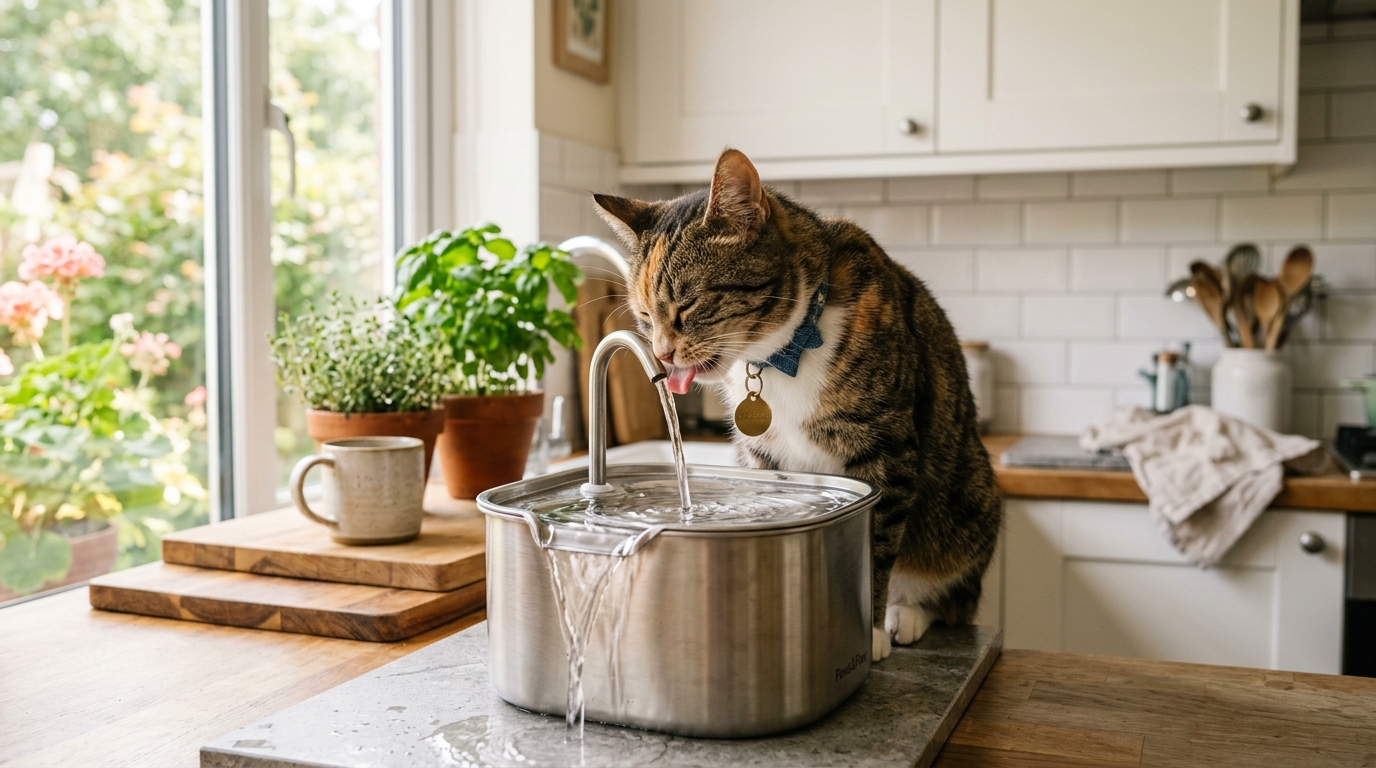
Offer fresh water in clean containers that your cat can reach comfortably. Try a quiet location and a stable bowl. If using a fountain, maintain it according to the instructions and provide a separate water option when the pump stops or needs cleaning. Older or less mobile cats may need water available on the floor where they spend time.
Test one change at a time. Move a bowl or introduce a different bowl while keeping another familiar water source. Watch whether your cat uses it. Avoid forcing the cat toward a new setup or relying on a noisy fountain they will not approach.
Food and hydration choices
Wet food can contribute water, but the diet should remain nutritionally appropriate for your cat. Discuss substantial diet changes with your veterinary team, especially for prescribed diets or chronic conditions. Do not assume every cat eating dry food is chronically dehydrated; individual circumstances differ.
Keep a useful change log
| Observation | Helpful record | Limitation |
|---|---|---|
| Drinking | Much more or less than this cat’s usual pattern | Shared bowls make exact amounts uncertain. |
| Litter box | Change in clump frequency or size | This cannot identify the cause. |
| Appetite | Meal offered and amount left | Eating does not rule out every illness. |
| Other symptoms | Vomiting, diarrhea, energy or behavior changes | Describe the timing rather than diagnosing. |
If a cat suddenly visits water sources more often, mention the change even when they seem alert. Increased thirst can be associated with disease and should not be dismissed as good hydration.
Do not rely on a skin-tent test
A home skin check cannot determine whether a cat needs treatment or rule out disease. Age and body condition can affect what you see. Cornell advises contacting a veterinarian promptly when dehydration is suspected. Do not repeatedly handle a distressed cat to complete a checklist.
When to get help and what to report
Contact a veterinarian promptly if you suspect dehydration, particularly with poor appetite, repeated vomiting, diarrhea or lethargy. Collapse or breathing difficulty requires urgent care. Report when symptoms started, what your cat has eaten and drunk, current medication and any changes in urination.
While arranging advice, keep accessible fresh water available if the cat is able to drink voluntarily. Do not force water into the mouth or attempt fluid treatment without instructions for that individual cat. The treatment and cause need veterinary assessment.
Related guides
- Why Is My Cat Drinking More Water Than Usual? Causes, Warning Signs & What to Do
- Why Is My Cat Not Eating? Common Causes, Warning Signs & What to Do
Sources and further reading
Written and edited by Emon Ahmed. This is general educational information, not a diagnosis, prescription or veterinary review. For an individual pet’s medical concerns, contact a qualified veterinarian.