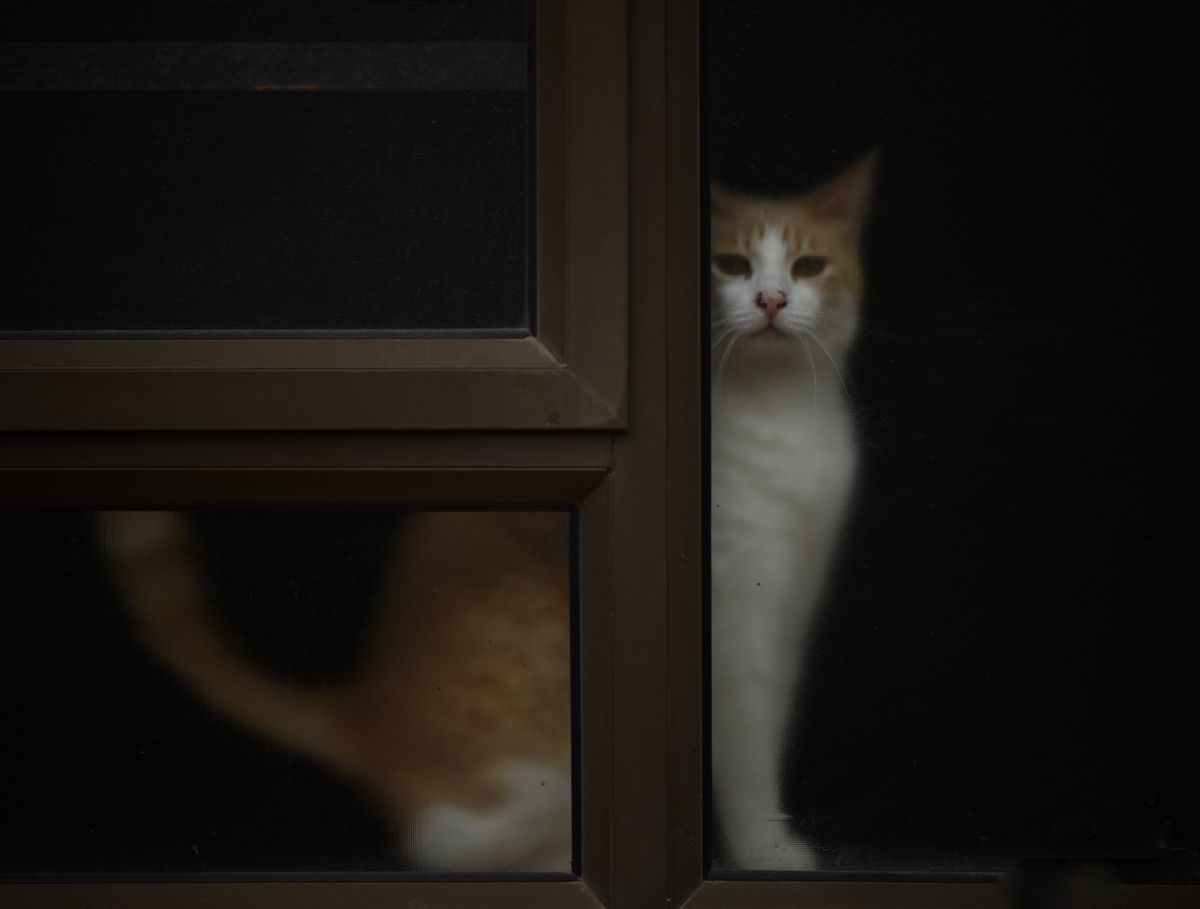
A bird lands outside and your quiet cat suddenly makes tiny clicks and chirps. Chattering during focused bird watching is a familiar feline behavior, although its exact purpose is not settled. Hunting interest and excitement are plausible explanations. Claims that every cat is imitating prey or expressing the same emotion go beyond what you can observe.
Distinguish a watching sound from distress
Notice whether the sound appears only when a bird or moving object is visible. A cat that focuses, makes brief sounds, and then returns to ordinary activity has a different pattern from one vocalizing continuously or looking uncomfortable.
A video should include the window and trigger, not only the jaw. Context helps explain why the behavior happens. Do not make a bird approach the cat to obtain a clearer recording.
Avoid treating theories as established facts
Cats Protection discusses chirping and chattering around birds and possible explanations. The behavior can be interesting without a single confirmed story behind it. Your cat’s response may also vary between occasions.
You do not need to decide whether the cat feels frustration, anticipation, or something else before improving the viewing area. Safe access and an opportunity to disengage are useful regardless of the precise motive.
Make the viewing place safe
Secure windows and screens so an excited cat cannot push through or fall. A screen that stops insects may not safely contain a cat. Check furniture or a perch for stability and avoid trapping cords nearby.
Keep the cat indoors while watching if that is the safe arrangement for your home. Do not open the window to let them reach wildlife as a reward. Watching and access to prey are different things.
Offer another outlet when watching becomes intense
If your cat remains agitated afterward, invite a gentle game away from the window. Use a suitable toy that can be caught, then give space to settle. Do not wave the toy into a cat that is already overstimulated.
Some cats prefer shorter viewing opportunities. Provide other resting and play spaces so the window is a choice. You do not need to block every view because of a brief harmless chirp.
Know when the mouth movement is a health concern
Jaw movements away from an obvious watching context, drooling, difficulty eating, or apparent pain deserve veterinary advice. Do not assume all clicking is the same bird-watching habit.
Mention when the change began and whether appetite or grooming changed. Avoid trying to open the mouth to investigate if the cat resists. A safe professional examination is more useful than forcing a close look.
Frequently asked questions
Is my cat copying the bird?
That is sometimes suggested, but it is not established as the explanation for every domestic cat.
Should I stop harmless chattering?
Usually there is no need if the cat is comfortable and the viewing area is secure. Watch for sustained agitation or unrelated symptoms.
Related Petzora guides
Sources and further reading
Written by Emon Ahmed for general education, not veterinary diagnosis or treatment.