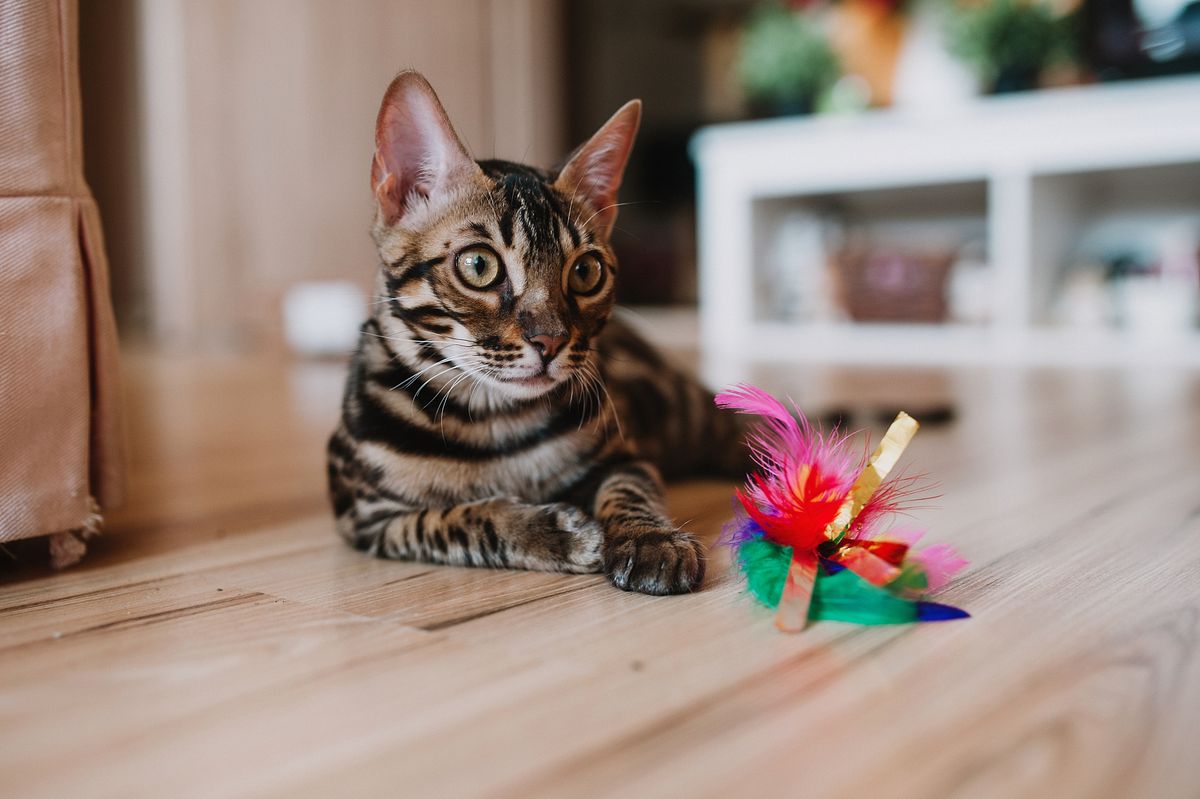
You switch off the light, settle into bed, and hear a muffled meow. Your cat has arrived with a toy in their mouth. Bringing toys at night can be part of play, a learned request for attention, or an individual carrying routine. The behavior alone does not prove your cat thinks you cannot hunt. What happens before and after the delivery is more useful than a dramatic explanation.
What the toy delivery can tell you
Start with the sequence. A cat that drops a toy, watches you, and returns it after you throw it may be inviting interaction. A cat that carries the same object to a sleeping spot and then settles may have a different routine. These are practical interpretations, not a way to read a cat’s thoughts.
Write down the time, which toy appears, and whether your cat seems relaxed. If the delivery always follows your bedtime, your movement toward the bedroom may have become the cue. If it happens after a long quiet afternoon, offer an earlier opportunity to play and see whether the timing changes.
Why it happens when you want to sleep
Cats do not necessarily share their owner’s sleep schedule. Their activity often increases around dawn and dusk, although household routines also shape when they are awake. A toy arriving after dark can therefore be ordinary activity meeting an inconvenient human timetable.
Nighttime hunting-like play is not proof of hunger. Avoid adding food automatically after each delivery. Instead, decide on a predictable play and feeding routine appropriate to your cat’s existing diet. If you change meal timing, keep the daily amount consistent.
Is your cat bringing you a gift?
“Gift” is a friendly human description, but the intention is uncertain. Carrying, dropping, and retrieving an object can have several functions. You do not need to choose one explanation to help your cat enjoy safe play.
Look at the whole scene rather than the object alone. Loose movement and an easy return to resting are different from pacing, hiding, or persistent distressed calls. A familiar toy ritual in an otherwise comfortable cat usually calls for routine management rather than punishment.
A practical bedtime experiment
For several evenings, offer a short interactive game before your usual wind-down period. Move the toy away from your cat so they can chase it, and let them catch it periodically. Finish while the game is still enjoyable. Do not keep an exhausted or reluctant cat playing to meet a timer.
Afterward, put wand toys and loose strings away. Leave only sturdy toys that cannot be swallowed, shredded into dangerous pieces, or wrapped around the cat. Keep a short note of deliveries and your own response. Changing one part of the evening at a time makes the result easier to understand.
How to respond without creating a midnight game
If your cat is comfortable and their needs are met, keep nighttime responses quiet and predictable. Throwing the toy every time may make the ritual worth repeating. Schedule the enjoyable game when you are awake instead.
Do not shout, spray water, or lock a frightened cat away as punishment. Provide access to water, an appropriate litter tray, and a comfortable resting area. If you need a closed bedroom door, practise that boundary gradually during calm daytime periods.
When the behavior deserves a check
Arrange veterinary advice if a new toy-carrying habit comes with appetite changes, unusual thirst, disorientation, persistent night calling, or difficulty settling. A sudden change in an older cat deserves particular attention.
Record a brief video if possible. Show the full sequence rather than only the loudest moment. Your veterinarian can use the context alongside age, health history, and other changes.
Frequently asked questions
Should I take the toy away?
You can quietly place it aside, but there is no need to remove a safe favorite toy simply because your cat carries it. Unsafe strings and damaged toys should be stored away.
Does a toy in my bed mean my cat is hungry?
Not necessarily. Check the feeding schedule and overall appetite rather than assuming every delivery is a request for food.
Will another cat fix this?
A second cat is not a reliable solution to a nighttime routine. Compatibility, space, introductions, and both cats’ welfare matter.
Related Petzora guides
Sources and further reading
Written by Emon Ahmed for general education. Behavior explanations are possibilities, not a diagnosis or a claim of veterinary review. Consult a veterinarian about pain, illness, or sudden unexplained changes.