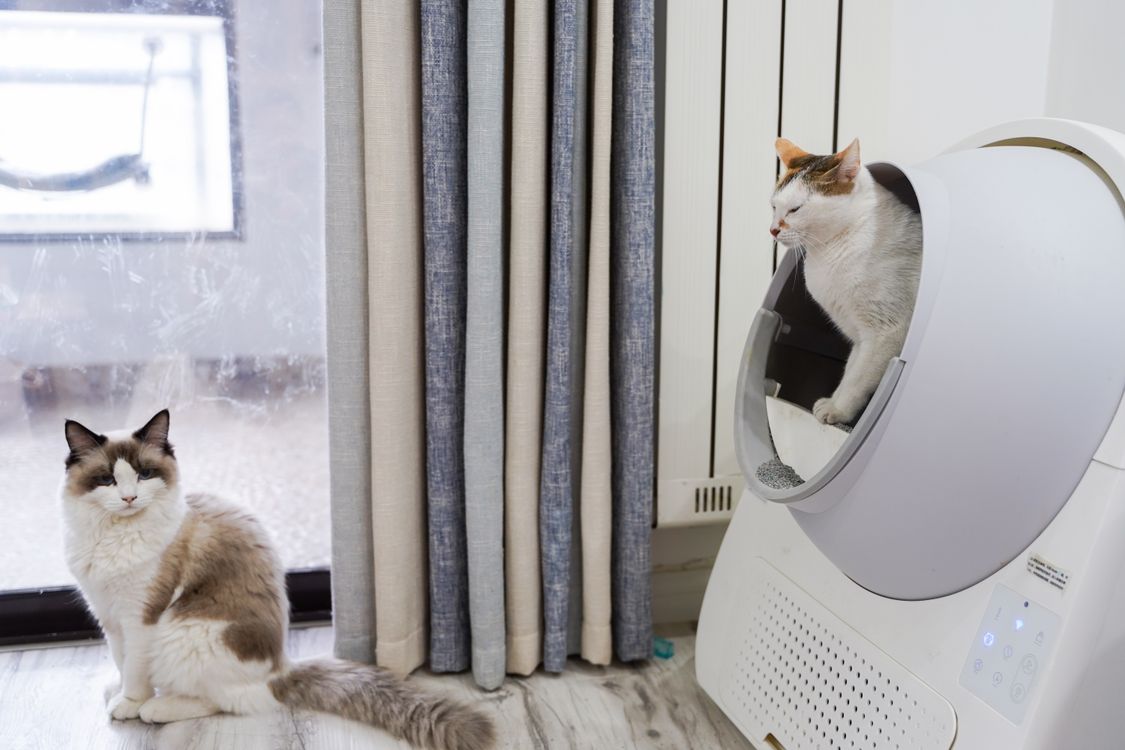
If your cat launches out of the litter box and sprints through the house like they have just won a race, you are not alone. Many cat parents notice a sudden burst of energy immediately after their cat poops. These quick dashes are often called post-poop zoomies or post-litter box zoomies.
In many healthy cats, the behavior is harmless and may simply reflect relief, excitement, instinct, or a normal burst of energy. But not every dramatic exit from the litter box should be ignored. If the running is new, frantic, or paired with straining, crying, blood, constipation, diarrhea, or repeated trips to the box, it can be a clue that something is uncomfortable.
Quick answer: why does my cat run after using the litter box?
The exact reason is not fully understood, and different cats may do it for different reasons. Possible explanations include a feeling of relief after defecating, stimulation of nerves involved in bowel movements, normal feline zoomies, excitement after finishing a vulnerable activity, an instinctive desire to move away from waste, or simply a learned routine.
If your cat uses the litter box normally, produces normal stool, and acts comfortable before and after, a short victory lap is usually not a problem.
1. Your cat may feel immediate relief
One of the simplest explanations is that your cat feels physically better after passing stool. A bowel movement involves coordinated activity in the colon, rectum, pelvic muscles, and nervous system. Once that pressure is gone, some cats appear to experience a sudden shift from concentration to energy.
Veterinary behavior discussions have also suggested that stimulation of the vagus nerve during defecation may contribute to the sensation of relief in some animals. That does not mean every post-poop sprint has a single neurological cause, but it is one plausible reason a cat may suddenly feel energized after finishing.
2. It may simply be normal cat zoomies
Cats often have short, intense bursts of activity known as frenetic random activity periods, or FRAPs. During a zoomie episode, a cat may sprint down a hallway, leap onto furniture, change direction suddenly, or chase an imaginary target.
If your cat already gets zoomies in the evening, after waking up, or after a play session, the litter box may simply be another trigger for the same normal behavior. Young cats and energetic indoor cats may show it more dramatically because they have more stored energy to release.
For another common feline behavior that often looks strange but is usually normal, read our guide to why cats knead.
3. Finishing a vulnerable activity can trigger excitement
Using the litter box requires a cat to stay in one place and focus on urinating or defecating. From an instinctive point of view, that can be a vulnerable moment. Once the job is finished, moving quickly away from the area may feel natural.
Domestic cats are safe in our homes, but many everyday behaviors still reflect instincts that developed long before litter boxes existed. A fast exit may therefore be less about fear and more about switching rapidly from a stationary activity back to alert movement.
4. Your cat may want to move away from the smell
Cats are highly sensitive to scent. They often bury urine and feces, and some individuals seem especially eager to leave the box once they are finished.
This does not necessarily mean your litter box is dirty. Even a freshly scooped box contains strong scents that are much more noticeable to a cat than to a human. After covering their waste, some cats may simply prefer to put distance between themselves and the area.
Keeping the box clean still matters. Scoop at least daily, wash the box regularly with a mild unscented cleaner, and avoid heavily perfumed litter if your cat seems sensitive to fragrance.
5. Running after pooping may become a learned routine
Cats are excellent at building routines. If your cat once sprinted after using the litter box and the experience was stimulating or rewarding, the sequence can become a habit: enter box, dig, eliminate, cover, sprint.
You may even notice that the route is almost identical each time. Some cats dash to a favorite scratching post, another room, a window, or a person. When the pattern is consistent and your cat otherwise looks relaxed and healthy, it is more likely to be a quirky routine than a medical warning.
6. Your cat may have extra energy to burn
Indoor cats do not always get the same level of movement, hunting, climbing, and exploration that they would naturally choose throughout the day. A litter-box trip can become a small transition point that releases pent-up energy.
You can help by providing several short interactive play sessions each day. Wand toys, chase games, food puzzles, climbing spaces, and safe opportunities to watch birds or outdoor activity can give that energy a better outlet.
Do not try to stop harmless zoomies by scolding your cat. If the behavior is normal for them, punishment can create stress around both you and the litter box.
7. Sometimes a fast litter-box exit can mean discomfort
This is the reason worth paying the most attention to. A cat may rush out of the box because defecation or urination was uncomfortable. Constipation, diarrhea, inflammation, urinary problems, pain, arthritis, or an unpleasant litter-box setup can all change how a cat behaves around elimination.
The difference is usually found in the details. A healthy post-poop zoomie looks playful and brief. A cat in discomfort may look tense, repeatedly enter and leave the box, strain, vocalize, lick the genital or anal area, hide afterward, or produce abnormal stool or urine.
Normal zoomies vs. signs of a problem
Usually less concerning:
- Your cat produces a normal bowel movement.
- There is no straining or crying in the box.
- The sprint lasts only a short time.
- Your cat looks playful rather than frightened or painful.
- Eating, drinking, sleeping, and grooming remain normal.
- The behavior has been part of your cat's routine for a long time.
Contact a veterinarian if you notice:
- Repeated straining with little or no stool.
- Repeated trips to the litter box with little or no urine.
- Hard, dry, unusually small stools.
- Diarrhea that persists or is accompanied by weakness.
- Blood or mucus in stool or urine.
- Vomiting, reduced appetite, lethargy, or hiding.
- Crying, growling, or obvious pain while eliminating.
- A sudden major change in litter-box behavior.
Important: repeated straining to urinate, especially in a male cat, can be an emergency because urinary blockage can become life-threatening. If you are not sure whether your cat is trying to urinate or defecate, it is safer to contact a veterinarian promptly.
Could constipation cause post-litter box running?
Yes, discomfort from constipation can change the way a cat enters or leaves the litter box. Constipated cats may strain, pass small hard stools, go in and out of the box repeatedly, vocalize, or defecate outside the box. Some also develop decreased appetite, vomiting, or lethargy.
If your cat has not produced a normal bowel movement for roughly two to three days, or is repeatedly straining, speak with your veterinarian rather than trying human laxatives or enemas at home. Some products used in people can be dangerous for cats, and treatment depends on the cause.
Hydration also plays an important role in normal bowel function. If you are concerned about fluid intake, see our guide to signs of dehydration in cats.
What should you do when your cat gets post-poop zoomies?
If the behavior is normal for your cat and there are no signs of pain, you usually do not need to do anything. Give your cat a clear path, keep fragile objects out of common sprint routes, and enjoy the weirdness.
You can also make the litter-box area more comfortable:
- Use a box large enough for your cat to turn around comfortably.
- Scoop waste at least once daily.
- Choose an accessible location where your cat does not feel trapped.
- Use unscented litter if fragrance seems to bother your cat.
- Provide enough boxes in multi-cat homes. A common starting point is one box per cat plus one extra.
- For senior cats or cats with mobility problems, consider a box with a lower entrance.
Why does my cat run after peeing?
A short sprint after urinating can also be normal, especially if your cat is playful and the urine amount looks typical. However, urinary discomfort deserves extra caution because cats with urinary tract problems may visit the box frequently, strain, produce only drops, cry, lick themselves repeatedly, or urinate outside the box.
If a cat repeatedly tries to urinate and little or nothing comes out, seek veterinary care urgently.
Why does my cat meow and then run after pooping?
Some cats are naturally vocal and may announce the end of a litter-box visit. A brief meow followed by playful running can simply be part of the routine. But vocalizing during defecation, especially if it sounds distressed or is paired with straining, hard stool, or hiding, can indicate discomfort and should be discussed with a veterinarian.
Why does my kitten get zoomies after using the litter box?
Kittens have enormous amounts of energy and often switch from one activity to another almost instantly. If your kitten is growing well, eating normally, using the litter box without difficulty, and producing normal stool, a post-litter sprint is usually just another energetic kitten behavior.
Make sure the box is easy for a small kitten to enter and keep the surrounding area safe because kittens can accelerate surprisingly quickly.
Do cats run after pooping because of predators?
You may see the idea online that cats sprint away from feces to prevent predators from tracking them. It is an interesting evolutionary theory, but it should not be presented as a proven explanation for every domestic cat. Cats also use scent for communication, and feline elimination behavior is complex.
It is more accurate to think of post-litter box zoomies as a behavior with several possible influences, including physiology, energy, instinct, environment, and individual habit.
When should post-poop zoomies worry you?
Focus less on the running itself and more on what happens immediately before and after it. If your cat has always sprinted after a comfortable bowel movement, that pattern is usually reassuring. If the behavior suddenly appears alongside constipation, diarrhea, urinary changes, pain, appetite loss, vomiting, or unusual hiding, it deserves attention.
Cats are good at hiding discomfort, so subtle changes in litter-box behavior can sometimes be one of the earliest signs that something is wrong.
Bottom line
For most healthy cats, running after using the litter box is simply one of those strange feline habits that looks dramatic but is harmless. Relief after defecation, ordinary zoomies, instinctive movement, scent avoidance, and learned routine can all play a role.
The important distinction is comfort. Normal post-poop zoomies look energetic and playful. Painful elimination looks tense, repetitive, or distressed. Watch the stool, urine, frequency, appetite, and your cat's overall behavior. When those things change, contact your veterinarian.
Sources and further reading
- PetMD: Why Do Cats Get the Zoomies?
- Cornell Feline Health Center: Constipation
- Cornell Feline Health Center: Feline Behavior Problems - House Soiling
This article is for general educational purposes and is not a substitute for veterinary diagnosis or treatment.