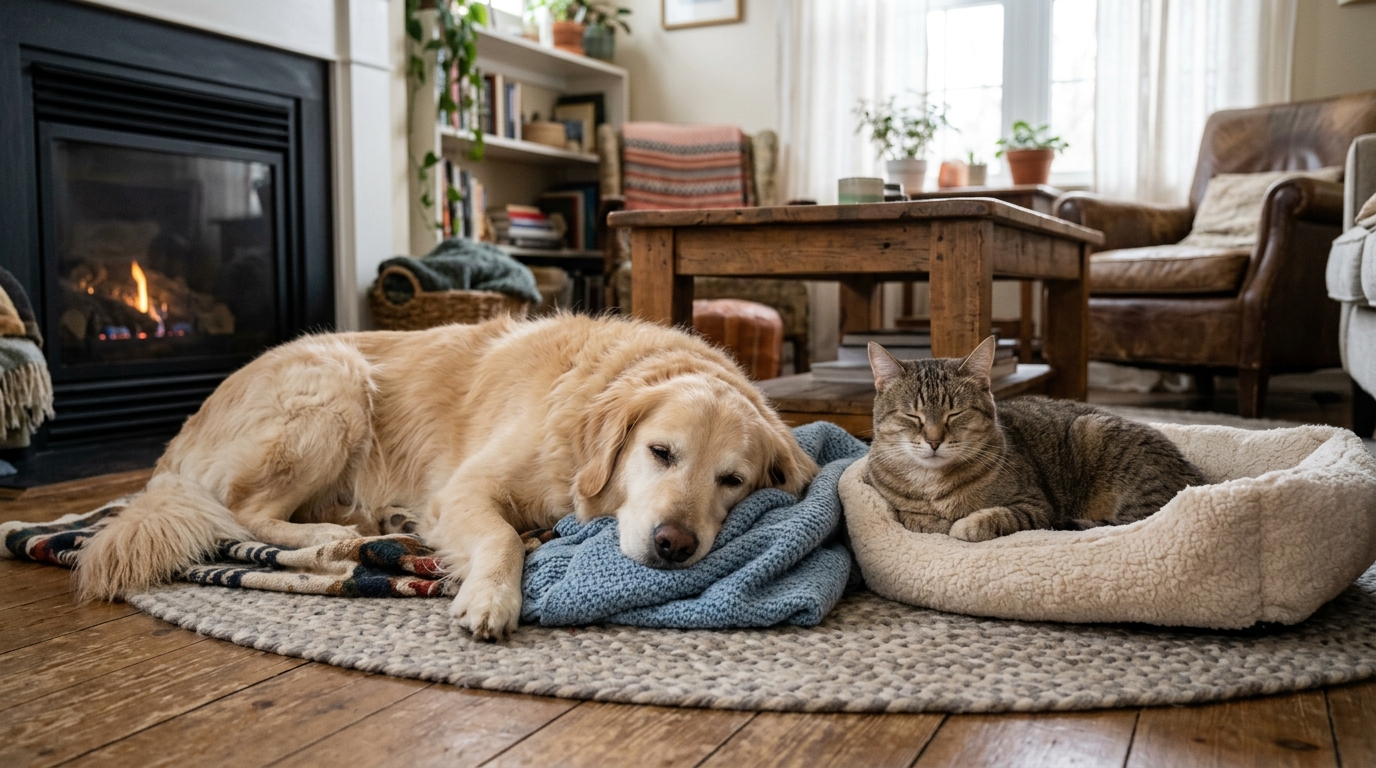
Dogs and cats communicate through posture, movement, facial expressions, and sound. Look at several signals together rather than assigning one meaning to a single ear or tail position. Giving an animal space to move away is often a useful first response.
Learning to accurately interpret the subtle dialects of canine and feline body language transforms your relationship with your pets. You stop seeing "stubbornness" or "guilt" and begin understanding their real-time requests for safety, space, affection, and emotional comfort.
Animals communicate long before they escalate to growling, hissing, or biting. An animal that bites without warning is almost always an animal whose dozen prior subtle calming signals were ignored, dismissed, or punished.
1. The Evolution of Calming Signals: Conflict Resolution in Pack Animals
Pioneering Norwegian canine researcher Turid Rugaas first coined the term "Calming Signals" (Dempende Signaler) after documenting thousands of natural interactions between wild canids and domestic dogs. In nature, physical fights carry immense survival risk: a puncture wound can become infected, leading to sepsis and death.
Consequently, canines evolved an elaborate repertoire of over thirty distinct visual appeasement signals designed to de-escalate social tension, reassure unfamiliar animals, and signal peaceful intentions. When your dog offers these gestures to you, they are politely communicating: "I mean no harm; please lower the pressure."
2. Five Canine Stress Signals That Humans Consistently Miss
1 The "Whale Eye" (Sclera Exposure)
The dog keeps their head turned slightly away from you or an approaching child, but tracks the movement with their eyes, exposing a distinct crescent of white sclera around the iris. This indicates severe apprehension, freeze posture, and defensive anxiety.
2 The Rapid Tongue Flick (Lip Licking)
When no food is present, the dog darts the tip of their tongue out to touch the leather of their nose in a fraction of a second. This is an instantaneous neurological calming signal offered when a human bends directly over their head, stares into their eyes, or speaks with a sharp tone.
3 The Sudden "Freeze" (Body Stiffening)
A relaxed dog is loose, curvy, and breathing rhythmically. If your dog suddenly halts all movement, stiffens their spine, clamps their jaw shut, and fixes their gaze like a statue while being petted or while guarding a chew toy, stop moving immediately. Freezing is the final amber warning light before an air-snap or bite.
4 The Vigorous "Shake Off" After a Stressful Event
Your dog is dry, but suddenly shakes their entire body vigorously from snout to tail, like shedding water. Dogs shake off to discharge adrenaline and reset their nervous system after an uncomfortable interaction (such as being hugged by a toddler or visiting the vet scale).
3. The Myth of the "Guilty Dog": What the Cowering Posture Really Means
You return home, find a chewed shoe on the rug, and point your finger. Your dog lowers their head, flattens their ears, tucks their tail between their legs, and avoids eye contact. Millions of owners proclaim: "He knows what he did wrong! Look at his guilty face!"
Rigorous animal cognition studies (notably by Dr. Alexandra Horowitz at Barnard College) disproved this thoroughly. In controlled double-blind trials, dogs exhibited the exact same "guilty look" when confronted by an angry owner, even when the dog had not touched the forbidden object at all.
The crouched, squinting posture is not moral remorse; it is submissive appeasement behavior. Your dog reads your stiff posture, furrowed brow, and angry vocal frequency, and instinctively offers submissive appeasement signals in a desperate attempt to defuse human aggression.
4. Feline Tail Dynamics: Swishes, Quivers, and Question Marks
While dogs express emotion predominantly through facial musculature and body posture, felines use their tail as an expressive emotional barometer:
Tail Held High with a Gentle Curve ("Question Mark")
The universal feline green light! Indicates high social confidence, friendly greeting intentions, and playful receptivity.
Low, Horizontal Tail with Rapid Tip Swishing
Indicates mounting emotional conflict, irritability, or overstimulation. If you are petting your cat and the tail begins thumping against the sofa, stop petting immediately.
The Vertical Tail Base Quiver / Shiver
Tail is held arrow-straight in the air with the base vibrating rapidly. When greeting you at mealtime, this is an expression of ecstatic feline delight and bonding.
Puffed "Bottle-Brush" Tail & Arched Spine
Sudden piloerection triggered by sympathetic fight-or-flight shock. The cat is attempting to look physically larger to ward off an unexpected threat.
5. Cat Facial Pheromones: Slow Blinks and Head Bunting Chemistry
In feline language, continuous unblinking eye contact is an aggressive challenge. When a cat looks across the room at you, slowly closes their eyelids, pauses, and reopens them languidly, they are sharing the Feline Slow Blink—the feline biological equivalent of a warm smile.
When you slow-blink back, you are confirming: "I see you, I respect you, and I am safe." Furthermore, when a cat rubs their cheeks and forehead against your shins, hands, or laptop (a behavior known as bunting / allorubbing), they are depositing scent pheromones from their temporal and perioral sebaceous glands, blending their scent profile with yours to designate you as safe, familiar family territory.
6. How to Broker Peace Between Co-Habitating Dogs and Cats
Cross-species households often experience friction because canine and feline dialects have opposite meanings:
- To a dog, a wagging tail means engagement; to a cat, a swishing tail means "Back off!"
- To a dog, staring is curious focus; to a cat, an unblinking canine stare feels like an active stalking threat.
- To a cat, exposing the belly means "I am relaxed and trust you, but do not touch my stomach!" To a dog, exposing the belly invites physical greeting.
To create harmony, provide your cat with vertical feline superhighways (cat trees and wall perches) so they can navigate rooms without being cornered at floor level, and reward your dog whenever they turn their head away from the cat, reinforcing calm disengagement.
7. Final Words from the Behaviorists
Your dog and cat are speaking to you every single hour of the day. By quieting human noise, observing the angle of an ear, honoring a requested pause, and respecting the boundaries they communicate, you create an unspoken sanctuary of safety, emotional security, and deep companionship.
Read the context, not a single signal
Behavior does not give a direct measurement of a pet’s emotions. Look at the situation and several signals together, allow the animal to move away, and avoid forcing interaction. Sudden changes or distress need appropriate veterinary or qualified behavior advice.