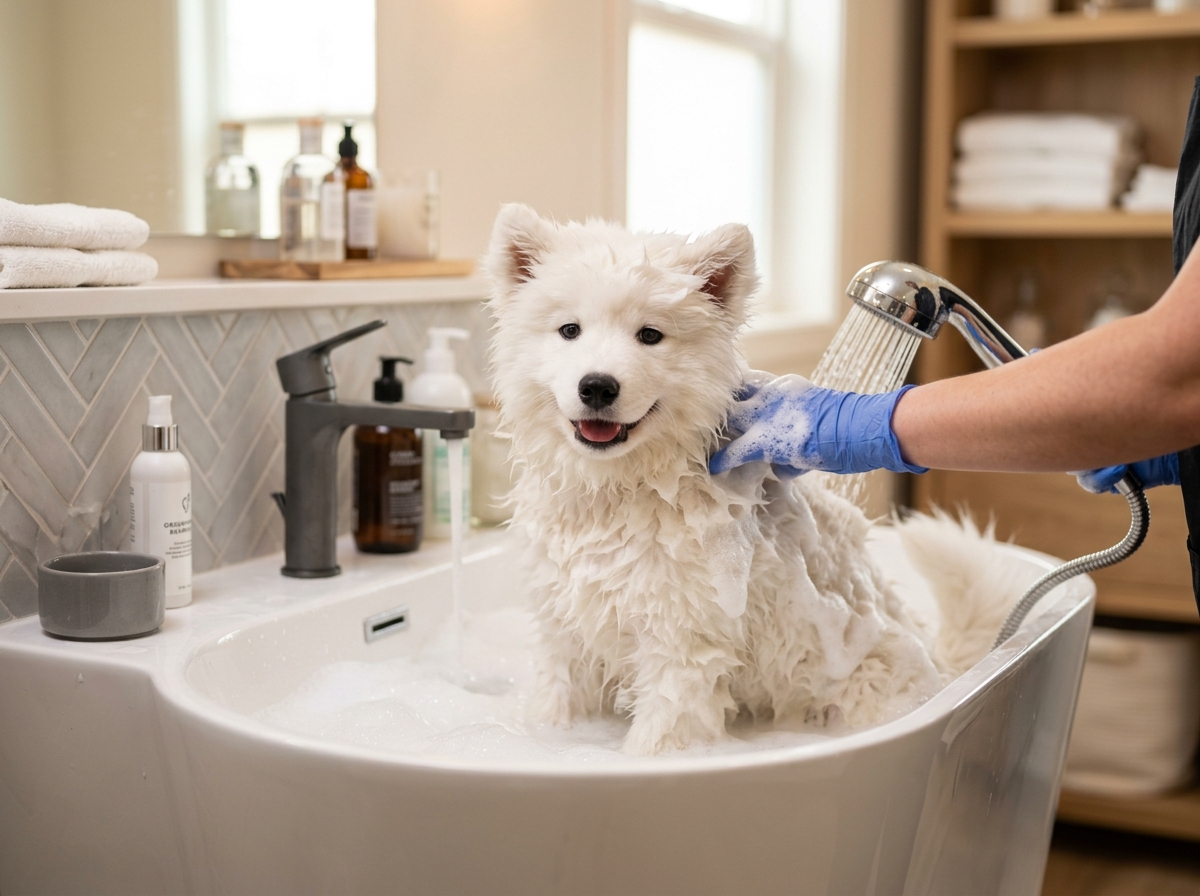
There is no single bathing schedule that fits every dog. A short-haired indoor dog that stays clean may need baths only occasionally, while an active dog that swims, rolls in dirt, or has a medicated skin-care plan may need more frequent bathing.
Start with coat and lifestyle
Short, smooth coats are often easier to keep clean between baths with brushing and a damp cloth. Long, dense, or double coats may trap dirt and require more grooming. Dogs that spend a lot of time outdoors may need baths more often than mostly indoor pets.
A practical starting range
For many healthy dogs, bathing every four to eight weeks is a reasonable starting point, but some dogs need less frequent baths and others need more. The goal is clean skin and coat without causing dryness or irritation.
Signs your dog may need a bath
Noticeable odor, visible dirt, greasy coat, environmental allergens, or something unpleasant on the fur are practical reasons to bathe. If odor returns quickly after bathing, a skin or ear problem may be present.
When frequent bathing may be appropriate
Veterinarians sometimes recommend medicated shampoos for allergies, infections, or other skin conditions. In those cases, follow the specific schedule and contact time given for the product.
Choose the right shampoo
Use a shampoo made for dogs. Human shampoos can be too harsh for canine skin. For sensitive dogs, fragrance-free or veterinarian-recommended products may be more comfortable.
Bathing technique
Brush tangles before the bath, use lukewarm water, wet the coat thoroughly, work shampoo gently through the fur, and rinse very well. Shampoo residue can cause itching. Keep water and cleanser out of the eyes and ears.
Drying matters
Towel dry well, especially in skin folds and between toes. If you use a dryer, keep the temperature comfortable and introduce the noise gradually. Dense coats may remain damp underneath longer than they appear.
When to call a veterinarian
Seek veterinary advice if your dog has persistent itching, hair loss, scabs, a strong yeasty odor, red skin, recurrent ear problems, or discomfort during grooming.
Frequently asked questions
Can I bathe my dog every week?
Some dogs tolerate weekly bathing with an appropriate product, especially when a veterinarian recommends it. Others become dry or itchy with frequent baths.
Do puppies need a different routine?
Puppies can be bathed when needed using gentle dog-safe products, but keep them warm and make the experience calm and positive.
Can brushing replace bathing?
Brushing removes loose hair and debris and can extend time between baths, but it does not fully replace washing when the coat is dirty or oily.
Bottom line: Bathe according to your dog coat, activity, and skin condition rather than following a rigid calendar.
There is no universal bathing schedule
Some healthy dogs may need a bath only every several weeks or when dirty, while others need more frequent bathing because of coat type, lifestyle, odor, skin treatment, or allergies. The right schedule balances cleanliness with skin comfort rather than following one calendar rule for every dog.
Factors that change bath frequency
Coat type
Short, smooth coats often need less intensive bathing than coats that trap debris or oil. Double-coated dogs benefit from thorough rinsing and drying, while curly or continuously growing coats usually require a larger grooming routine that includes brushing and coat maintenance between baths.
Activity and environment
A dog that swims, rolls in mud, visits daycare, hikes, or lives in a humid environment may need more frequent cleaning than a mostly indoor dog. Rinse off saltwater, mud, or irritating debris instead of leaving it on the skin.
Skin health
Dogs with allergies, infections, or other skin conditions may be prescribed a medicated shampoo and a specific bathing schedule. Follow the plan given by the veterinarian rather than substituting fragranced cosmetic shampoo.
How to choose a shampoo
Use a product labeled for dogs. Human shampoos and soaps can be too harsh or otherwise unsuitable for canine skin. If your dog has sensitive skin, choose a mild, fragrance-light product and stop using it if redness, itching, or flaking worsens.
A better bath step by step
- Brush out loose hair and tangles before wetting the coat.
- Use lukewarm water and wet the coat thoroughly.
- Apply dog shampoo according to the label and avoid the eyes and inner ears.
- Massage gently down to the skin without aggressive scrubbing.
- Rinse longer than you think you need; leftover shampoo can irritate skin.
- Towel dry and use pet-safe drying methods appropriate for the coat.
- Brush again once the coat is dry if the coat type benefits from it.
How to tell you may be bathing too often
Dryness, flaking, increased itching, a dull coat, or irritation after baths can be clues that the product or schedule is not working well. These signs can also have medical causes, so persistent skin changes should not automatically be blamed on bathing.
What about “dog smell”?
A mild natural odor is normal. A sudden strong, yeasty, sour, or foul odor can come from ears, skin folds, teeth, anal glands, infection, or other health issues. Repeated bathing may temporarily cover the smell without addressing the cause.
Bathing puppies and senior dogs
Keep young puppies warm and make early baths calm and brief. Older dogs may need non-slip footing, warmer rooms, shorter sessions, and careful handling if they have arthritis or weakness. Comfort and safety matter more than completing a perfect grooming session.
A practical schedule to start with
For a healthy dog without a medical bathing plan, bathe when the coat is dirty, greasy, or noticeably odorous, then adjust based on how the skin and coat respond. Regular brushing, paw cleaning, bedding care, dental hygiene, and ear monitoring often reduce the need for unnecessary full baths.
Between-bath maintenance
Full baths are only one part of coat care. Regular brushing removes loose hair and debris, paw rinses remove mud or salt, and washing bedding can reduce odor. Spot-cleaning a dirty area may be enough when the rest of the coat is clean.
Drying is part of the bath
Leaving a dense coat damp for a long period can be uncomfortable and may contribute to skin problems. Towel thoroughly and use a pet-appropriate dryer on a safe setting if needed. Avoid very hot air and monitor the dog’s stress level.
Ear care during bath time
Try to keep large amounts of water out of the ear canals. Do not insert cotton swabs deep into the ears. If the ears are red, painful, foul-smelling, or producing discharge, have them checked rather than simply cleaning more aggressively.
Frequently asked questions
Can I bathe my dog every week?
Some dogs can tolerate weekly bathing with an appropriate product, and some medical plans intentionally use frequent baths. Other dogs become dry or irritated. The dog’s skin response and any veterinary plan should guide the schedule.
Why does my dog still smell after a bath?
Persistent odor may come from skin disease, ears, teeth, anal glands, or damp undercoat. If the smell returns quickly, look for the underlying source.
Should I shave a double-coated dog before bathing?
Routine shaving is not necessary for most double-coated breeds and can alter coat function. Use brushing, de-shedding, and appropriate grooming instead unless there is a specific medical or grooming reason.