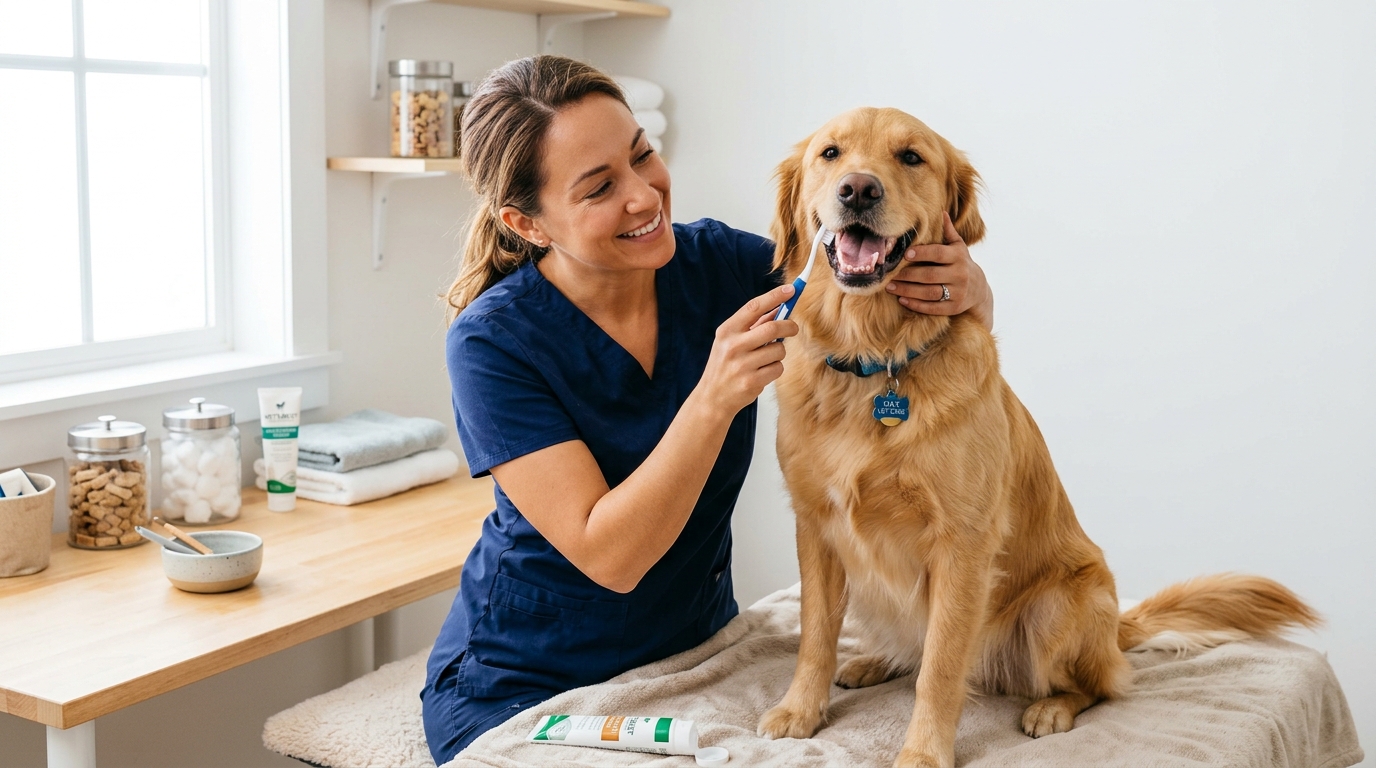
Build a gentle dog tooth-brushing routine, check dental-product claims and recognize when bad breath or mouth discomfort needs a veterinary examination.
Home care starts with a comfortable mouth
Dental care is not simply a cosmetic task. If touching the mouth appears painful, stop and arrange veterinary advice. Bad breath, bleeding, swelling, difficulty eating or a broken tooth should not be covered up with scented treats. Home brushing is not a substitute for an oral examination.
Introduce brushing in small steps
Ask your veterinary team which brush and pet toothpaste are appropriate. Begin with calm voluntary handling near the mouth, then introduce the tool gradually. Use short sessions and stop before the dog becomes distressed. Follow the veterinary demonstration instead of forcing the mouth open for a long session.
Set up the tools before inviting your dog over. Practise in a quiet place with good lighting and no competing pets. A repeatable comfortable session is more useful than trying to complete every tooth while the dog struggles. Ask for a demonstration if you cannot position the brush safely.
Use an honest progress checklist
| Stage | What to observe | Next step |
|---|---|---|
| Handling | Dog stays comfortable with brief contact | Repeat before adding the brush. |
| Tool introduction | Dog can investigate without pressure | Follow the demonstrated technique. |
| Short brushing | Dog remains calm for a brief session | Build gradually, not by restraint. |
| Ongoing care | No apparent pain or new mouth changes | Maintain the advised routine and checkups. |
What the VOHC seal means
The Veterinary Oral Health Council recognizes products that meet its standards for slowing plaque or tartar buildup. Look up the exact product on the current accepted list and check whether the claim is for plaque, tartar or both. A seal is not a promise that the product treats existing dental disease.
Choose products suitable for the animal’s size and instructions. Dental treats also contribute calories. Ask your veterinarian about chewing safety if your dog gulps treats, has damaged teeth or has dietary restrictions. Product names and acceptance can change, so do not rely on an old brand list.
Avoid these shortcuts
- Do not scrape hardened deposits with household tools.
- Do not use human toothpaste for a dog.
- Do not force brushing when the dog shows pain or attempts to escape.
- Do not treat a chew, water additive or fresh-smelling breath as proof that the mouth is healthy.
- Do not give antibiotics or pain medicines without veterinary instructions.
Questions to bring to a dental visit
Ask what the examination found, whether professional treatment is needed, what home care is safe now and when reassessment is due. If a product is recommended, ask how it fits alongside brushing and the dog’s diet. Note any change in eating, drooling or mouth handling between visits.
Related guides
- How Many Training Treats Per Day? Build a Calorie Budget
- The Complete Daily Pet Care Routine Blueprint: Essential Hygiene, Coat Maintenance & Health Checks for Dogs & Cats
Sources and further reading
Written and edited by Emon Ahmed. This is general educational information, not a diagnosis, prescription or veterinary review. For an individual pet’s medical concerns, contact a qualified veterinarian.