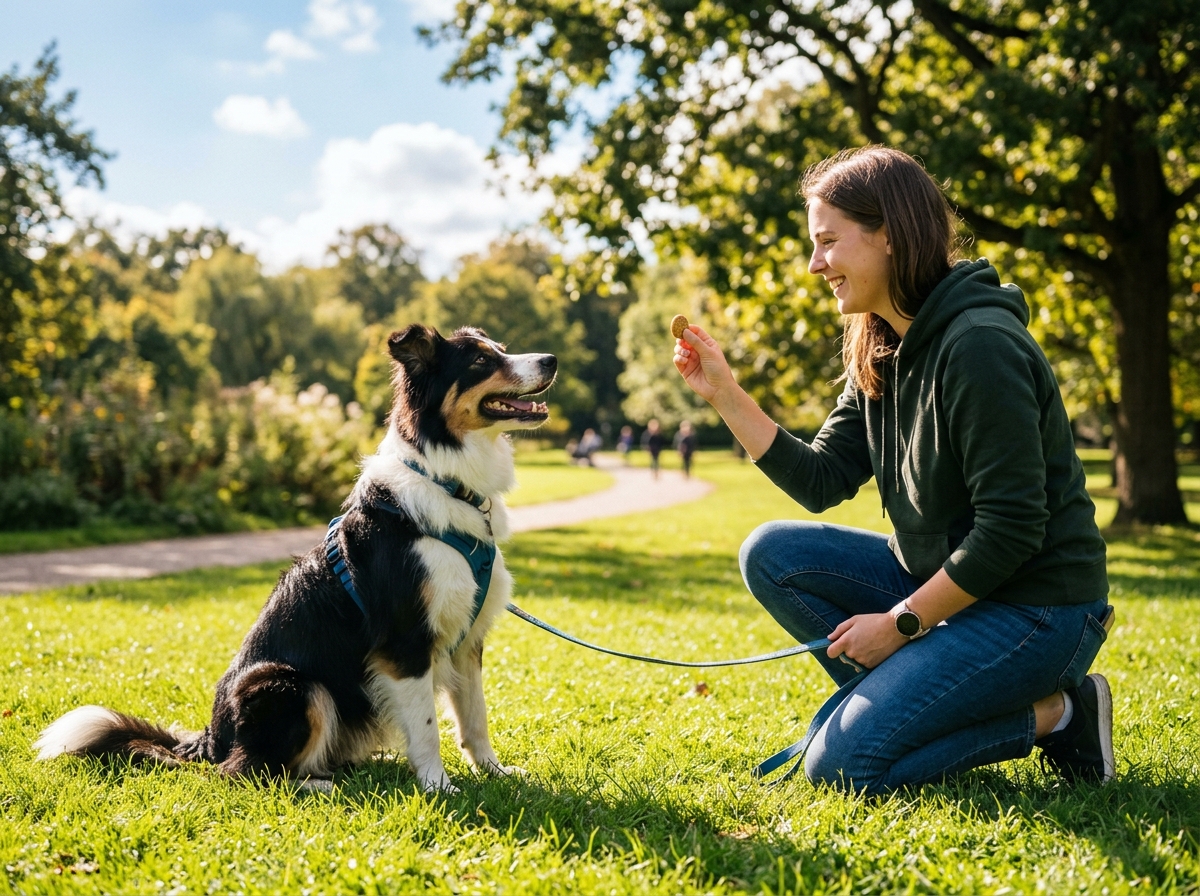
A dog that panics when left alone needs support, not punishment. Barking, destructive behavior, or house-soiling can have different causes, so assess the whole situation. This guide introduces gradual practice and explains when professional help is needed.
In my fifteen years as a certified canine behaviorist, I have worked with hundreds of families on the brink of surrendering their beloved dogs out of sheer desperation. Neighbors are complaining of constant barking, landlord eviction notices are pending, and owners feel like hostages in their own homes. But here is the most crucial truth you will ever hear: your dog is not punishing you, getting revenge, or acting out of dominant spite. Your dog is having a severe, involuntary panic attack.
Separation anxiety is a clinical phobia—the canine equivalent of an agoraphobic human trapped in an elevator that has lost power. You cannot punish a phobia away; yelling at a dog for destructive behavior discovered hours later merely proves to them that your arrival home is as terrifying and unpredictable as your departure.
1. The Neurobiology of Canine Panic: Why Spite Is a Myth
Dogs are highly social pack obligates whose ancestral survival for thousands of years depended entirely on proximity to their family group. In the wild, an isolated wolf puppy separated from the pack is in immediate danger of predation, starvation, and death. Isolation triggers an ancient primal alarm circuit inside the amygdala.
When a dog with clinical separation anxiety perceives isolation, their sympathetic nervous system floods their bloodstream with adrenaline and cortisol. Heart rate doubles, respiration becomes rapid and shallow, pupils dilate, and gastrointestinal sphincters relax (causing sudden indoor diarrhea or urination). The destruction they inflict on window blinds and doors is not malicious vandalism; it is a desperate, claustrophobic attempt to escape the barrier and find their human pack.
2. Boredom vs. Separation Anxiety: The 4 Diagnostic Differentiators
Before beginning a treatment protocol, you must determine whether your dog is genuinely suffering from clinical panic or simply under-stimulated and bored:
| Behavioral Marker | Under-Stimulated / Bored Dog | Clinical Separation Anxiety |
|---|---|---|
| Reaction to High-Value Food | Eagerly devours frozen peanut butter KONGs, bully sticks, and chews. | Refuses fresh steak, bacon, or cheese the instant the door shuts. |
| Target of Destruction | Random fun items: couch cushions, trash cans, TV remotes, shoes. | Exclusive exit barriers: doorknobs, doorframes, window blinds, locks. |
| Timing of Vocalization | Intermittent barks when a delivery truck passes or a dog walks by outside. | Begins within 60 to 180 seconds of departure; non-stop rhythmic howling. |
| Physical Autonomic Signs | Normal respiration; sleeps comfortably on couch between play bouts. | Profuse hypersalivation (puddles of drool), shaking, panting, sweaty paw pads. |
3. Step 1: Neutralizing Pre-Departure Cues (Keys, Shoes & Jackets)
To cure separation anxiety, you must dismantle the predictive association of Pre-Departure Cues (PDCs):
- Pick up your car keys, jingle them loudly, walk to the sofa, sit down, and scroll on your phone for 5 minutes. Then put keys back.
- Put on your heavy winter coat and work boots, walk into the kitchen, pour a glass of water, drink it, take off your coat, and sit down.
- Pick up your work briefcase or gym bag, walk into the bedroom, set it down, and brush your teeth.
- Open the garage door using the electric wall button, then walk back to your desk and continue typing.
Perform these cue deconditioning drills 8 to 12 times every single day without actually leaving the home. Within 10 to 14 days, the sound of jingling keys loses its terrifying predictive power, and your dog will stop leaping into panic mode before you even step outside.
4. Step 2: The Sub-Threshold Departure Protocol (5 Seconds to 4 Hours)
The golden rule of systematic desensitization is: the dog must never cross their panic threshold. If your dog starts panicking at 3 minutes alone, leaving them alone for 10 minutes resets their emotional progress back to zero.
You must build duration in micro-increments where the dog remains completely calm and relaxed:
Phase 1: The Door Touch & Step (Seconds)
Touch the doorknob, turn it, open the door 2 inches, close it, and step back. Repeat until your dog does not rise from their bed. Progress to stepping outside for 5 seconds, 10 seconds, 20 seconds, and 45 seconds.
Phase 2: The Sidewalk Stroll (Minutes)
Once your dog can comfortably tolerate 90 seconds, progress to 2 minutes, 3 minutes, 5 minutes, 8 minutes, and 12 minutes. Always vary the duration: do a 5-minute departure, followed by a 1-minute departure, followed by an 8-minute departure. This teaches the dog that departures are unpredictable in length and always result in a calm return.
Phase 3: The True Absence (Hours)
Once a dog crosses the 30-minute threshold without panic, their parasympathetic relaxation system takes over. Progress from 30 minutes to 45 minutes, 1 hour, 2 hours, and eventually full 4-to-5-hour independent tolerance.
5. Setting Up Remote Video Monitoring to Catch Micro-Stress
You cannot execute this protocol blind. Install an inexpensive home camera (like Wyze, Furbo, or an old tablet using the AlfredCamera app) aimed at the exit door. Monitor the live video stream from your smartphone while standing in your driveway:
- Green Zone (Calm): Dog lies down, sighs, rests head on paws, grooms lightly, or sleeps.
- Yellow Zone (Early Threshold): Dog stands up, yawns, shakes off, stares intently at the door, paces once or twice. (Return inside now before panic peaks!)
- Red Zone (Panic Threshold): Whining, scratching door, frantic pacing, drooling, panting. (You pushed duration too far; reduce the next session by 50%.)
6. Veterinary Behavioral Pharmacology: When Medications Are Compassionate
Many dog owners resist medication, viewing it as a personal failure or worrying it will turn their dog into a "zombie." In reality, modern behavioral medications do not sedate your dog; they normalize serotonin and norepinephrine neurotransmitters in a chemically overwhelmed brain.
If a dog is at a 10/10 panic level the second you step outside, their brain is neurologically incapable of learning. Medications like Fluoxetine (Prozac) or Clomipramine (Clomicalm) lower emotional arousal to a 4/10, allowing desensitization training to take root. Fast-acting situational aids (like Trazodone or Gabapentin) can provide immediate relief during unavoidable absences while long-term training progresses.
7. Mental Enrichment & Occupational Foraging Tools
Chewing and licking stimulate the vagus nerve, releasing natural endorphins that slow heart rate. While high-value treats will not cure panic alone, they provide invaluable support when paired with desensitization:
- Frozen Layered KONGs: Layer kibble, canned pumpkin, plain Greek yogurt, and freeze-dried beef liver; freeze overnight. Provides 30 minutes of deep licking stimulation.
- Textured Lick Mats: Spread with mashed sardines or wet pate food and stuck to vertical tiles or kitchen floors.
- Snuffle Mats: Dense fleece strips where your dog must use their olfactory bulb to hunt for hidden single-ingredient treats before settling down.
8. Final Words from the Behaviorist
Overcoming separation anxiety is not a linear sprint; it is an emotional marathon. There will be weeks where you feel like you have conquered the mountain, followed by regression after a thunderstorm or schedule change. Be patient with your dog and compassionate with yourself. By listening to their threshold, celebrating micro-victories, and consistently proving that you always return, you will give your companion the ultimate gift: peaceful, confident independence.
Read the context, not a single signal
Behavior does not give a direct measurement of a pet’s emotions. Look at the situation and several signals together, allow the animal to move away, and avoid forcing interaction. Sudden changes or distress need appropriate veterinary or qualified behavior advice.