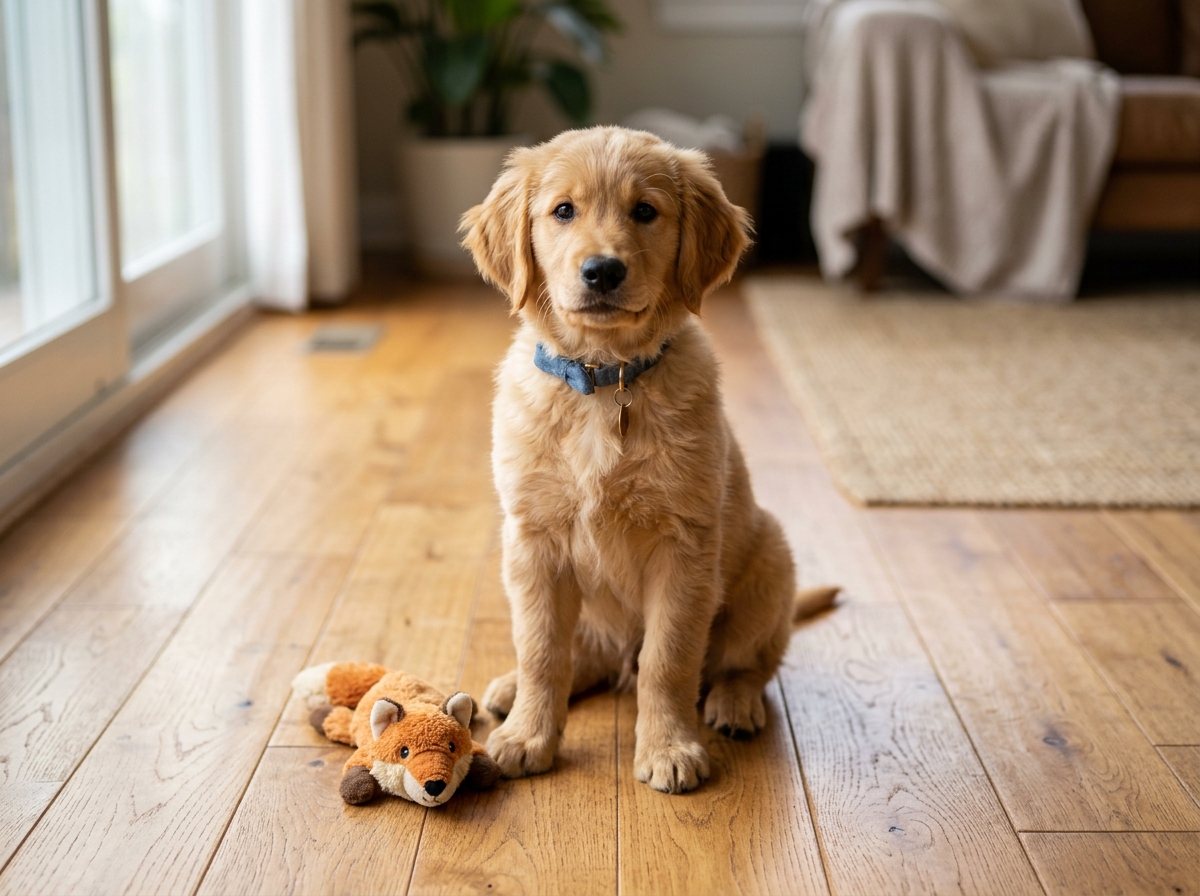
Use a first-week puppy toilet plan with supervised breaks, timely rewards and an accident log. Progress varies with age, health and the household routine.
Seven days is a starting plan, not a deadline
House training involves both learning and physical development. Some puppies need frequent overnight help and many need more than a week to become reliable. This plan organizes the first week; it does not promise a fully trained puppy by day seven. If toilet habits change suddenly or seem painful, ask a veterinarian rather than simply increasing training.
Prepare one consistent toilet routine
Choose an appropriate toilet location and use a familiar route. Keep a lead, rewards and suitable cleaning supplies ready. In shared homes, agree who responds after waking, meals and play. Ask your veterinary team about safe outside access for your puppy’s vaccination status and local disease risks.
Days one and two: observe before guessing
Supervise closely while the puppy is awake. Offer toilet opportunities after waking, eating, drinking and active play, as well as when you notice sniffing or circling. Go with the puppy rather than sending them outside alone. Reward promptly after they finish in the intended area.
| Time | What happened beforehand | Result | Next adjustment |
|---|---|---|---|
| 07:10 | Woke from sleep | Toileted outside | Keep the lead by the exit |
| 09:00 | Finished active play | Accident before the break | Offer a break sooner after play |
| 12:30 | After the meal | No result yet | Supervise and offer another opportunity |
Days three and four: make supervision easier
Use the log to find where your routine misses the puppy’s needs. A safe pen or puppy-proofed area may help when direct supervision is difficult. A crate is not a way to force a puppy to hold urine beyond their ability. If you will be away, arrange a suitable toilet opportunity and a carer or safe setup.
An accident is information about the plan. Do not rub the puppy’s nose in it or punish them after the event. Clean with a suitable enzymatic product following its instructions. Calmly redirect if you catch an accident beginning, without frightening the puppy.
Days five to seven: repeat what works
Keep successes easy to repeat. Extend access to the home gradually while you continue supervising. Avoid suddenly increasing the time between breaks because there was one dry day. Have every family member use the same reward timing and record missed breaks.
Troubleshooting without blaming the puppy
- If accidents follow play, plan the toilet opportunity before the activity ends.
- If accidents happen while you prepare food, give the puppy a break before that busy period.
- If your puppy toilets indoors immediately after an outing, check whether they were distracted outside and supervise the return.
- If the household is inconsistent, give each break a named person. A reminder is more useful than assuming someone already did it.
When to ask for veterinary advice
Straining, apparent pain, blood, unusual thirst or a sudden change in toileting needs veterinary advice. A dog repeatedly trying to urinate without producing urine needs urgent help. Do not restrict drinking water as a substitute for a workable training schedule.
Related guides
- First Week With a New Pet: Complete Home Setup Checklist
- Teach Your Dog to Go to a Mat and Settle Without Force
Sources and further reading
Written and edited by Emon Ahmed. This is general educational information, not a diagnosis, prescription or veterinary review. For an individual pet’s medical concerns, contact a qualified veterinarian.