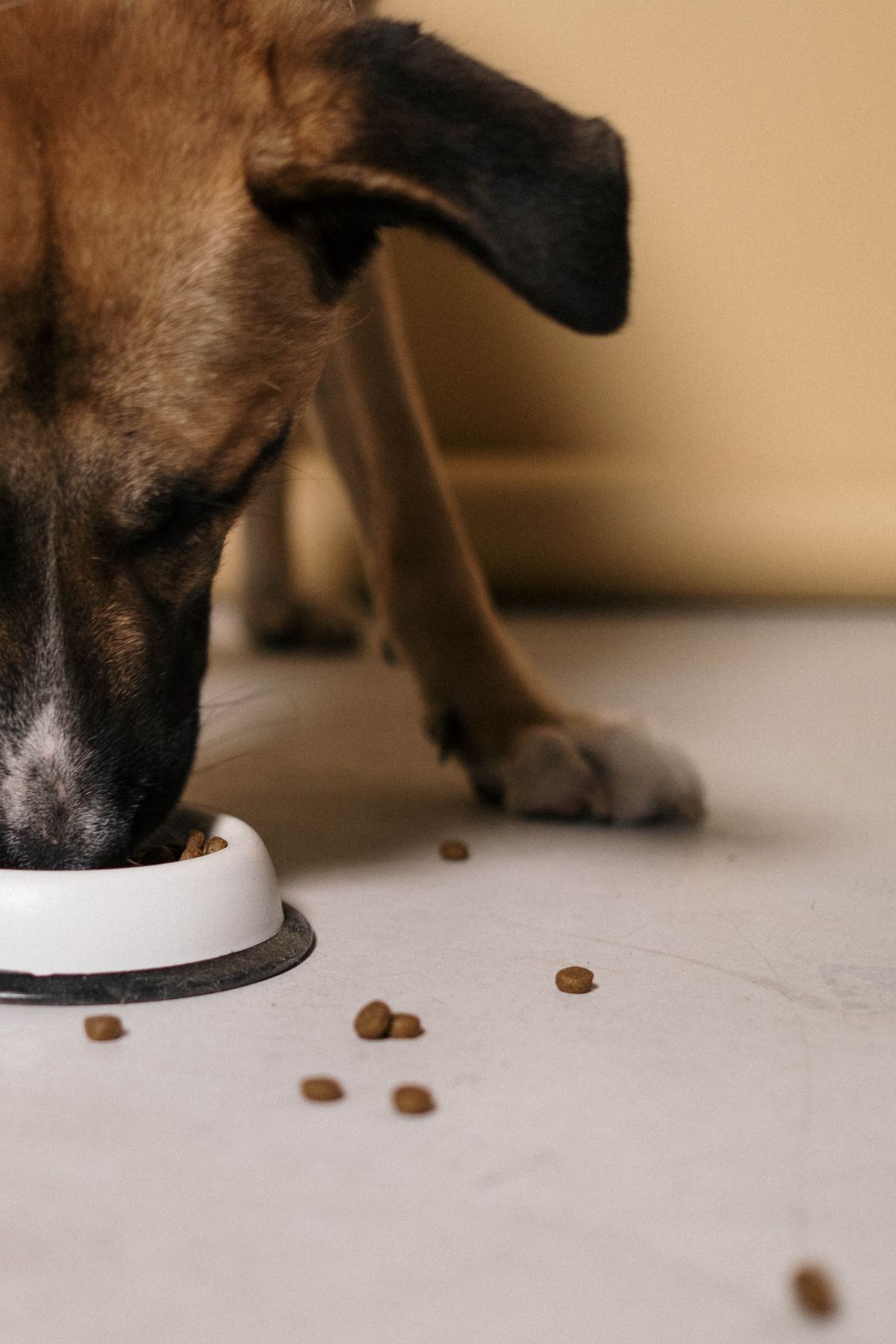
Your dog takes a mouthful of kibble, walks to the rug, and eats it there. Carrying food away may be an individual habit or a response to the feeding environment. It does not automatically mean the food is wrong. Watch whether your dog carries food deliberately and eats comfortably, or drops it because chewing has become difficult.
Watch one complete meal
Stay at a distance and note the sequence. Does the dog pick up food, walk to a favorite spot, and eat without hesitation? Or do pieces fall while the dog tries to chew? Those are different observations and can call for different next steps.
Check whether the behavior occurs with every meal, only when another pet is nearby, or only with one dish. A video showing the bowl and destination is more useful than a close-up of scattered kibble alone.
Review the feeding space
Vetstreet discusses possible explanations including separation from other animals and dish-related noise. These are possibilities to test, not a diagnosis of every food-carrying dog. A quiet space may simply be a more comfortable place to finish a meal.
If several pets eat together, try feeding them in separate calm locations. Make sure no pet can approach another’s dish during the test. Watch appetite and comfort, not just whether the floor stays cleaner.
Check bowl movement and sound
A dish that slides, clangs, or is difficult to reach can make feeding awkward. Notice whether an identification tag strikes the rim or whether the bowl shifts when the dog noses it. You can compare a stable pet-safe dish without changing the food at the same time.
Do not leave a dog without identification as a permanent bowl-noise solution. Choose an appropriate quieter feeding setup. Wash bowls regularly and replace damaged containers with materials suitable for food contact.
Use a simple one-change experiment
Begin with the feeding location. Keep the meal and dish the same, provide a quiet area, and observe a few meals. If the pattern continues comfortably, test a different stable dish next. Write down what actually changes.
Avoid replacing the food, adding toppers, moving the dish, and changing meal times all at once. That may create a new routine while leaving you unsure which adjustment mattered. Dietary changes should have a reason beyond a tidy-floor goal.
Manage the mess without creating conflict
Use a washable area or mat for meals and clear dropped food afterward. Keep portions measured. Food carried to rugs should not remain hidden where another pet or child can find it later.
Do not repeatedly take food out of the dog’s mouth or remove the bowl to “teach respect.” That can make feeding tense. If the dog guards food, prevent close approaches and seek qualified behavior guidance.
Know when to call a veterinarian
New food dropping, chewing on one side, drooling, reduced appetite, or obvious discomfort deserves veterinary advice. A dog that wants food but struggles to eat may have a problem a bowl change cannot resolve.
Record when the change started and mention weight loss, vomiting, stool changes, or recent dental concerns. If the dog is choking or having trouble breathing, seek emergency help rather than continuing the meal experiment.
Frequently asked questions
Does food carrying mean my dog dislikes kibble?
Not necessarily. A dog may eat the carried food readily. Appetite and comfortable chewing are more useful indicators.
Can I feed on a mat instead of a bowl?
Some suitable feeding setups use mats, but hygiene, measured portions, the food type, and your dog’s needs still matter. Choose a pet-safe washable surface.
Is food carrying the same as resource guarding?
No. Moving food alone does not establish guarding. Stiffening, growling, or snapping around food is a separate concern.
Related Petzora guides
Sources and further reading
Written by Emon Ahmed for general education. Behavior explanations are possibilities, not a diagnosis or a claim of veterinary review. Consult a veterinarian about pain, illness, or sudden unexplained changes.