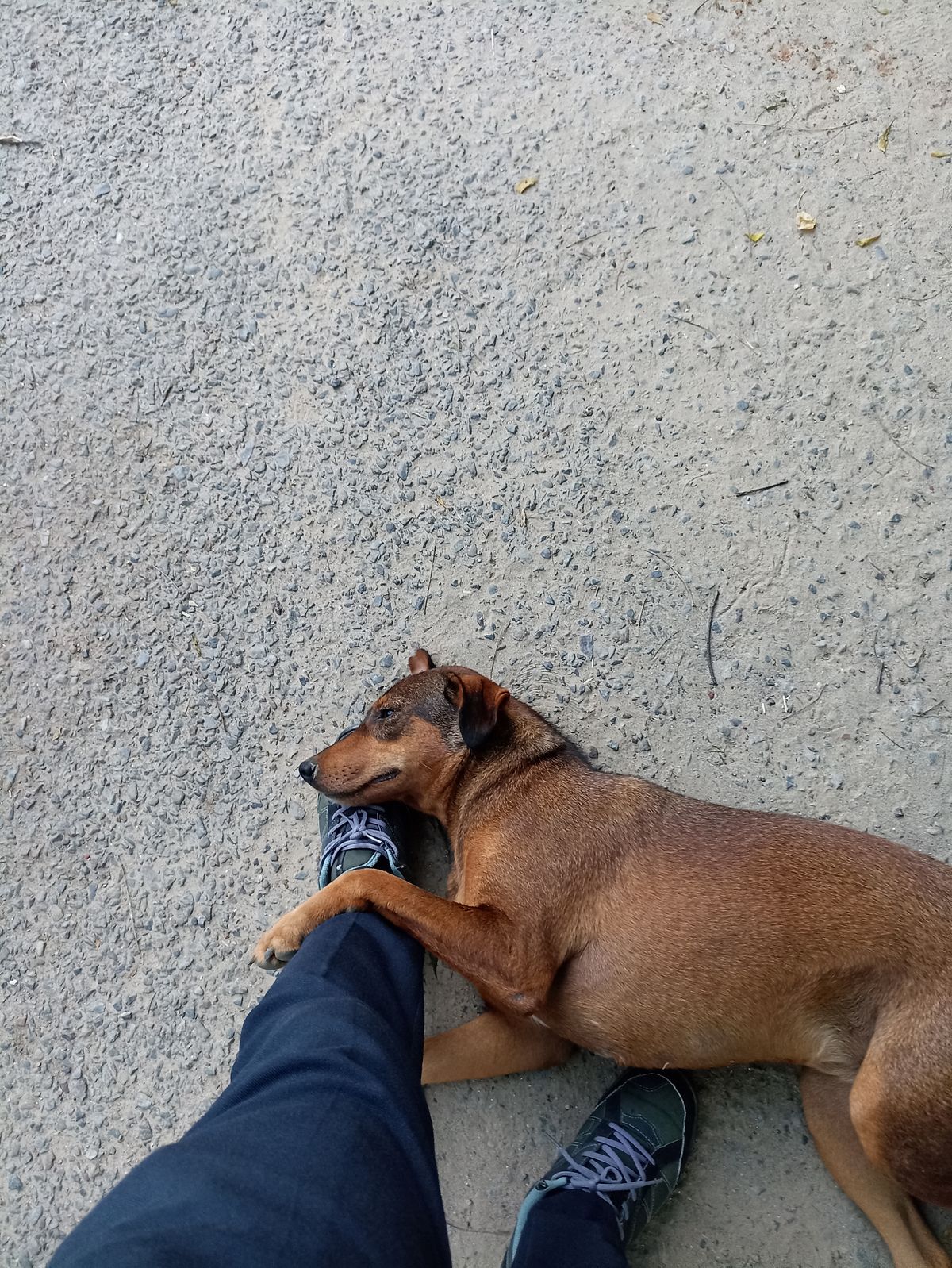
You sit down and your dog immediately parks on your shoes. Contact, comfort, and a familiar habit are possible reasons dogs sit on their owner’s feet. This position does not automatically mean dominance, possessiveness, or separation anxiety. Whether your dog looks relaxed and can move away comfortably is more informative than the location alone.
Start with the simple explanation
The AKC describes sitting on feet in the context of ordinary social contact and individual preferences. A dog may enjoy being close, feel secure beside you, or find the spot warm. You do not need to invent a complicated motive for a comfortable dog choosing proximity.
Notice whether the dog settles there with several family members or only in particular situations. A predictable habit during television time may have different context from pressing against you during thunderstorms.
Do not diagnose anxiety from one position
A dog that rests on your feet and then wanders off to drink or sleep elsewhere is not showing the same pattern as a dog that becomes distressed whenever you move away. Look for behavior across situations rather than attaching a diagnosis to contact.
If you suspect separation-related distress, note what happens during actual absences as well as at home. Destruction, vocalization, toileting, and inability to settle can have different causes. A veterinarian or qualified behavior professional can help interpret the full picture.
When closeness becomes inconvenient
It is reasonable to need room to stand or work. Place a comfortable mat nearby so your dog can remain close without blocking your feet. Choose a spot that is not in a doorway or under a chair that can roll.
Invite the dog to the mat and reward a brief comfortable pause. Build duration gradually. A nearby resting place works better when it remains rewarding than when it is introduced only after you become annoyed.
Teach a safe moving routine
Before standing, use a consistent quiet cue and encourage your dog to move aside. Take your time, especially with a small dog that is easy to overlook. Avoid stepping over a sleeping dog whenever a simple repositioning is possible.
Practise when you are unhurried. Reward moving to the mat, stand, then sit again. The routine can become predictable without pushing the dog off your feet or creating excitement each time you move.
Watch for tension around approaching people
If your dog stiffens, growls, or snaps when someone comes near you, treat that as a separate concern rather than proof of devotion. Give space, prevent risky situations, and seek qualified help. Do not encourage guarding because it feels flattering.
Avoid punishing a growl or testing the dog with repeated approaches. Arrange the room so everyone can move safely. The goal is comfortable contact, not a situation where another person must negotiate with the dog to reach you.
When a new clingy habit warrants advice
Contact your veterinarian if sudden increased contact comes with pain, appetite changes, unusual fear, confusion, or difficulty resting. Changes in the dog’s body or household can both affect where they want to sit.
Bring a practical log: situations, posture, reaction when you move, and whether the dog can choose other resting places. That helps separate a harmless preference from a broader problem.
Frequently asked questions
Is sitting on my feet a dominance behavior?
The position alone does not establish dominance. Consider comfort, habit, and context before assigning a motive.
Can I allow it sometimes but not while working?
Yes. Use a clear predictable routine and make the alternative resting spot worthwhile.
Should I get another dog so mine stops following me?
Another dog is not a reliable treatment for anxiety or a contact habit. Address your dog’s individual needs first.
Related Petzora guides
Sources and further reading
Written by Emon Ahmed for general education. Behavior explanations are possibilities, not a diagnosis or a claim of veterinary review. Consult a veterinarian about pain, illness, or sudden unexplained changes.