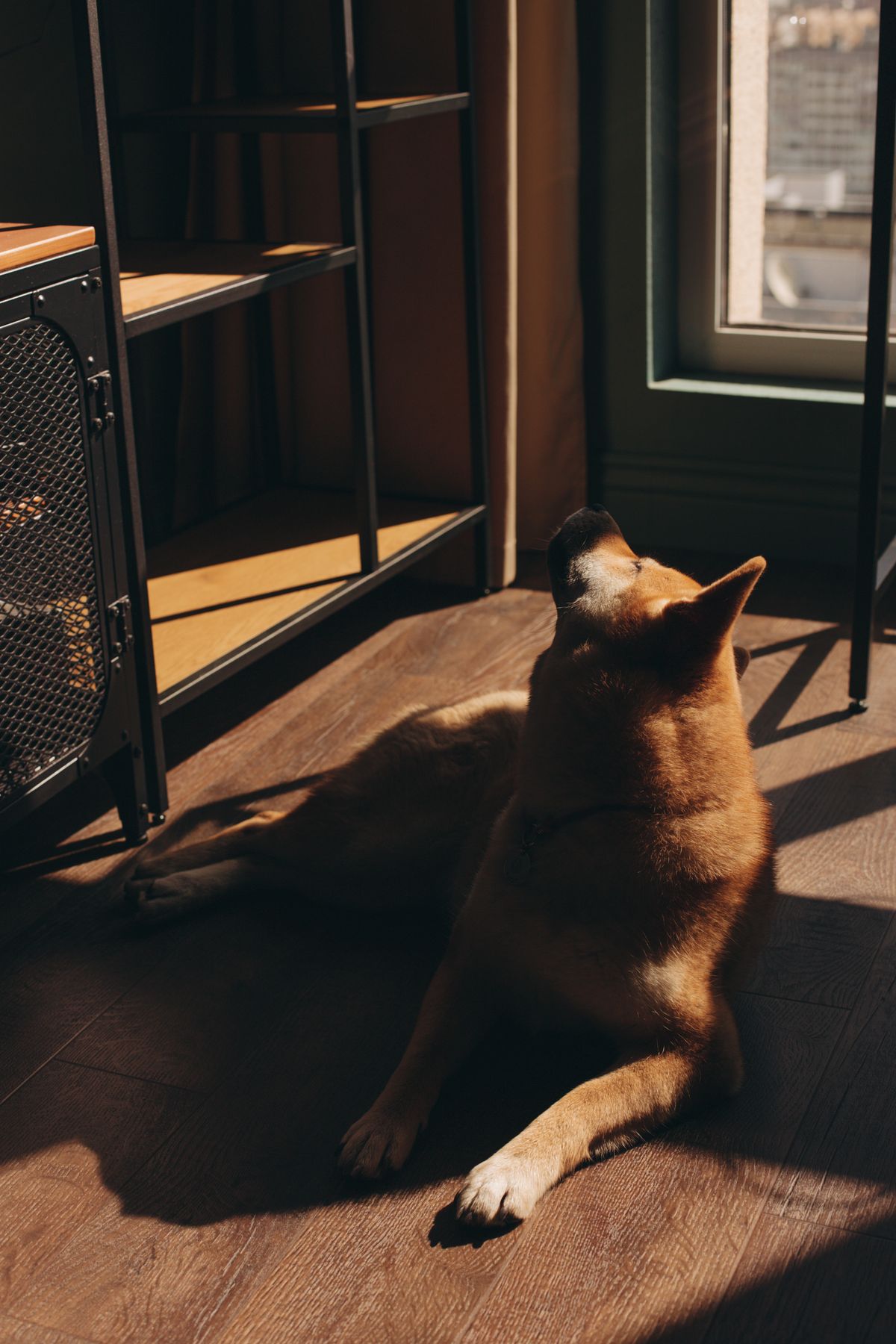
Your dog circles the bed, lies down, and lets out a long breath. An occasional sigh while settling can accompany relaxation, but the sound alone cannot tell you your dog’s emotion or health. Check the rest of the body and what the breathing looks like after that one exhale.
What an ordinary settling sigh can look like
The AKC explains that context and body language are useful when interpreting sighs. A loose body, soft expression, and comfortable resting posture can fit with contentment. A single exhale followed by quiet ordinary breathing is different from repeated effort to breathe.
Do not assume the sound means disappointment because it resembles a human sigh. Your dog may simply be settling after movement. Look at the circumstances before deciding what the sound “says.”
Compare with your dog’s usual pattern
Some dogs have an obvious routine: a circle, a flop, and a sigh. If it has been stable and the dog remains comfortable, you can observe it without turning every breath into a concern.
A new pattern deserves a closer look. Is the dog changing position repeatedly, reluctant to lie down, or waking and standing again? Does the sound come with a groan, cough, or unusual effort? Those details are worth recording.
Separate a sigh from breathing difficulty
A sigh is occasional. Difficulty breathing can affect repeated breaths and may involve noticeable effort, unusual noise, an extended neck, or an inability to rest comfortably. Do not rely on an online sound comparison to diagnose the difference.
Seek urgent veterinary care for breathing distress, collapse, or blue or gray gums. If you are uncertain and the dog seems uncomfortable, call your veterinarian promptly. A short video can help, but making a recording should not delay urgent care.
Check the resting setup
Watch whether the dog has room to stretch and can enter or leave the bed easily. A slippery approach, awkward step, or bed that is difficult to climb onto may make settling less comfortable. Observe before assuming the mattress itself needs replacing.
Try a quiet accessible resting location if the current one is busy. Keep temperature comfortable and allow the dog to choose another spot. A relaxed sigh on a familiar bed does not require supplements or a special product.
What to include in a useful note
Write down when the sound occurs, whether it is a single breath or repeated, and what the dog does afterward. Include recent changes in activity, coughing, appetite, mobility, and medication. Avoid guessing a diagnosis in the note.
If the dog seems stiff or reacts when getting down onto the bed, discuss that with a veterinarian. Do not give human pain medicines or interpret an uncomfortable settling sequence as a personality trait.
A calm response to a normal habit
For a comfortable dog, you usually do not need to interrupt. Let them rest and enjoy the familiar routine. Repeatedly waking them to check the sigh can itself disturb the settling process.
If the sound follows you ending a game, it might occur during that transition, but it still does not prove resentment or sadness. Look at the whole interaction and offer a predictable balance of activity and rest.
Frequently asked questions
Does a sigh mean my dog is sad?
Not necessarily. Human interpretations are easy to attach to the sound, but the dog’s posture and situation matter more.
Is sighing the same as wheezing?
No. A sigh is an exhale; wheezing or repeated noisy effort may involve an airway issue and needs veterinary assessment.
Should I buy a new bed?
Only if the current setup is unsuitable. Assess access, size, location, and comfort rather than replacing it because of one sigh.
Related Petzora guides
Sources and further reading
Written by Emon Ahmed for general education. Behavior explanations are possibilities, not a diagnosis or a claim of veterinary review. Consult a veterinarian about pain, illness, or sudden unexplained changes.