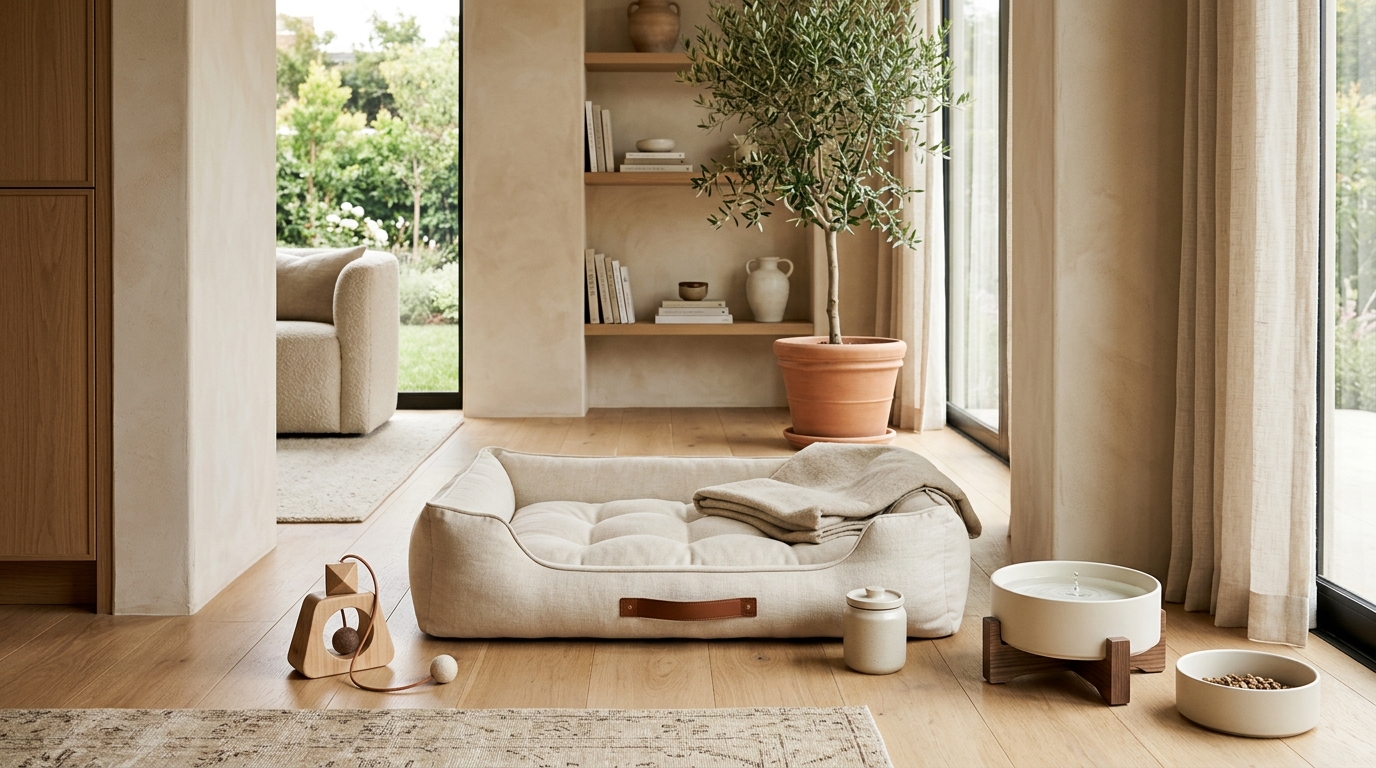
Compare dog beds by usable space, entry height, stability and cleaning. This buying checklist includes no laboratory testing or brand performance rankings.
What this guide does and does not evaluate
This is a feature-based buying guide. Petzora has not carried out foam-density tests, pressure mapping or a comparison trial of the brands discussed in older versions of this article. “Orthopedic” on a label does not establish how a particular bed will work for your dog. A bed may support comfort, but it cannot diagnose or treat the reason a dog struggles to rise.
Measure the resting space, not just the dog’s weight
Observe your dog’s normal sleeping position. A curled sleeper may still stretch out later. Measure the space their body occupies and compare it with the usable cushion area, not the outside dimensions including bolsters. Leave room to turn. Check whether an edge reduces access or forces the dog to climb.
For example, two beds with identical outside measurements can have different sleeping areas when one has thick raised sides. Write both dimensions on your comparison sheet. If the retailer only lists the outside size, ask before ordering.
Compare these features before paying
| Feature | Question to ask | Why it matters |
|---|---|---|
| Entry | Is there a low, unobstructed side? | A raised rim can be awkward for limited mobility. |
| Base | Will it slide on this floor? | A stable entry helps avoid a moving surface. |
| Cover | Can it be removed and washed? | A bed that is difficult to clean may be impractical. |
| Protection | Is an inner liner included? | Check whether spills can reach the filling. |
| Fit | What is the usable cushion area? | External width can overstate sleeping space. |
| Returns | Can an unsuitable opened bed be returned? | Comfort cannot be guaranteed from photographs. |
Support, heat and cleaning trade-offs
Very soft filling may feel pleasant to your hand but make standing harder for some dogs. Consider a supportive surface that does not require climbing. In a warm room, look at fabric, ventilation and location as well as the filling. Follow the manufacturer’s instructions for drying covers; putting a damp cover back on can trap moisture.
A spare washable cover can be more useful than decorative extras. Check zipper access, drying time and whether a cover is sold separately. Manufacturer warranties should be read directly, including exclusions and the steps needed to make a claim.
Introducing a new bed
Put it in a familiar quiet resting area and allow voluntary exploration. Do not repeatedly lift a painful dog onto it. Keep a suitable existing resting place while you assess the new one. Watch whether your dog can enter, turn, settle and stand comfortably. If they avoid it, check the surface, heat, smell and location before assuming they are stubborn.
When bedding is not the main problem
Reluctance to rise, limping or difficulty using stairs deserves veterinary assessment. Ask the veterinary team about suitable bedding and home adjustments for that dog. Avoid interpreting a preference for the floor as proof that the animal has no pain.
Related guides
- The Comprehensive Senior Dog Wellness Blueprint: Warning Signs, Joint Mobility & Cognitive Health
- Best Dog Harness Features: What to Look For Before You Buy
Sources and further reading
Written and edited by Emon Ahmed. This is general educational information, not a diagnosis, prescription or veterinary review. For an individual pet’s medical concerns, contact a qualified veterinarian.