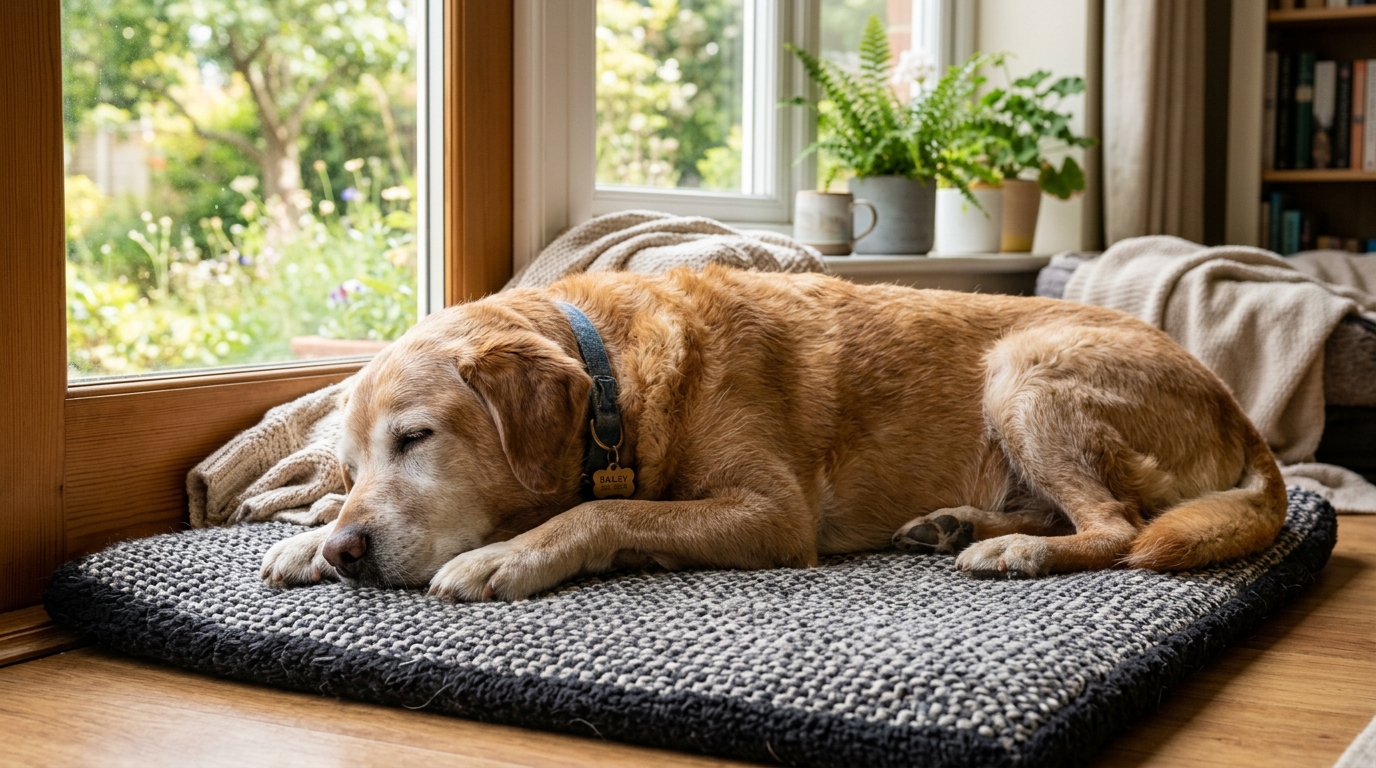
Track your senior dog’s mobility, appetite, toileting and behavior with a practical observation log, and distinguish routine monitoring from urgent warning signs.
Start with your dog’s normal day
A useful senior-care record compares the dog with their own earlier pattern. Do not use a single birthday to decide that a new symptom is normal aging. Size, previous health and individual circumstances matter. Ask the veterinary team about suitable appointments and screening for your dog.
Five areas to watch
- Mobility: getting up, turning, walking on familiar surfaces and using necessary steps.
- Appetite and weight: food offered, food left and any veterinary weight records.
- Drinking and toileting: changes in thirst, accidents or difficulty passing urine or stool.
- Sleep and behavior: new restlessness, confusion, withdrawal or intolerance of handling.
- Comfort and grooming: areas the dog repeatedly licks, coat changes or difficulty reaching usual grooming positions.
Record examples rather than diagnoses
“Takes three attempts to rise after resting on the kitchen floor” is more useful than “arthritis worse.” Record where, when and how often a change occurs. A short video of ordinary movement may help the veterinary team if it can be made without forcing painful actions.
| Date and situation | What you observed | What changed |
|---|---|---|
| Morning after sleep | Hesitated at the doorway | Placed a stable mat on the slippery patch |
| Evening meal | Ate less than usual | Recorded the portion and called for advice |
| Night | Paced in the hallway twice | Noted the time and other symptoms |
Improve access while waiting for advice
Keep commonly used water, bedding and resting areas easy to reach. Check for slippery routes and unstable rugs. Do not require an older dog to jump onto furniture for a comfortable place to rest. Ask about ramps or support equipment suited to the dog’s needs before using them.
Home adjustments support access; they do not replace pain assessment. Avoid using human pain medication or another animal’s prescription. A bed purchase is not a reason to postpone an appointment for limping or difficulty rising.
Prepare for the appointment
Bring the change log, medication and supplement list, diet details and questions. Note whether the dog’s response varies across surfaces or times of day. Ask what to monitor after the visit, how progress will be assessed, and which changes should prompt an earlier call.
Choose one practical follow-up measure, such as whether the dog gets up more comfortably on the usual route. This is easier to compare than an overall impression that they look younger. Do not estimate a percentage of weight being shifted between limbs from a visual glance.
Urgent warning signs
Breathing difficulty, collapse, sudden inability to stand, serious injury, suspected poisoning or repeated unsuccessful attempts to urinate need urgent veterinary advice. Persistent appetite, thirst, mobility or behavior changes also deserve assessment. They should not be treated as inevitable aging.
Related guides
- Orthopedic Dog Bed Buying Guide 2026: Support, Foam, Fit & Durability
- Dog Vomiting: Common Causes, Red Flags, and What to Do
Sources and further reading
Written and edited by Emon Ahmed. This is general educational information, not a diagnosis, prescription or veterinary review. For an individual pet’s medical concerns, contact a qualified veterinarian.