Why Does My Dog Follow Me Everywhere? 12 Reasons and What It Really Means
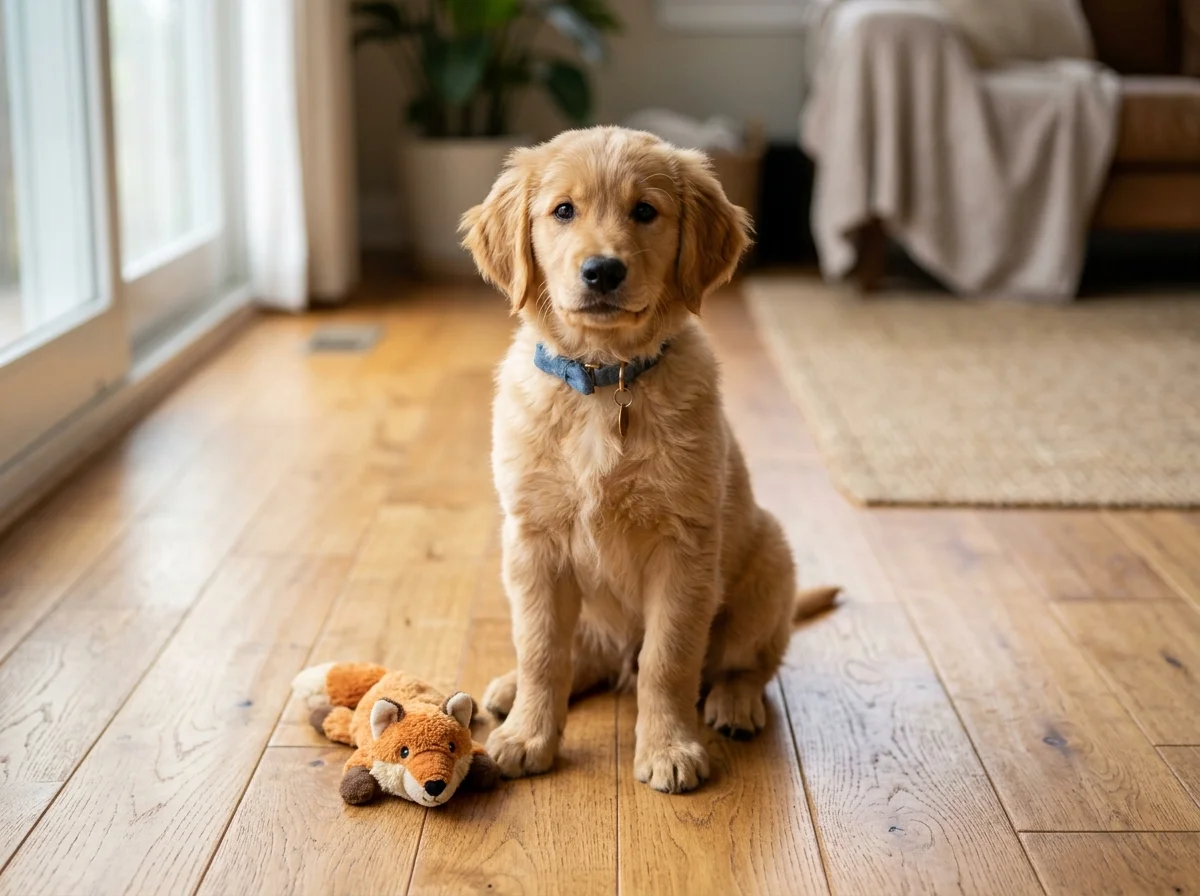
If your dog shadows you from room to room, the reason may be affection, habit, curiosity, boredom, anxiety, or simply a strong social bond. Learn what this behavior means and when it may need attention.
Does your dog follow you into the kitchen, wait outside the bathroom, trail you from the sofa to the bedroom, and somehow appear beside you every time you stand up? Many dog owners jokingly call this a “velcro dog,” but constant following can have several different explanations. In many cases, it is completely normal social behavior. In others, it can be a clue that your dog needs more enrichment, clearer routines, confidence-building, or help coping with being alone.
This guide explains why dogs follow their people, how to tell healthy attachment from stress-driven behavior, and what you can do to help your dog feel secure without discouraging the bond you enjoy.
Why Dogs Naturally Want to Stay Close to People
Dogs are highly social animals. Through domestication, many dogs became especially skilled at watching people, responding to routines, and using human behavior as information. Your dog learns where food comes from, who opens doors, when walks happen, which rooms are comfortable, and which person is most likely to provide attention. Following you can therefore be both emotionally rewarding and practically useful from your dog’s point of view.
It is also important to remember that individual dogs differ. Breed tendencies, early experiences, age, confidence, daily routine, household structure, and previous reinforcement all shape how closely a dog stays near a person. One dog may nap alone for hours while another prefers to be in the same room almost all day.
1. Your Dog Feels Closely Bonded to You
The simplest explanation is often affection and social attachment. Dogs frequently choose to stay near people they trust. If your dog follows you with a loose body, relaxed face, soft eyes, and normal behavior when you leave the house, the following is likely part of a healthy relationship.
Healthy attachment usually looks flexible. Your dog may enjoy being near you but can also settle on a bed, chew a toy, nap in another room, or remain calm while you complete a task without constant interaction.
2. Following You Has Been Rewarded
Dogs repeat behaviors that work. If following you often leads to treats, dropped food, petting, play, access to the garden, or a walk, your dog may have learned that staying close pays off.
This learning can happen accidentally. You walk toward the kitchen, your dog follows, and you give a snack. You go to the door, your dog follows, and a walk begins. You sit down, your dog follows, and you scratch behind the ears. Over time, following becomes a very reliable strategy for gaining something enjoyable.
3. Your Daily Routine Is Predictable
Dogs are excellent observers of patterns. They notice when you put on certain shoes, pick up keys, open a cupboard, sit at your desk, or move toward a particular room at a certain time. Your dog may follow because your movement predicts what happens next.
This is one reason dogs sometimes seem to “know” when dinner or a walk is coming. They are often responding to a chain of familiar cues rather than reading the clock.
4. Your Dog Is Curious
Some dogs simply want to know what is happening. A person walking through the home can mean new smells, open doors, activity, visitors, food, or an opportunity to explore. Curious dogs may follow family members because movement is interesting.
Curiosity-driven following is usually relaxed. The dog is interested but not distressed if nothing exciting happens.
5. Your Dog May Be Bored
If a dog has little to do, following a person can become the most interesting activity available. Dogs need more than physical exercise. Sniffing, problem-solving, training, chewing, exploring, and social interaction all contribute to mental stimulation.
A dog who follows constantly and also pesters for attention, steals objects, barks for entertainment, or struggles to settle may benefit from a richer daily routine.
Simple enrichment ideas
- Scatter part of a meal in grass or on a snuffle mat.
- Use food puzzles or stuffed enrichment toys.
- Practice two or three short training sessions each day.
- Allow relaxed sniffing time on walks instead of focusing only on distance.
- Rotate safe chew items and toys.
- Teach simple scent games such as finding hidden treats.
6. Your Dog Wants Something
Sometimes following is communication. Your dog may need to go outside, want water, expect a meal, or be asking for interaction. Context matters. If the behavior suddenly appears around a particular time or is paired with looking toward a door, bowl, toy, or leash, your dog may be trying to guide your attention.
It helps to notice the whole sequence rather than assuming every instance means affection.
7. Your Dog Is Seeking Safety or Reassurance
Dogs may stay close when something makes them uncertain. Thunder, construction noise, visitors, a new home, another pet, unfamiliar flooring, or changes in routine can increase proximity-seeking.
If your dog begins following you more closely after a stressful event, look for other signs such as tucked posture, panting without exercise, pacing, hiding, trembling, lip licking, or difficulty settling. Calm support and gradual confidence-building may be more useful than forcing independence.
8. Your Dog Is Getting Older
Senior dogs sometimes become more dependent on familiar people. Changes in hearing, vision, mobility, sleep patterns, or cognition can make the environment feel less predictable. A senior dog may follow because being near you feels safer or because they are having more difficulty navigating the household.
A noticeable behavior change in an older dog is worth discussing with a veterinarian, especially if it appears alongside nighttime restlessness, house-soiling, disorientation, changes in appetite, unusual vocalization, or altered sleep.
9. Your Dog May Not Feel Well
Some dogs become clingier when they are uncomfortable or unwell. Others do the opposite and withdraw. A sudden increase in following should be considered in context with the dog’s overall behavior.
Contact a veterinarian if increased clinginess is accompanied by vomiting, diarrhea, loss of appetite, coughing, limping, difficulty breathing, repeated pacing, obvious pain, unusual thirst, changes in urination, weakness, or a major change in energy.
Behavior changes do not diagnose illness on their own, but they can be useful information when combined with physical signs.
10. Your Dog Has Learned to Depend on Constant Company
If a dog rarely experiences calm, comfortable time away from a person, they may never learn that separation within the home is safe. This can happen when someone works from home, adopts a dog during a long period of constant companionship, or responds every time the dog requests attention.
The solution is not to ignore the dog abruptly. Instead, gently build independence through positive, predictable experiences.
11. Your Dog May Have Separation-Related Distress
Following you everywhere is not automatically separation anxiety. Many dogs follow their owners closely but are completely calm when left alone. The key question is what happens during actual separation.
Possible signs of separation-related distress include persistent barking or howling after departure, destructive behavior concentrated around exits, repeated escape attempts, pacing, heavy salivation, house-soiling despite being trained, refusal to eat when alone, or extreme agitation when departure cues begin.
If these signs occur, avoid punishment. Distress is not stubbornness. A qualified behavior professional or veterinarian can help determine the cause and create an appropriate plan.
12. Breed and Individual Temperament Can Play a Role
Some dogs are naturally more people-focused than others. Herding, sporting, companion, and working lines may be particularly attentive to human movement because generations of selection favored cooperation with people. However, breed alone never explains everything. Two dogs of the same breed can have very different personalities.
Early socialization, reinforcement history, household routine, genetics, and life experience all matter.
Is It Bad If My Dog Follows Me Everywhere?
Usually, no. Following is not a problem if your dog is relaxed, can rest independently, eats normally, plays normally, and remains reasonably calm when you are unavailable.
It becomes more important to address when the dog cannot settle without physical proximity, shows panic when separated, interferes with everyday tasks, guards access to you from other people or pets, or becomes increasingly distressed.
Healthy Attachment vs. Over-Dependence
A securely attached dog can enjoy closeness without needing constant contact. Signs of healthy attachment include choosing to rest nearby, checking in during walks, responding happily to interaction, and being able to relax when nothing is happening.
Possible signs of over-dependence include shadowing every movement with visible tension, waking whenever you move, refusing food or enrichment unless you stay nearby, being unable to settle behind a gate, or becoming distressed when you leave the room.
How to Teach Your Dog to Relax Without Following You
Reward calm independence
When your dog chooses to lie on a bed, remain in another room, or engage with a toy without following you, quietly reinforce that choice. You can place a treat near the dog or calmly praise them without creating excitement.
Create a comfortable resting station
Give your dog a predictable place with a bed, mat, or open crate where good things happen. Offer chews, stuffed toys, or occasional treats there. The goal is to make the location valuable, not to use it as punishment.
Practice short separations inside the home
Start with very small steps. Walk a few feet away while your dog remains on a mat, then return before the dog becomes worried. Over time, increase distance and duration gradually. If your dog becomes distressed, the step was too difficult.
Use enrichment strategically
Offer a food puzzle or chew while you work nearby, then gradually increase space. This helps the dog learn that enjoyable activities can happen without constant direct attention.
Keep arrivals and departures calm
You do not need to ignore your dog, but highly dramatic departures and reunions can make those moments more emotionally intense. A calm routine can make transitions easier for some dogs.
Teach a “place” or mat cue
A mat behavior gives your dog a clear alternative to following. Reward the dog for going to the mat, lying down, and staying relaxed for gradually longer periods. Keep sessions short and positive.
What Not to Do
Do not punish your dog for following you. Scolding may increase uncertainty and make the dog more dependent rather than more confident. Also avoid suddenly isolating a dog for long periods if they are used to constant company. Independence is best taught gradually.
Another common mistake is responding to every follow with attention. If your dog receives petting, talking, or food every single time they trail you, you may unintentionally strengthen the habit. It is fine to give affection, but balance it with reinforcement for calm independent behavior.
When to Get Professional Help
Seek guidance if your dog shows panic when alone, injures themselves trying to escape, destroys doors or windows, vocalizes for long periods, suddenly becomes unusually clingy, or cannot settle even with gradual training.
A veterinarian can help rule out medical causes of a sudden behavior change. For persistent fear or separation-related problems, look for a qualified reward-based trainer or behavior professional who uses gradual, humane methods.
Frequently Asked Questions
Why does my dog follow me to the bathroom?
Bathrooms are simply another place you go, and many dogs have learned that following keeps them close to you. The behavior may also be reinforced if you talk to or pet your dog there.
Why does my dog follow me but not other family members?
Your dog may have the strongest reinforcement history or emotional bond with you. You may also be the person who most often feeds, walks, trains, or interacts with the dog.
Does following mean my dog loves me?
It can be part of an affectionate bond, but following alone does not prove a specific emotion. Dogs also follow for food, routine, curiosity, reassurance, or learned rewards.
Should I stop my dog from following me?
Not necessarily. If the dog is relaxed and can cope independently, there is no need to eliminate the behavior. The goal is flexibility, not distance.
Why has my dog suddenly become clingy?
Changes in routine, stress, aging, discomfort, illness, environmental changes, or increased reinforcement can all play a role. Sudden or significant behavior changes are worth discussing with a veterinarian, particularly when other symptoms are present.
Can I create separation anxiety by letting my dog sleep near me?
Sleeping near you does not by itself cause separation anxiety. The more important issue is whether your dog can remain calm during normal periods of separation and has opportunities to practice relaxed independence.
The Bottom Line
A dog that follows you everywhere is often showing normal social attachment, curiosity, or learned behavior. In many homes, it is simply part of the relationship between a dog and their favorite person. What matters is whether your dog can also relax independently and cope comfortably when you are unavailable.
If the following behavior is relaxed, there may be nothing to fix. If it comes with panic, restlessness, sudden behavioral changes, or physical symptoms, look more closely at the cause. A balanced routine with enrichment, predictable rest, gradual independence training, and appropriate professional support can help your dog feel secure both beside you and on their own.