Why Does My Cat Follow Me Everywhere? 12 Reasons and What It Means
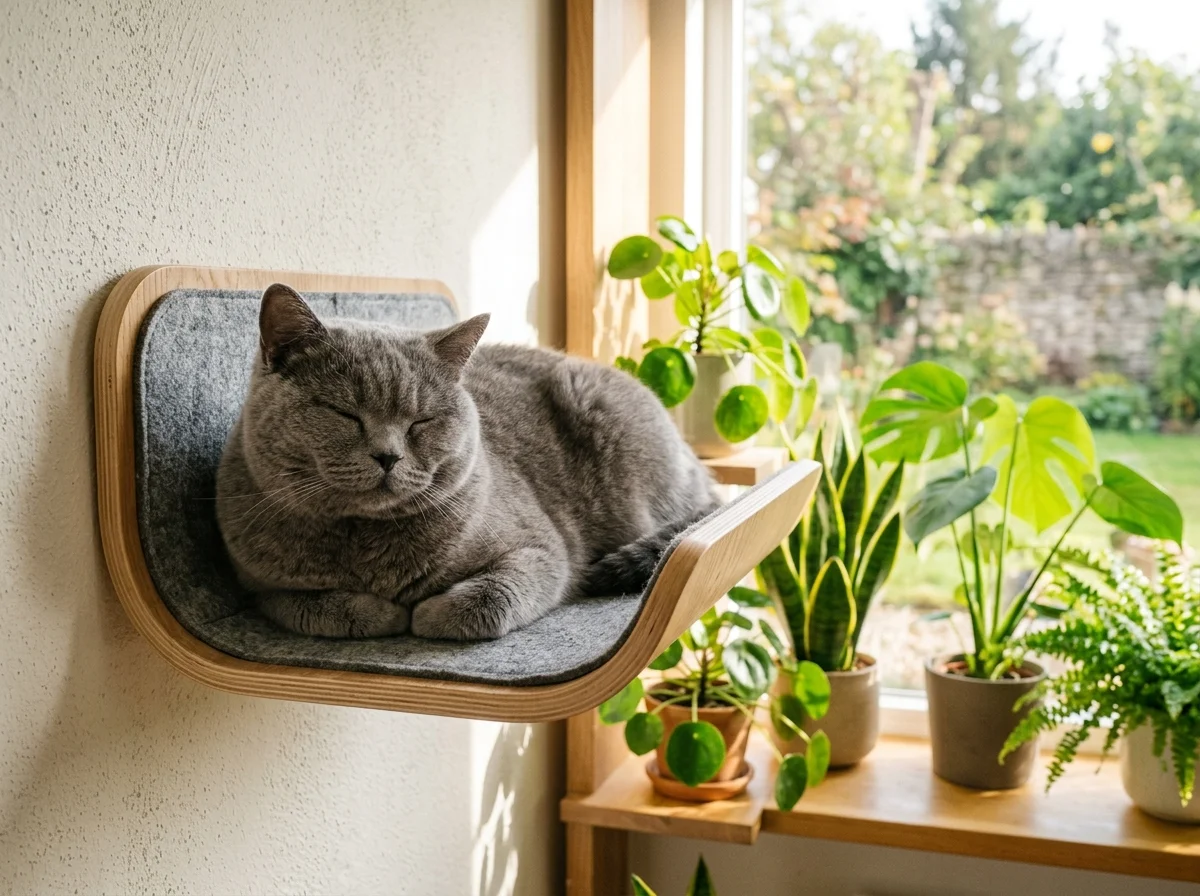
If your cat follows you from room to room, waits outside the bathroom, or appears every time you stand up, the behavior can be completely normal. Learn the most common reasons cats follow their people, how to read the context, and when a sudden change deserves attention.
By Petzora Care Desk ·
If your cat seems to be your tiny shadow, you are far from alone. Some cats follow their favorite person from the bedroom to the kitchen, sit outside the bathroom door, trail behind during chores, and appear instantly whenever a chair moves. The behavior can feel flattering, funny, confusing, or sometimes a little intense.
In most cases, a cat that follows you everywhere is expressing a mix of attachment, curiosity, routine, learned expectations, and a desire to stay close to what feels safe and interesting. Cats are often described as independent animals, but independence does not mean they are antisocial. Many cats form strong, selective bonds with people and actively choose proximity when they feel secure.
This guide explains the most common reasons your cat may follow you, how to distinguish normal social behavior from stress-driven clinginess, and what you can do if you want to encourage healthy independence without damaging your bond.
Quick answer: why does my cat follow me everywhere?
Your cat may follow you because you are a source of safety, food, play, warmth, routine, attention, or social comfort. Some cats also follow because they are curious about movement and changes in their environment. The key is to look at the whole pattern: body language, appetite, sleep, vocalization, litter-box habits, energy level, and whether the behavior is new or longstanding.
If your cat has always followed you and otherwise seems relaxed, active, eating normally, and using the litter box normally, the behavior is usually harmless. If the following starts suddenly and is paired with hiding, unusual meowing, reduced appetite, increased thirst, weakness, vomiting, breathing changes, or other new symptoms, contact a veterinarian.
1. Your cat feels bonded to you
One of the simplest explanations is also one of the most common: your cat likes being near you. Cats can form strong social bonds with people, especially when interactions are predictable and respectful. A cat that chooses to nap near you, slow-blinks, rubs against your legs, sits nearby without demanding anything, or follows you calmly is often showing social preference rather than neediness.
Bonded cats do not always want constant touching. Some prefer to share space rather than sit on a lap. Following can be their version of companionship: “I want to know where you are, but I do not necessarily need you to hold me.”
You may notice other affiliative behaviors too. Kneading is one common comfort behavior, and you can read more in Why Do Cats Knead? What This Strange Behavior Really Means.
2. You are part of your cat’s daily routine
Cats are excellent pattern learners. They notice when you wake up, when you prepare food, when you open a particular cupboard, when you sit at your desk, and when you settle down at night. If following you has reliably led to meals, treats, play, access to a favorite room, or affection, your cat may simply be anticipating what happens next.
This does not mean your cat is “using” you. Predictability is comforting to many cats. A stable routine reduces uncertainty and helps them organize their day around familiar events.
3. Your movement is interesting
Cats are naturally tuned in to movement. Standing up, opening a door, carrying a bag, changing rooms, or moving furniture can instantly attract attention. Your cat may follow because movement often predicts something worth investigating.
Indoor cats have a relatively controlled environment, so ordinary human activity can become part of their enrichment. A walk from the sofa to the kitchen may be boring to you but potentially meaningful to a curious cat.
4. You are a “safe base”
Some cats use a trusted person as a secure reference point. When the home is noisy, visitors arrive, a delivery person knocks, or something unfamiliar appears, the cat may stay closer to the person they trust most.
Watch the body language. A relaxed follower may have a neutral tail, soft eyes, normal ears, and smooth movements. A stressed follower may crouch, flatten the ears, keep the tail low or tight, scan the room repeatedly, or startle easily. Our guide to cat and dog body language can help you read subtler signals.
5. Your cat wants social interaction
Following often becomes more noticeable in cats that enjoy frequent interaction. They may be waiting for petting, conversation, brushing, play, or simply your attention. Some cats are naturally more people-oriented than others, and personality matters a great deal.
If your cat follows and then sits beside a toy, leads you toward a scratching post, or looks back while walking toward another room, it may be actively inviting you to do something.
6. Food expectations can create a powerful following habit
If you feed your cat, you are associated with one of the most important daily resources. Cats quickly learn the sounds and routines that predict food: footsteps at a certain time, a refrigerator door, a can opening, or a specific drawer.
A cat that follows mostly around meal times is often showing anticipation. If the behavior becomes intense, avoid rewarding every follow with a snack. Otherwise the pattern can become stronger over time and may contribute to overfeeding.
7. Your cat has learned that following works
Behavior that gets rewarded tends to repeat. If following you leads to talking, touching, treats, doors opening, or toys appearing, your cat may learn that staying close is effective.
This is not a problem unless you want more independence. If so, reward calm independent activities too. For example, give attention when your cat relaxes on a perch, uses a puzzle feeder, plays alone, or settles on a bed a short distance away.
8. Your cat may be bored
A cat with limited environmental stimulation may turn your movement into the most interesting event in the house. Following can increase when there are few climbing spaces, little play, no window view, limited scratching opportunities, or long quiet periods.
Try adding short interactive play sessions, rotating toys, cardboard boxes, climbing routes, window perches, food puzzles, and safe places to hide. You do not need to keep your cat entertained every minute. The goal is to create enough choices that following you is one option rather than the only interesting activity available.
Balanced daily care also supports healthy behavior. See our complete daily pet-care routine checklist for a broader routine.
9. Life stage can affect how closely a cat follows you
Kittens often follow because almost everything is new and they are learning from the environment. Young cats may alternate between intense exploration and social checking-in. Adult cats can become highly routine-oriented. Senior cats may become more dependent on familiar paths, people, and predictable schedules.
If an older cat suddenly becomes much more clingy, pay attention to other changes. Increased vocalization, altered sleep, disorientation, mobility difficulty, appetite changes, or litter-box changes are useful details to share with a veterinarian.
If sleep patterns have changed too, compare them with Why Does My Cat Sleep So Much? Normal Hours by Age.
10. Stress or a recent change may increase following
Cats may seek more proximity after a move, schedule change, new pet, new baby, household conflict, construction noise, travel, or a period when you were away. In these situations, following can be a temporary coping strategy.
Help by keeping feeding, play, litter-box cleaning, and bedtime routines consistent. Provide quiet retreat areas where the cat cannot be disturbed. Avoid forcing interaction. Predictability usually helps more than excessive reassurance.
11. Your cat may be trying to communicate a need
Sometimes following is functional. Your cat may lead you to an empty water bowl, a closed door, a dirty litter box, a favorite toy, or a place where something unusual is happening. Pay attention to where the cat goes after getting your attention.
A cat that follows while meowing may be communicating more directly. If this happens especially after dark, see Why Does My Cat Meow at Night? Causes and Practical Fixes.
12. A sudden increase in clinginess can occasionally accompany discomfort or illness
Following by itself does not diagnose a health problem. However, a sudden behavior change can sometimes happen when a cat feels unwell, insecure, thirsty, painful, or generally uncomfortable. What matters is the combination of signs.
Contact a veterinarian if new clinginess appears with reduced appetite, weight loss, vomiting, diarrhea, repeated sneezing with discharge, breathing difficulty, weakness, hiding, signs of pain, unusual litter-box behavior, or marked changes in thirst.
If drinking has increased noticeably, read Why Is My Cat Drinking More Water Than Usual?. For persistent respiratory signs, see our guide to cat sneezing and warning signs.
How to tell normal following from anxious clinginess
| More likely normal social following | More concerning pattern |
|---|---|
| Cat looks relaxed and moves normally | Cat appears tense, crouched, restless, or unable to settle |
| Appetite and litter-box habits are normal | Eating, drinking, or elimination has changed |
| Cat can rest away from you at times | Cat panics or vocalizes intensely when separated |
| Behavior has been stable for months or years | Behavior changed suddenly without an obvious reason |
| Cat still plays, explores, grooms, and sleeps normally | Other normal activities have decreased |
Why does my cat follow me into the bathroom?
Bathrooms combine several things cats find interesting: running water, closed doors, smooth cool surfaces, predictable human behavior, and a small room where your attention is less divided. Some cats also dislike being excluded by a closed door, especially if they normally have free access to the home.
Following you into the bathroom is usually harmless. You do not need to allow it if you prefer privacy. Consistency matters more than occasionally allowing access and then suddenly preventing it.
Why does my cat follow me but not other people?
Cats can be selective. They may prefer the person who feeds them, plays gently, respects boundaries, moves calmly, or has the most predictable schedule. Scent, voice, past experiences, and individual temperament can also influence preference.
Being the favorite person is not necessarily about who gives the most treats. Cats often value predictability and choice. A person who lets the cat initiate contact may become more trusted than someone who constantly tries to pick the cat up.
Why does my cat follow me and stare at me?
Staring has many meanings depending on posture. Soft eyes, relaxed ears, and slow blinking usually suggest comfort. A fixed stare with a tense body, flattened ears, tail lashing, or enlarged pupils may indicate arousal, uncertainty, or irritation.
Try a slow blink and then look away. Many cats interpret this as a calm, non-threatening interaction.
Why does my cat follow me and then walk in front of me?
Some cats weave around legs or move ahead because they are excited, trying to guide you, or anticipating food. This can become a tripping hazard. Instead of scolding, pause, redirect the cat with a tossed toy or target, and reward walking beside you or settling on a nearby mat.
Should I stop my cat from following me?
Usually, no. If the behavior is relaxed and not interfering with daily life, there is no reason to discourage it. Following can be part of a healthy human-cat relationship.
If you need more personal space, avoid punishment. Punishment can create confusion or reduce trust without teaching the cat what to do instead. Reward alternative behaviors: resting on a nearby bed, staying on a perch while you cook, playing with a puzzle feeder, or settling in another room for short periods.
How to encourage healthy independence
- Create attractive resting stations: Put beds, blankets, shelves, or cat trees in locations where your cat can observe the household without being directly underfoot.
- Use predictable play sessions: Two or three short interactive sessions can be more useful than one long session.
- Offer food enrichment: Puzzle feeders, treat balls, and scatter feeding can turn meals into independent activity.
- Rotate toys: Keep some toys out of sight and switch them every few days to maintain novelty.
- Reward calm distance: Occasionally place a treat on a cat bed or perch when your cat chooses to relax there.
- Maintain routine: Consistent feeding, play, and quiet periods help reduce uncertainty.
- Provide vertical space: Cats often feel secure when they can watch from above.
What not to do
Do not spray your cat with water, shout, chase them away, or suddenly isolate them for normal following behavior. These strategies can increase stress and may make the cat more vigilant rather than more independent.
Also avoid interpreting every instance of following as a demand for food. If every approach earns a snack, you may accidentally create a very persistent food-seeking routine.
Can following be a sign of separation anxiety?
Following alone is not enough to identify separation-related distress. Concern is greater when the cat shows intense vocalization, destructive behavior, inappropriate elimination, refusal to eat, excessive grooming, or marked agitation specifically when a person leaves or is unavailable.
If you suspect separation-related distress, record what happens during absences if possible and discuss the pattern with a veterinarian or qualified feline behavior professional. Medical causes should be considered before assuming the issue is purely behavioral.
Frequently asked questions
Does my cat follow me because it loves me?
It can be part of affection and social bonding, but cats also follow for routine, food, curiosity, safety, and learned rewards. The best interpretation comes from the full context and body language.
Why does my cat suddenly follow me everywhere?
Think about recent changes first: schedule, visitors, moving furniture, a new pet, travel, stress, or changes in feeding. If the shift is sudden and there are any health or behavior changes, contact a veterinarian.
Why does my cat follow me when I wake up?
Morning often predicts food, activity, open doors, or attention. Cats are good at learning daily sequences and may begin following as soon as the routine starts.
Why does my cat follow me at night?
Cats may become more active in the evening and early morning. They may also be seeking play, food, access to a room, or company. A consistent evening play-and-feed routine can help some cats settle.
Is a clingy cat unhappy?
Not necessarily. Some cats are naturally very social. Concern depends on whether the cat can relax independently, whether the behavior is new, and whether other signs of stress or illness are present.
Can I make my cat less clingy without hurting our bond?
Yes. Build positive independent activities rather than rejecting the cat. Reward resting on a perch, solo play, food puzzles, and calm time a few feet away from you. Independence grows best when the cat still feels secure.
Final thoughts
A cat that follows you everywhere is often doing something very normal: staying close to a trusted social partner, monitoring an interesting environment, and participating in a familiar routine. The behavior is usually a sign of comfort rather than a problem.
Pay attention to change rather than judging the behavior in isolation. If your cat has always been a shadow and remains relaxed, playful, and healthy, enjoy the companionship. If the behavior suddenly becomes intense or appears alongside physical or behavioral changes, take the new pattern seriously and seek veterinary advice.
The most helpful response is balance: give your cat affection and predictable interaction while also creating a home rich enough that they can confidently choose rest, play, exploration, and independence.