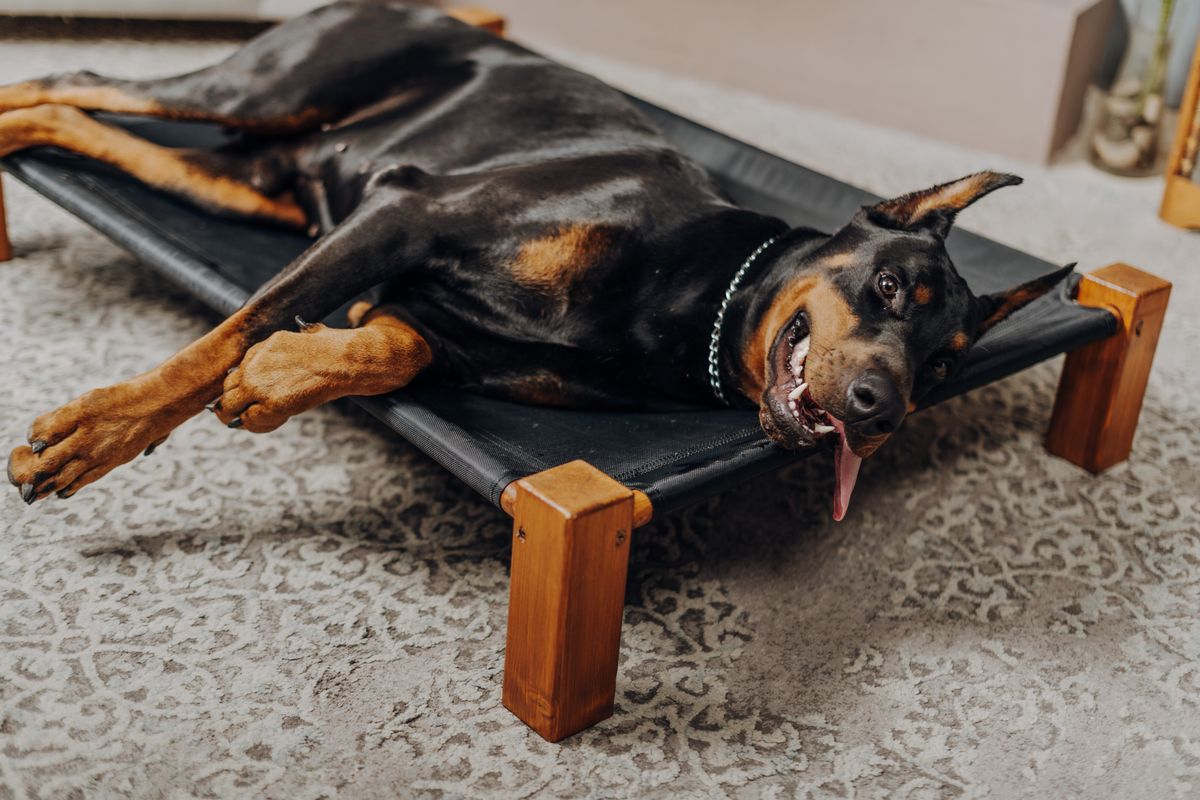
A mat can give your dog a familiar place to rest during ordinary household activity. Teach going to the mat first, then build comfortable settling and duration. These are separate skills. A dog that reaches the mat successfully has not yet learned to stay there while a visitor arrives or dinner is prepared.
Choose a comfortable, stable location
Use a nonslip mat or accessible bed large enough for your dog to lie down naturally. Place it in a quiet area where the dog can still observe the room without being trapped between furniture or exposed to constant foot traffic.
Gather suitable small rewards and decide on a short release word, such as “free.” Start without visitors or food preparation. A difficult situation is a poor place to introduce an entirely new behavior.
Reward voluntary investigation
Mark and reward looking toward or stepping onto the mat. Deliver the reward on the mat so its location becomes meaningful. As your dog understands the pattern, reward more paws on the surface rather than continuing indefinitely at the first step.
Allow the dog to leave and reset between repetitions. Avoid dragging them onto the bed or repeatedly placing their paws there. You want the dog to learn an action they can choose, not merely tolerate being positioned.
Add the cue and a clear release
When your dog readily moves onto the mat, say your chosen cue just before the movement. Reward arrival, then use the release word to end that repetition. Keep the cue distinct from words the household uses for other behaviors.
Once arriving is easy, reward a comfortable sit or lie-down if your dog offers it. If you separately teach lying down, make that a gentle, achievable step. Physical discomfort can interfere with settling and should not be treated as a training failure.
Build seconds before adding distractions
Reward a moment of staying on the mat, then release. Increase the interval gradually. If the dog leaves, shorten the next repetition instead of scolding. Successful short practice builds a clearer pattern than asking for a long wait too soon.
Change only one challenge at a time: duration, your distance, or activity nearby. Take a small step away before crossing the room. Move a spoon before attempting a complete dinner routine. Keep sessions short enough that the dog remains engaged and comfortable.
Practice the visitor routine in stages
Rehearse quiet arrival sounds and a familiar person at a manageable distance before expecting calm behavior with an exciting guest. Use gates or another safe arrangement when needed, and give the dog space to disengage.
The mat is not a punishment station or a treatment for serious fear. If your dog growls, panics, or cannot relax around visitors, pause the exercise and seek professional behavior support. Management and safety come before demonstrating a cue.
Frequently asked questions
Should the dog remain there until every guest leaves?
Begin with brief achievable periods and regular breaks. Do not expect long duration before it has been taught.
Can I move the mat to another room?
Yes, but practice easy steps in the new location before expecting the same duration or distractions.
Related Petzora guides
Sources and further reading
Written by Emon Ahmed for general education, not veterinary diagnosis or treatment.