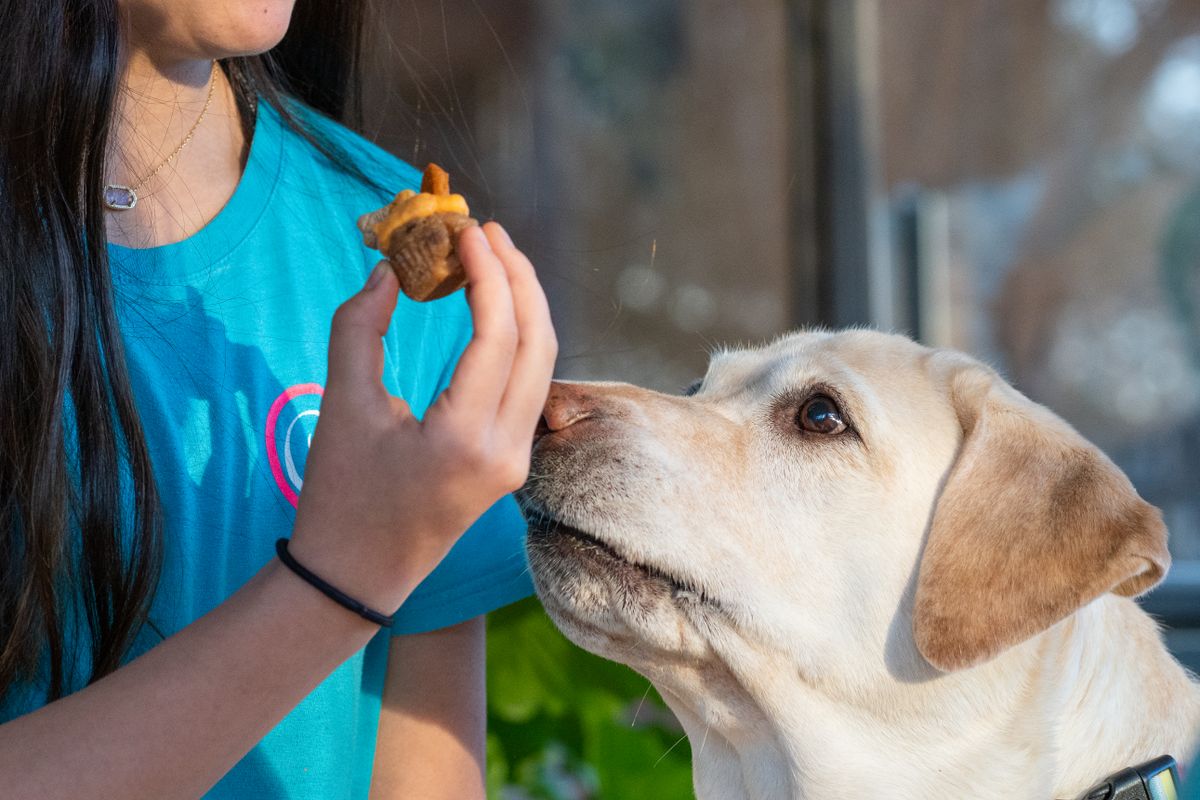
A nose target means your dog voluntarily touches a chosen target with their nose. Start with an easy touch to your open hand, reward it, and add the word only when the action is familiar. This can become a useful way to invite movement or redirect attention without pulling your dog into position. Work somewhere quiet before asking for it around distractions.
Prepare a comfortable first session
Use a quiet room, a few suitable small rewards, and a marker such as “yes” that predicts a reward. Keep the first session brief. Sit or stand at a height that lets your dog reach your hand without jumping.
Offer an open hand a few inches from the dog’s nose, off to one side rather than pressing it toward their face. Some dogs naturally investigate. Keep your body relaxed and allow the dog to choose whether to approach.
Mark the moment of contact
When the nose lightly touches your hand, say your marker and deliver a reward with the other hand. Remove the target hand briefly, then offer it again. The sequence makes the touch, rather than staring at your hand, the action that earns the reward.
If your dog only looks, lower the difficulty by bringing the target slightly closer without touching the nose yourself. Reward useful investigation at first if necessary, then work toward contact. Do not push the muzzle into your palm or hold the dog in place.
Add “touch” after the behavior becomes predictable
Once your dog repeatedly touches the offered hand, say “touch” just before presenting it. Mark and reward the same action. Keep the spoken cue consistent so the word begins to predict an achievable task.
If the dog does not respond, pause instead of repeating the cue several times. Check whether your hand is too far away, the dog is distracted, or the session has gone on too long. Return to an easier successful repetition.
Increase movement one small step at a time
Move your hand only a little farther away, or offer it on the other side. Change one part of the exercise at a time. Reward a small step toward the hand before expecting movement across the room.
Practice in another quiet location before adding visitors, traffic, or unfamiliar dogs. A skill learned beside the sofa may need careful rebuilding outside. Do not interpret difficulty in a new setting as stubbornness or disobedience.
Use the skill thoughtfully
A familiar target can help invite your dog onto a scale or away from an everyday distraction. It does not replace safe management, a recall, or professional help for fear. Keep rewards available while you strengthen the response.
Avoid using “touch” to lure your dog into something frightening and then restraining them. That can make the hand itself worrying. For handling or veterinary procedures, build a separate gradual plan with an appropriately qualified professional.
Frequently asked questions
What if my dog mouths my hand?
Withdraw calmly, take a break, and make the next repetition easier. Mark gentle nose contact rather than mouthing.
Do I need a clicker?
No. A short consistent spoken marker can also tell your dog which action earned the reward.
Related Petzora guides
Sources and further reading
Written by Emon Ahmed for general education, not veterinary diagnosis or treatment.