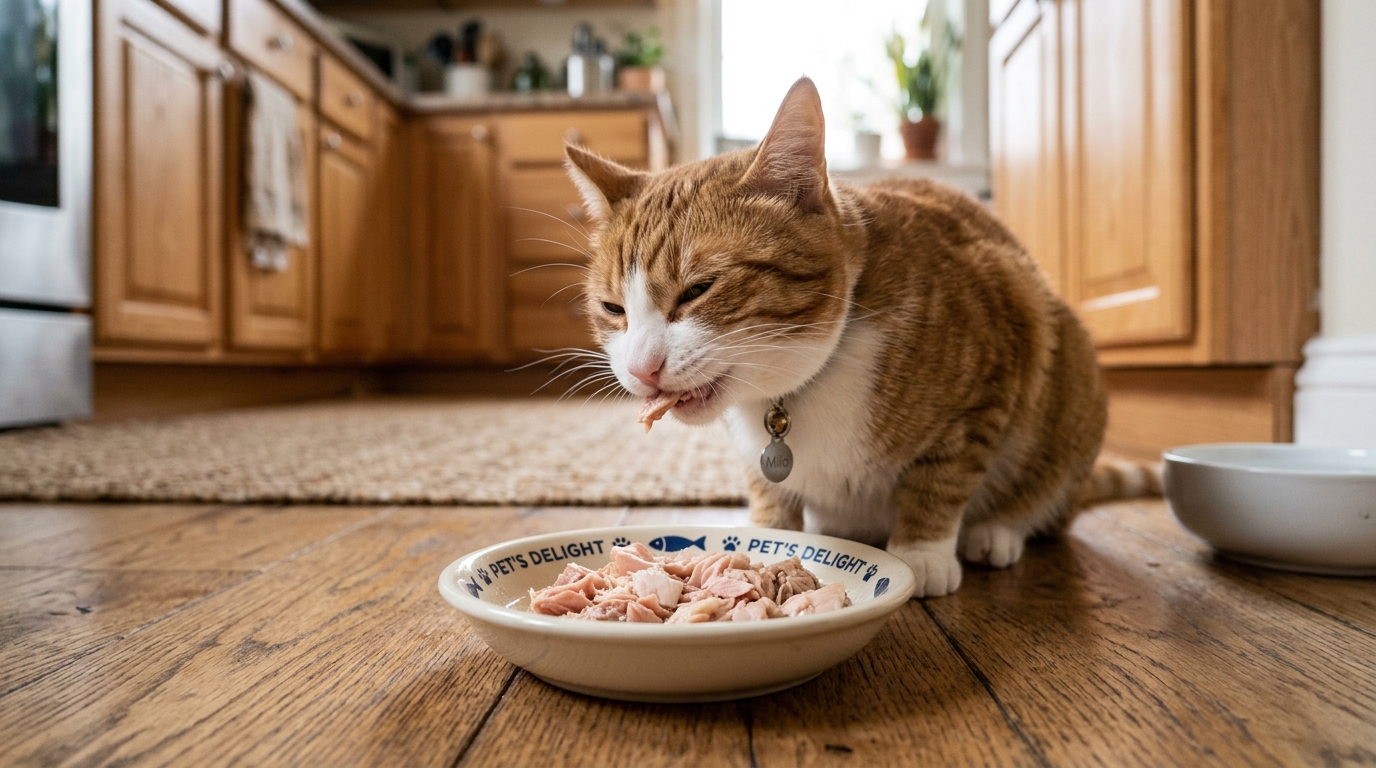
Tuna has a strong smell and taste that many cats find irresistible. A small amount can be an occasional treat for many healthy cats, but tuna should not replace nutritionally complete cat food.
Why cats like tuna
Tuna is rich in animal protein and has a powerful aroma. That makes it useful for tempting some cats to eat or hiding medication when a veterinarian recommends it.
Why tuna is not a complete diet
Human tuna products are not formulated to meet all feline nutrient requirements. Feeding large amounts repeatedly can displace balanced food and create deficiencies or excesses over time.
Water-packed versus oil-packed
Plain tuna packed in water is generally a simpler occasional choice than tuna packed in oil. Avoid tuna containing onion, garlic, spicy sauces, or heavy seasoning.
Sodium and calories
Some canned tuna contains added salt, and oil-packed products can add significant calories. Extra calories matter especially for indoor cats that are overweight or less active.
Mercury concerns
Larger predatory fish can accumulate mercury. An occasional small taste is different from feeding tuna as a daily staple. Variety and a complete commercial cat food reduce unnecessary exposure and nutritional imbalance.
How much is reasonable?
Treats should remain a small part of daily calorie intake. A teaspoon or two as an occasional topper is very different from replacing an entire meal. Ask your veterinarian for guidance if your cat has kidney disease, heart disease, food allergies, or another medical condition.
Tuna made for cats
Some complete cat foods use tuna as an ingredient while still meeting nutritional standards. Check the label for a statement indicating the product is complete and balanced for the appropriate life stage.
Frequently asked questions
Can kittens eat tuna?
Kittens need carefully balanced nutrition for growth. Tiny amounts may be used as an occasional treat, but kitten food should remain the main diet.
Can tuna cause a cat to refuse other food?
Some cats become very selective when frequently offered strongly flavored foods. Use tuna sparingly if your cat starts holding out for it.
What about tuna water?
A small amount of plain water from unsalted tuna can sometimes encourage hydration or appetite, but check the ingredients first.
Bottom line: Tuna can be an occasional treat, not a complete everyday diet.
Tuna is a treat, not a complete cat food
The biggest nutritional issue with human tuna is not that one small bite is automatically dangerous; it is that tuna by itself does not provide the complete and balanced nutrient profile cats need as a regular diet. A nutritionally complete cat food is formulated to provide essential amino acids, fatty acids, vitamins, and minerals in appropriate proportions.
Which tuna is the simplest choice?
If you offer a small taste, choose plain tuna packed in water with no onion, garlic, sauces, spicy seasoning, or heavy added salt. Tuna packed in oil adds extra calories and may upset some cats’ stomachs. Drain the fish before serving.
How much is a “small amount”?
Think of tuna as an occasional extra rather than a meal replacement. The exact amount depends on the cat’s size, calorie needs, medical history, and what else the cat eats. Keeping extras to a small portion of the overall diet helps protect nutritional balance and body weight.
Why mercury is discussed with tuna
Large fish can accumulate mercury over time. An occasional small serving is different from feeding tuna as a major part of the diet for weeks or months. Rotating treats and relying on complete cat food for routine nutrition avoids making one human food a major long-term exposure.
Cats that need extra caution
Ask a veterinarian before adding tuna regularly if your cat has kidney disease, heart disease, food allergies, gastrointestinal disease, is on a prescription diet, or needs weight control. Prescription diets are designed for specific nutritional goals, so frequent extras can work against the plan.
What if my cat refuses everything except tuna?
A sudden change in appetite deserves attention, especially if a cat stops eating normal food. Do not simply replace the regular diet with tuna for several days. Cats that eat too little can become seriously ill, so contact a veterinarian if appetite loss is persistent or accompanied by vomiting, lethargy, pain, or other changes.
Safer ways to use tuna
- Flake a tiny amount over regular food to increase interest.
- Use a few small pieces as a high-value reward.
- Choose complete cat foods that contain fish if your cat enjoys the flavor.
- Avoid seasoning, bones, and rich sauces.
Practical takeaway: plain tuna can be an occasional treat for many healthy adult cats, but it should not replace a complete diet. When in doubt, especially for a cat with a medical condition, ask the veterinarian who knows that cat’s history.
Read the label before sharing
Canned tuna products vary widely. Check for added salt, broth ingredients, flavorings, sauces, and oil. “Tuna” on the front of the package does not guarantee a plain product. When in doubt, skip the human food and use a cat treat or complete cat food instead.
Do not use tuna to hide every medication
A tiny amount can sometimes help with palatability, but repeated use may create food aversion if the cat associates tuna with unpleasant medication. Ask your veterinary team for medication techniques appropriate to the prescription.
Watch total treat intake
Tuna is easy to overfeed because the pieces are small and highly palatable. Count all extras together, including commercial treats, table food, toppers, and tuna. Weight gain can happen slowly when small additions are repeated every day.
Frequently asked questions
Can kittens eat tuna?
A tiny taste is different from using tuna as a meal. Kittens need complete growth nutrition, so tuna should never displace a properly formulated kitten food.
Can cats eat tuna in oil?
Plain water-packed tuna is the simpler option. Oil adds unnecessary fat and calories and may upset digestion in some cats.
Can tuna cause allergies?
Fish proteins can be involved in food reactions in some cats. Persistent itching, ear problems, vomiting, or diarrhea needs a proper veterinary assessment rather than self-diagnosis from one ingredient.
What is a better everyday fish option?
If your cat likes fish, choose a complete and balanced cat food that uses fish as part of a formulated diet. That provides the flavor without turning plain tuna into the nutritional foundation.