The Kitten Who Chose the Quietest Corner: A Story of Recovery and Confidence
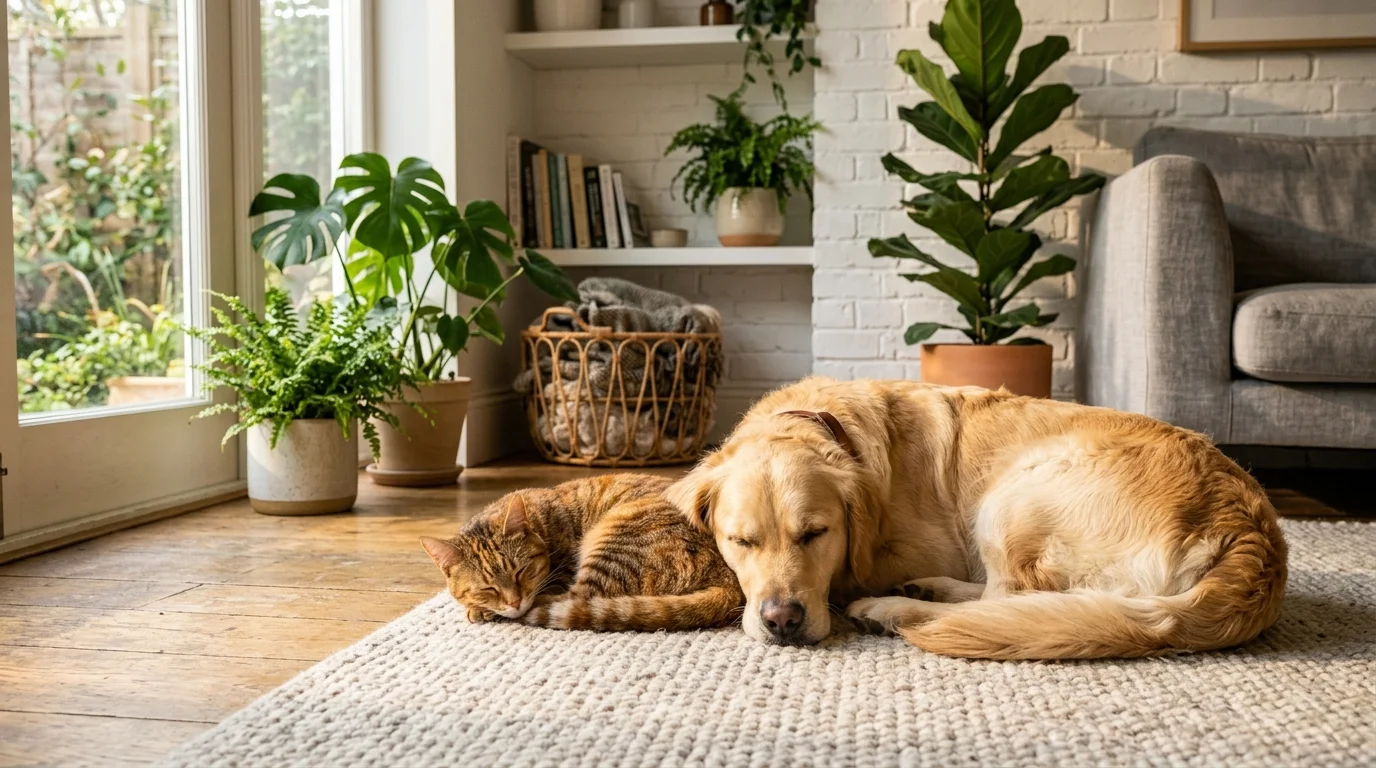
An original Petzora story about a frightened kitten who hides in the quietest corner of a new home and slowly discovers confidence on her own terms.
By Petzora Care Desk ·
Editorial note: This is an original Petzora fictional story inspired by common kitten rescue and adjustment experiences. The characters and events are fictional.
Nila chose the smallest place in the apartment.
Not the new cat bed beside the window. Not the blanket on the sofa. Not the cardboard box that had been carefully lined with a towel.
She chose the narrow space behind a bookshelf, where two walls met and the sounds of the household arrived softened and distant.
For the first three days, that corner was her entire world.
The Kitten Nobody Could Hurry
Nila had been rescued from behind a row of shops after several days of heavy rain. She was small enough to fit against one forearm and cautious enough to make every movement feel like a negotiation.
Her adopter, Tania, had expected fear. What she had not expected was how completely a frightened kitten could disappear while still being only a few meters away.
Tania could see two bright eyes behind the shelf. Sometimes a paw. Occasionally, a tiny nose appeared when food was placed nearby.
Friends offered advice. “Just pick her up so she gets used to you.” “Keep her on your lap.” “She needs to learn that you are safe.”
Tania decided to do the opposite. She stopped trying to prove anything.
Making the Room Smaller
Instead of giving Nila access to the entire apartment, Tania made one quiet room predictable. Food was placed in the same location. Water stayed several steps away from the food. The litter tray was kept clean and easy to reach. A low cardboard hideout was placed near the bookshelf so Nila had another protected option.
Tania spent time in the room without focusing on the kitten. She answered messages, folded clothes, and read beside the window. When Nila looked at her, Tania did not immediately reach out.
On the fourth night, Nila ate while Tania was still in the room.
It felt like a victory, but Tania resisted the urge to celebrate out loud.
The First Step Into the Open
A week later, Tania was sitting on the floor when she heard the faint sound of claws on cardboard.
Nila had left the bookshelf.
She entered the little cardboard hideout, turned in a circle, and sat with only her head visible through the opening. For ten minutes, she watched Tania.
Tania kept reading.
Then Nila stepped out.
She did not approach. She simply walked across the rug, sniffed the leg of a chair, and returned to safety.
That short walk changed the atmosphere in the room. The space was no longer divided into “safe corner” and “dangerous everything else.” There was now a path between them.
Play Became the Bridge
Food had helped Nila feel secure, but play helped her become curious. Tania introduced a wand toy, moving it slowly across the floor without bringing it too close.
At first, Nila only watched.
The next day, one paw shot out from behind the cardboard wall.
Two days later, she chased the toy across half the room.
During play, Nila seemed to forget that she was supposed to be afraid. Her body changed. Her back became loose, her ears moved forward, and her movements became quick and confident.
Tania learned to end play before the kitten became overwhelmed. Short sessions left Nila wanting to return rather than searching for an escape.
The Hand on the Floor
The first time Nila approached Tania voluntarily, there was no food involved.
Tania was lying on the rug with one hand resting loosely beside her. Nila walked over, sniffed one fingertip, and stepped back.
Tania did not move.
Nila returned.
This time she rubbed one cheek against the edge of Tania’s hand.
The moment lasted less than two seconds.
For Tania, it was more meaningful than any forced cuddle could have been. Nila had chosen it.
Confidence Does Not Arrive All at Once
Over the next month, Nila expanded her territory room by room. She discovered the kitchen first, then the hallway, then the sofa. She learned that the washing machine was noisy but harmless, that visitors sometimes arrived but eventually left, and that the morning sunlight on the windowsill was worth crossing an open room to reach.
There were setbacks. A dropped pan sent her behind the bookshelf for hours. A visitor who moved too quickly made her avoid the living room for a day. Tania did not treat these moments as erased progress.
Fear had been part of Nila’s survival. Confidence would take practice.
The Corner Remained
Tania never blocked the space behind the bookshelf.
Months later, Nila still went there during thunderstorms or when unfamiliar people visited. But now the corner was not a prison. It was simply one safe place among many.
Most evenings, Nila slept on the back of the sofa, paws tucked beneath her body, watching the apartment as if it had always belonged to her.
The Lesson Nila Left Behind
People often imagine that earning an animal’s trust requires doing more: more touching, more coaxing, more reassurance, more attempts to connect.
Nila’s story suggested something different.
Sometimes trust grows because a frightened animal is finally allowed to say no. No to being picked up. No to visitors. No to leaving a hiding place before she is ready.
And when those “no” answers are respected long enough, an animal may eventually begin offering a few quiet “yes” answers of her own.
A step into the open. A chase after a toy. A cheek against a hand.
Then, one day, the quietest corner in the house is no longer the only place that feels like home.