Two Senior Pets, One New Home: How a Dog and Cat Learned to Share a Second Chance
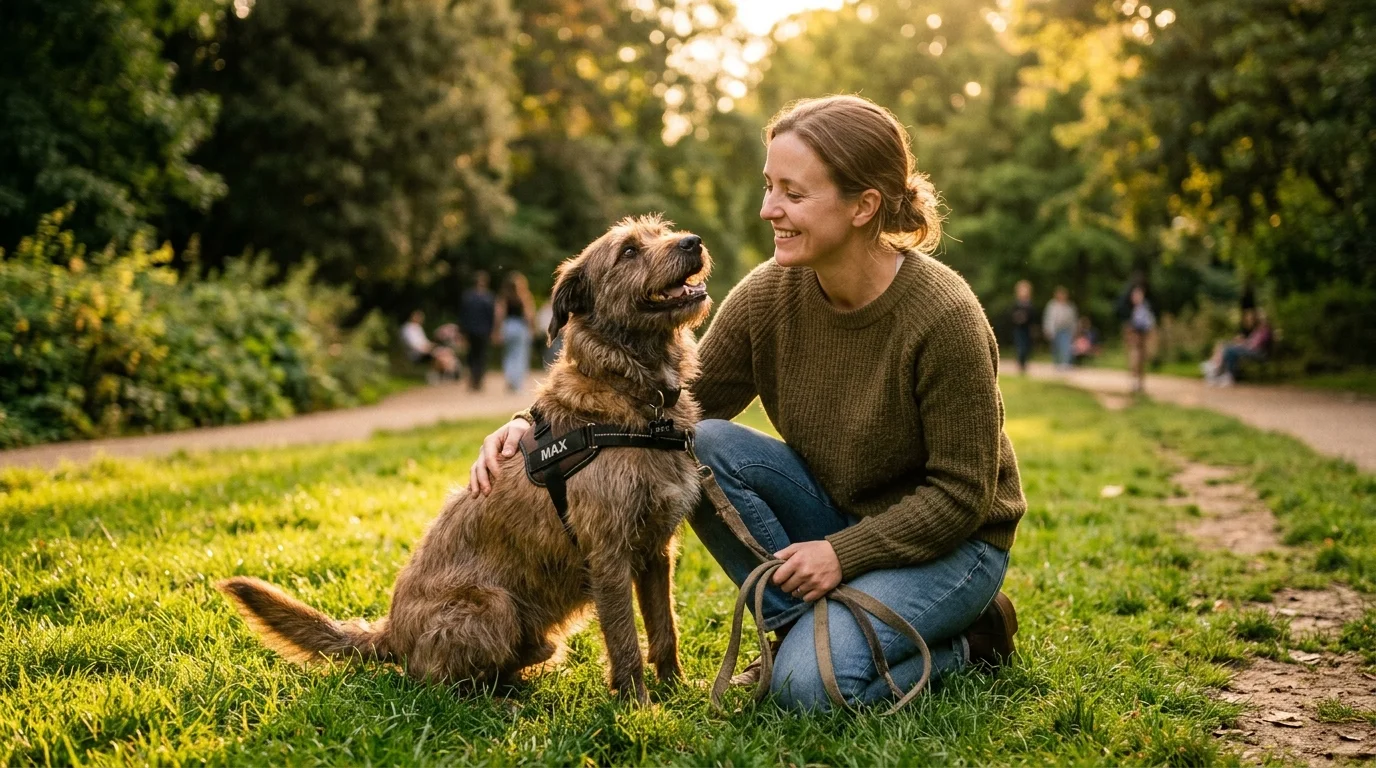
An original Petzora story about an older dog and an older cat adopted into the same quiet home, where patience turns wary distance into an unexpected companionship.
By Petzora Care Desk ·
Editorial note: This is an original Petzora fictional story inspired by common senior-pet adoption experiences. The characters and events are fictional.
When Mrs. Karim adopted Bruno, she expected the apartment to become quieter in a different way.
Bruno was a ten-year-old mixed-breed dog with silver around his muzzle and the careful walk of an animal who had learned not to waste energy. He liked short morning walks, soft food, and sleeping near the balcony door where the afternoon light reached the floor.
For three months, the arrangement was perfect.
Then Mrs. Karim met Misti.
Misti was an older cat at a local rescue. She was calm with people, uninterested in kittens, and deeply suspicious of dogs.
Mrs. Karim did not plan to adopt another pet that day.
She returned home with an empty carrier in her hand and a difficult idea in her head.
A Careful Decision
Introducing a senior cat to a senior dog was not something she wanted to rush. The rescue staff asked about Bruno’s behavior around cats. Mrs. Karim spoke with people who had seen him outdoors. He had noticed neighborhood cats but had never lunged or chased them.
Still, “probably calm” was not enough.
So the introduction began with separation.
Misti moved into the spare room with her own food, water, litter tray, scratching surface, bed, and hiding places. Bruno remained in the rest of the apartment. The closed door between them became the first stage of their relationship.
Meeting Through Scent
For several days, the two animals did not see each other.
Mrs. Karim moved a small blanket from Bruno’s sleeping area into Misti’s room and brought one of Misti’s towels into the living room.
Bruno sniffed the towel, sneezed once, and lay down.
Misti inspected the blanket from a distance before eventually sleeping near it.
Meals were gradually served on opposite sides of the closed door. Neither animal was forced closer than was comfortable.
The goal was not friendship. The goal was calm.
The First Look
The first visual meeting lasted less than a minute.
A secure barrier separated them. Bruno wore a leash. Misti had several places to retreat upward and away.
Bruno looked at the cat.
Misti looked at the dog.
Then Bruno looked at Mrs. Karim because she was holding a piece of chicken.
Misti remained where she was.
That was enough for the day.
Distance Became Routine
Over the next two weeks, the meetings became slightly longer. Bruno learned that noticing Misti and then returning his attention to Mrs. Karim was rewarding. Misti learned that Bruno did not charge toward her when she moved.
They were not affectionate. They were simply becoming predictable to one another.
For senior animals, predictability seemed especially valuable. Neither had the energy or interest for dramatic negotiations.
The Balcony Door
The first shared habit appeared by accident.
Bruno loved the patch of sunlight beside the balcony. Misti discovered it too.
One afternoon, Mrs. Karim entered the room and found Bruno stretched across one side of the warm floor while Misti sat several feet away on the other.
Neither animal appeared pleased.
Neither animal moved.
The next day, they repeated the arrangement.
Not Friends, Exactly
Mrs. Karim resisted telling people that Bruno and Misti had become best friends. That was not true, at least not then.
They had become something quieter.
They could eat in the same room. Misti could walk past Bruno without freezing. Bruno could settle on his bed while Misti jumped onto the sofa. They respected each other’s space.
Sometimes coexistence is the success.
The Night the Power Went Out
During a storm, the electricity failed. The apartment became dark and unusually still. Thunder shook the windows.
Bruno disliked storms. Mrs. Karim found him in the hallway, panting softly.
Misti had already taken refuge beneath a small table.
Bruno walked toward the table and stopped a short distance away. Mrs. Karim expected Misti to retreat.
She did not.
Bruno lay down.
For the rest of the storm, the two senior animals stayed in the hallway together, not touching, but close enough that each could hear the other breathe.
The Shape of Companionship
After that night, the distance between them seemed to shrink.
Misti sometimes slept on the sofa above Bruno’s bed. Bruno waited when she crossed the hallway. Once, Mrs. Karim saw Misti brush her tail against his back as she passed.
Bruno barely opened his eyes.
Their relationship never became playful. They did not wrestle or groom each other. They did not curl into the same bed.
But when Bruno returned from a veterinary appointment, Misti sat near the front door before he arrived. When Misti spent an afternoon asleep in another room, Bruno checked the doorway once before returning to his bed.
Second Chances Can Be Quiet
People often picture adoption stories around young animals: puppies racing through hallways, kittens climbing curtains, families beginning a long life together.
Senior pets tell a different kind of story.
Bruno and Misti did not need an exciting home. They needed comfortable surfaces, manageable routines, patient introductions, and a person willing to notice what made each of them feel secure.
They arrived with established habits and unknown histories. They also arrived with the ability to adapt.
The Window in Winter
By winter, the patch of sunlight moved farther into the room.
One morning, Mrs. Karim found Bruno sleeping there. Misti was beside him, close enough that one paw rested against his tail.
Neither animal seemed aware that this arrangement would have been impossible months earlier.
Mrs. Karim took no photograph. She did not want to move and disturb them.
She simply stood in the doorway for a moment.
Two old animals had entered the apartment expecting very little from one another.
Somewhere between closed doors, scent-swapped blankets, careful meals, shared sunlight, and a dark stormy hallway, “very little” had become companionship.
Not the loud kind.
The kind that stays.