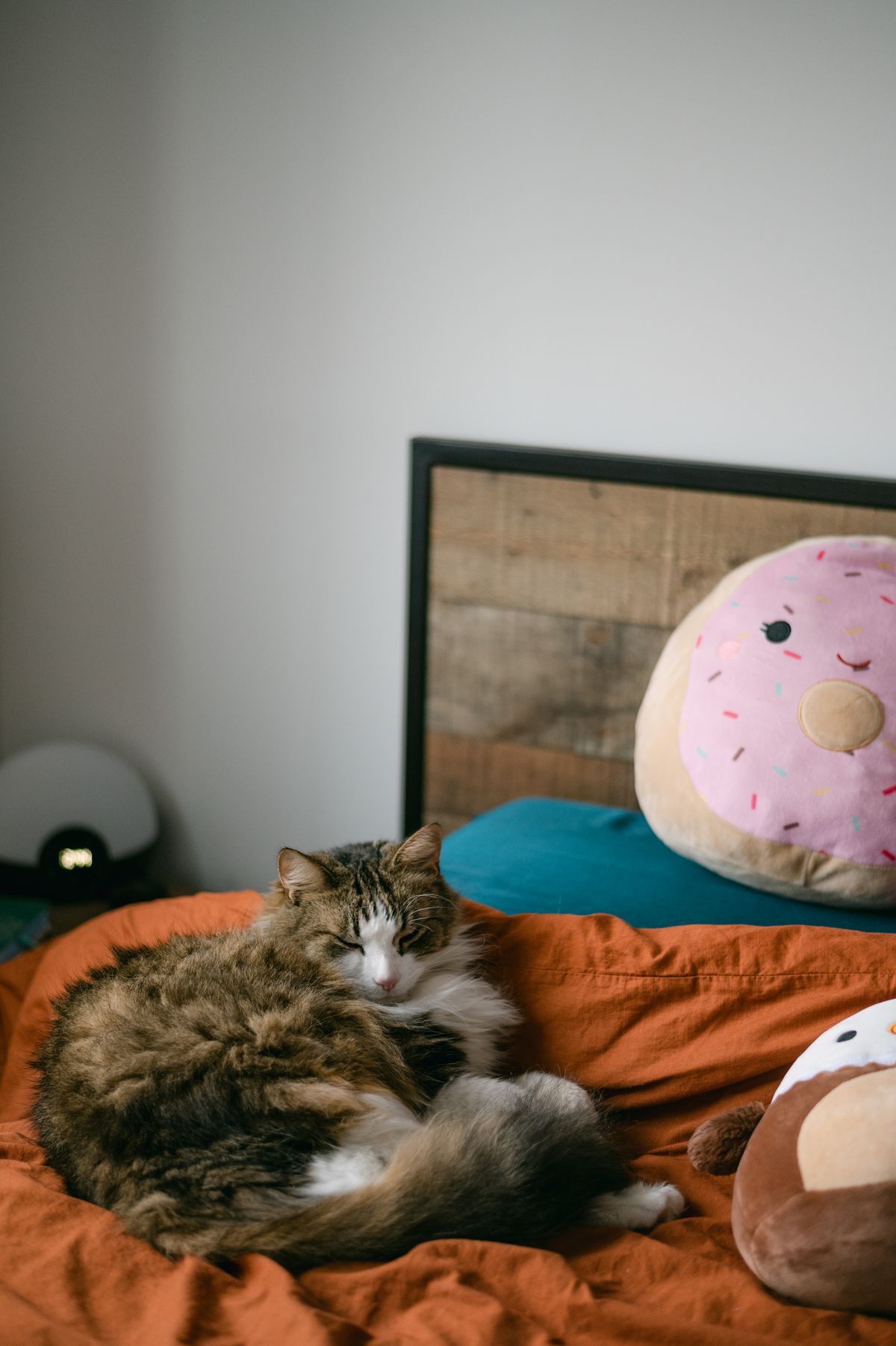
You leave space beside the pillow, but your cat chooses the far end of the bed. Sleeping near your feet may simply be the resting arrangement your cat finds comfortable. It is not a dependable measure of trust, affection, or your relationship. The same cat may move to a different place when the bedding, weather, or household routine changes.
Treat the location as a preference
There is no single proven explanation for every cat that sleeps at someone’s feet. More space, a particular blanket, distance from moving arms, or an easier route off the bed are possible practical factors. Consider them as things to observe rather than fixed rules about feline psychology.
Ask what distinguishes the end of your bed from the pillow area. Does a fan reach it? Is a favorite throw there? Does another pet occupy the head of the bed? Looking at the room is often more useful than asking whether your cat loves you less.
Watch how your cat settles
A cat that chooses the spot, relaxes, sleeps, and leaves freely is displaying a different pattern from one that crouches tensely and scans the room. Look at posture, movement, and the ability to settle. Do not use purring alone to decide whether a cat is comfortable.
Notice changes over several nights. One evening beside your feet and another on a chair can be normal variation. A sudden change accompanied by hiding, appetite loss, or difficulty jumping deserves more attention.
Make the bed a choice
If you enjoy sharing the bed, allow your cat to choose a spot. Do not repeatedly pick them up and return them to the pillow. A nearby cat bed or folded blanket offers another option if your feet move a lot at night.
Check that the sleeping area is easy to leave. For a cat with limited mobility, discuss safe access and comfort with your veterinarian. Do not assume a reluctance to jump is stubbornness or a loss of affection.
When the arrangement disturbs your sleep
Place a comfortable resting area beside the bed or elsewhere in a quiet room. Introduce it during the day, and let your cat explore it voluntarily. Keep the sleeping location consistent instead of moving it every night.
If you prefer a pet-free bedroom, build that routine gradually. Provide water, litter access, and a suitable resting space elsewhere. A sudden closed door after months of free access may create a new adjustment rather than immediately improve sleep.
Avoid overreading body position
A cat sleeping with their back toward you is not necessarily offended. Facing a door is not proof of guard duty. The position may simply fit the spot. A comfortable cat does not need to perform a particular pose to show that the home feels familiar.
Use ordinary observations: how easily they settle, whether they approach voluntarily, and whether their daily habits remain stable. Those details help you make better decisions than online lists assigning a personality to every sleeping position.
Know when a new sleeping habit matters
Contact a veterinarian if your cat suddenly avoids the bed and also moves stiffly, hides, eats less, or reacts painfully when touched. Increased nighttime restlessness, especially in an older cat, also deserves a discussion.
Bring notes about sleep locations, mobility, and recent changes in the home. A useful question is “What changed alongside the location?” rather than “Why is my cat rejecting me?”
Frequently asked questions
Does sleeping at my feet mean my cat trusts me?
It may fit with feeling comfortable nearby, but the location alone cannot establish how much a cat trusts someone.
Can I encourage my cat to sleep beside me?
Offer a comfortable option and allow the choice. Do not force contact or repeatedly move a resting cat.
Is it normal to change sleeping spots?
Yes, cats can use different resting areas. Pay attention when a change comes with signs of pain, illness, or distress.
Related Petzora guides
Sources and further reading
Written by Emon Ahmed for general education. Behavior explanations are possibilities, not a diagnosis or a claim of veterinary review. Consult a veterinarian about pain, illness, or sudden unexplained changes.