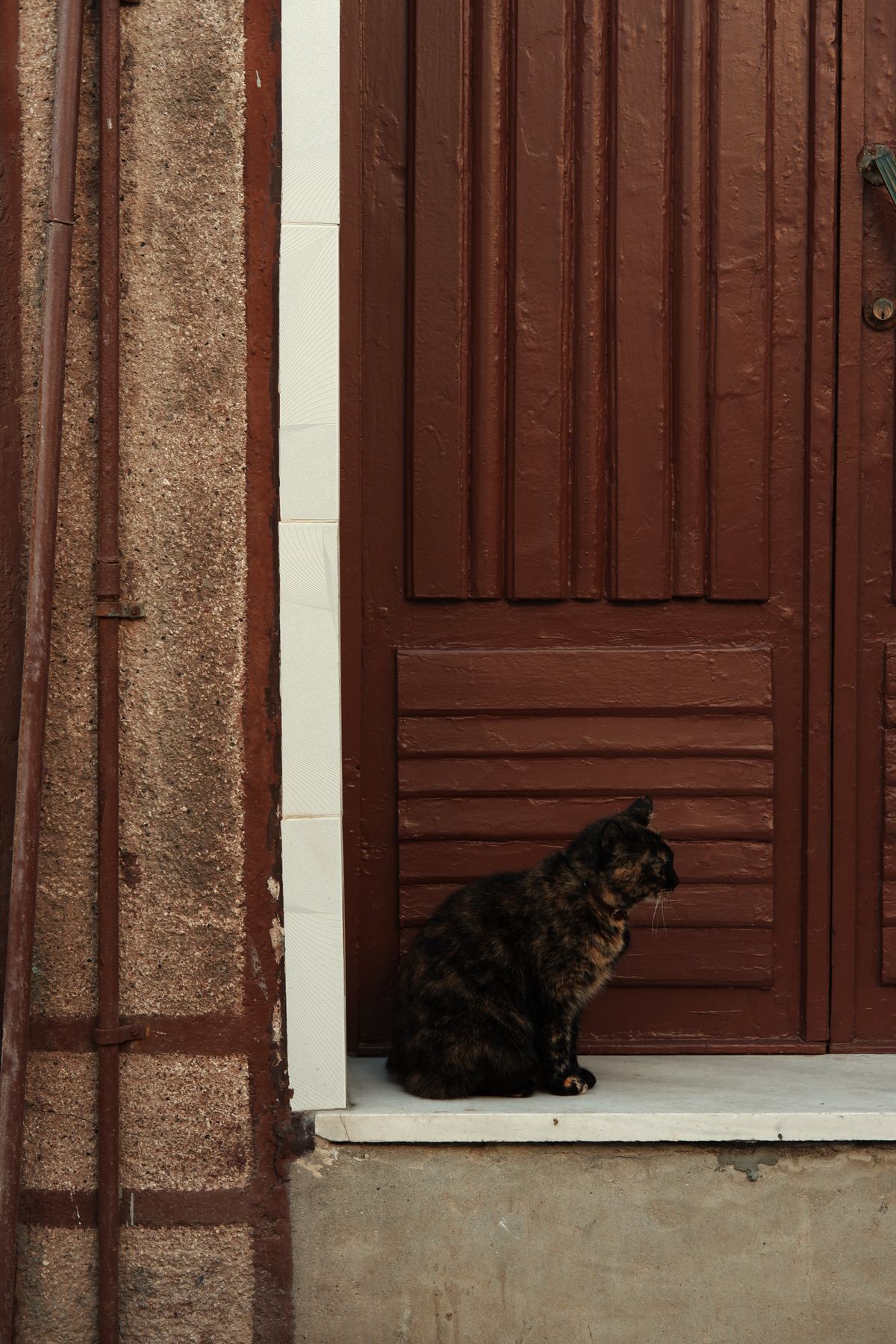
Your cat may ignore you on the sofa but become your personal bathroom attendant as soon as the door closes. Waiting outside a bathroom can reflect curiosity, a familiar routine, or a preference to stay near you. It does not automatically mean separation anxiety. A quiet cat sitting comfortably outside the door needs a different response from one that panics whenever access changes.
Observe the waiting, not just the location
A relaxed waiter may sit, wash, stretch, or leave before you return. A distressed cat may pace repeatedly, scratch intensely, or vocalize without settling. These clues do not establish a diagnosis, but they help you decide whether to accommodate a harmless preference or seek advice.
Notice whether your cat waits at other doors as well. If the reaction happens only at this bathroom, the room, sounds, or history of attention may matter. If any brief separation causes distress, look beyond the bathroom habit.
The door can be part of a learned routine
If you talk to your cat through the door or greet them enthusiastically afterward, waiting there may have become rewarding. That does not make the cat manipulative. It means the sequence can be predictable and interesting.
A useful home experiment is to compare bathroom visits with another short activity behind a door. Keep the conditions calm and stop if your cat becomes distressed. You are gathering observations, not testing how much discomfort your cat will tolerate.
Curiosity and access are plausible explanations
A closed door changes access to a room and to the person inside it. A cat that usually explores freely may investigate the change. Bathroom sounds, moving water, and towels can also make the area interesting, although you cannot tell which attraction matters from waiting alone.
Do not assume the cat is guarding you or protecting you from danger. Those stories are appealing, but they do not tell you what your particular cat needs. Watch whether they follow you back out, remain interested in the room, or simply resume resting.
If the habit is harmless
You can let your cat wait if it causes no problem. Keep cleaning chemicals, medicines, razors, and loose hair ties safely stored. Close the toilet lid and prevent access to hazardous products. A friendly bathroom companion still needs a safe environment.
For cats allowed into the room, give them a choice to leave. Avoid picking them up and placing them near water just because they followed you. Some enjoy the location but dislike handling or splashes.
Practise a gentle closed-door boundary
Start while your cat is already comfortable. Offer an inviting bed or resting place outside the room. Close the door briefly, reopen it calmly, and repeat only while the cat remains settled. Increase duration gradually rather than jumping straight to a long separation.
Do not turn the exercise into a struggle at the door. If scratching or distress begins, make the next session easier and consider qualified behavior advice. The goal is a predictable boundary your cat can handle, not a contest over who gives in.
When to look for a broader problem
Ask a veterinarian about sudden clinginess, new vocalization, changed eating or drinking, house-soiling, or an older cat becoming confused. Physical discomfort and changes in the environment can both alter behavior.
Bring notes about recent moves, new pets, visitors, and routine changes. Mention whether the cat settles while you are elsewhere in the home. That distinction is more informative than the label “bathroom cat.”
Frequently asked questions
Is waiting outside the bathroom a sign of love?
It may be compatible with enjoying your company, but one behavior cannot measure affection. A relaxed cat choosing to be nearby is a useful observation.
Should I always leave the door open?
Only if it suits your household and the room is safe. A gradual, calm boundary is reasonable when privacy is needed.
Why does my cat leave when I open the door?
Opening the door may resolve the interesting change in access. It does not mean your cat was trying to upset you.
Related Petzora guides
Sources and further reading
Written by Emon Ahmed for general education. Behavior explanations are possibilities, not a diagnosis or a claim of veterinary review. Consult a veterinarian about pain, illness, or sudden unexplained changes.